

I'm just discovering the Romería de San Miguel and the festival that takes over Torremolinos this weekend. I had no idea what a romería was, or why nearly 200,000 people would show up for one. And the church 192 steps from my front door turns out to be right in the middle of it all.
There are 192 steps between my front door and the church of San Miguel. Winding up from the beach, the street wraps around my building before turning into a zigzagging stairway carved into the cliff. The path is lined with small shops whose colorful goods spill out onto the marble mosaic walkway. Officially known as Cuesta del Tajo (Slope of the Cliff), the steps are one of the landmarks that define Torremolinos. They were here long before the hotels and apartment towers, and the town grew up around them.
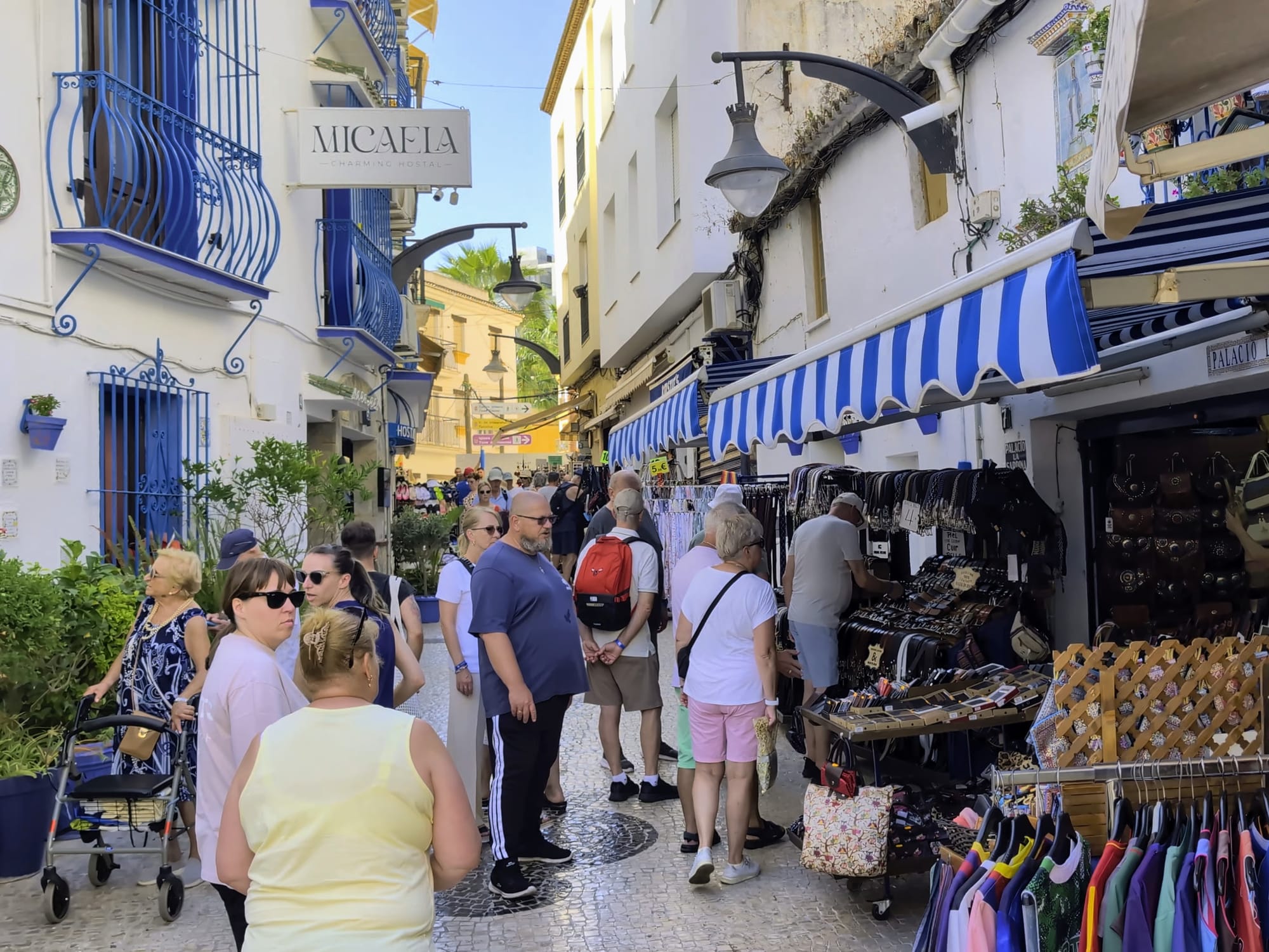
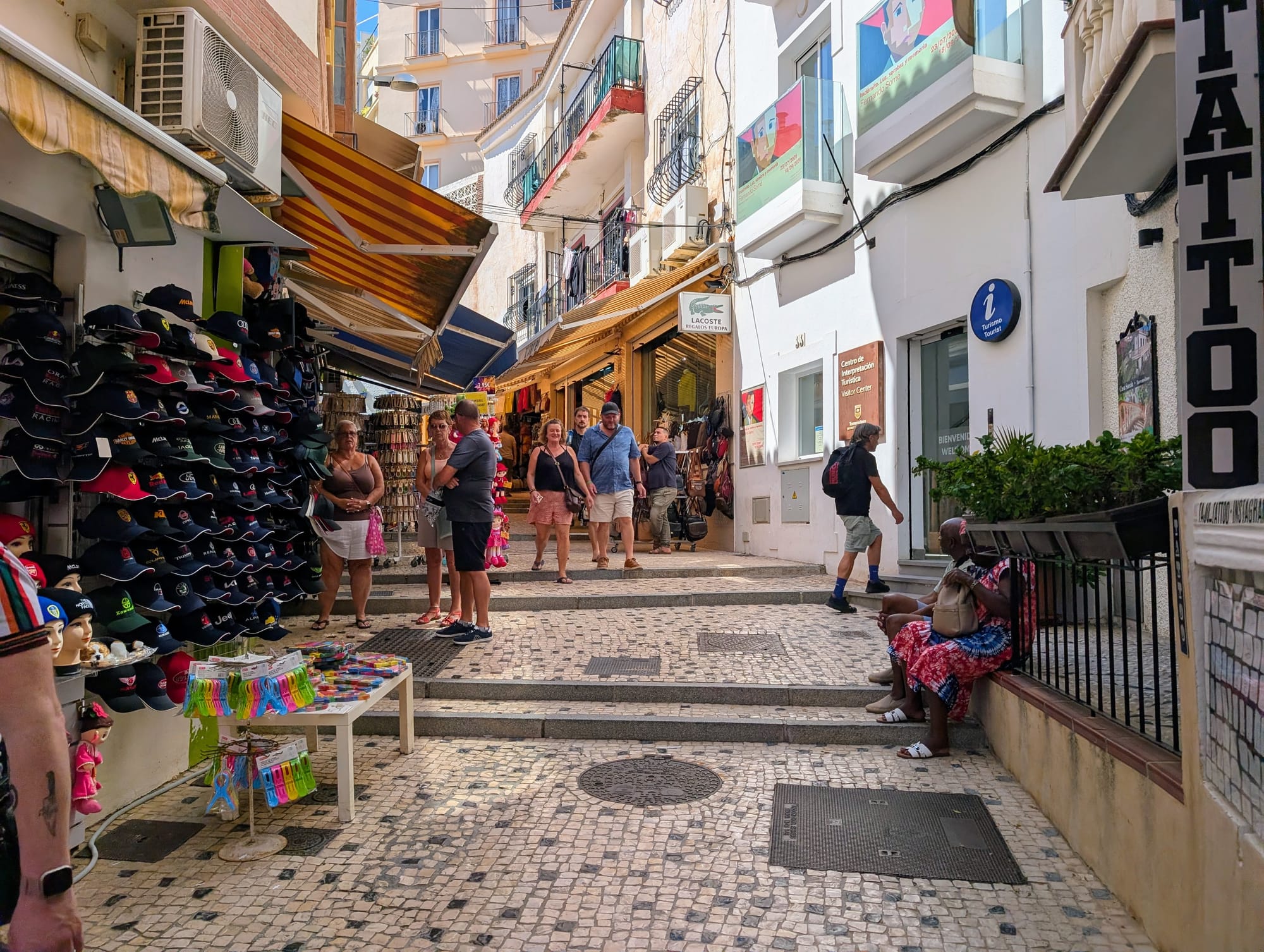
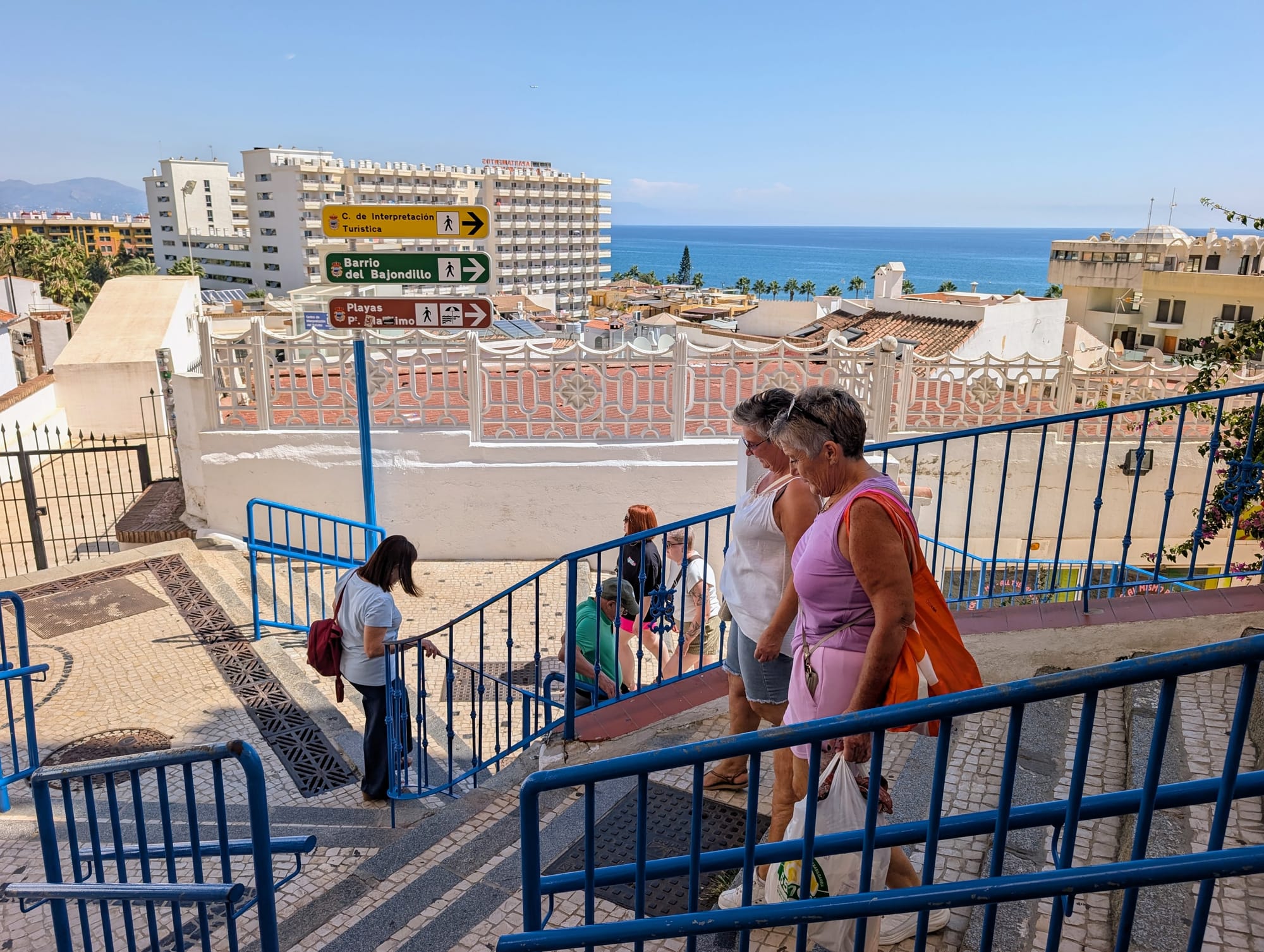
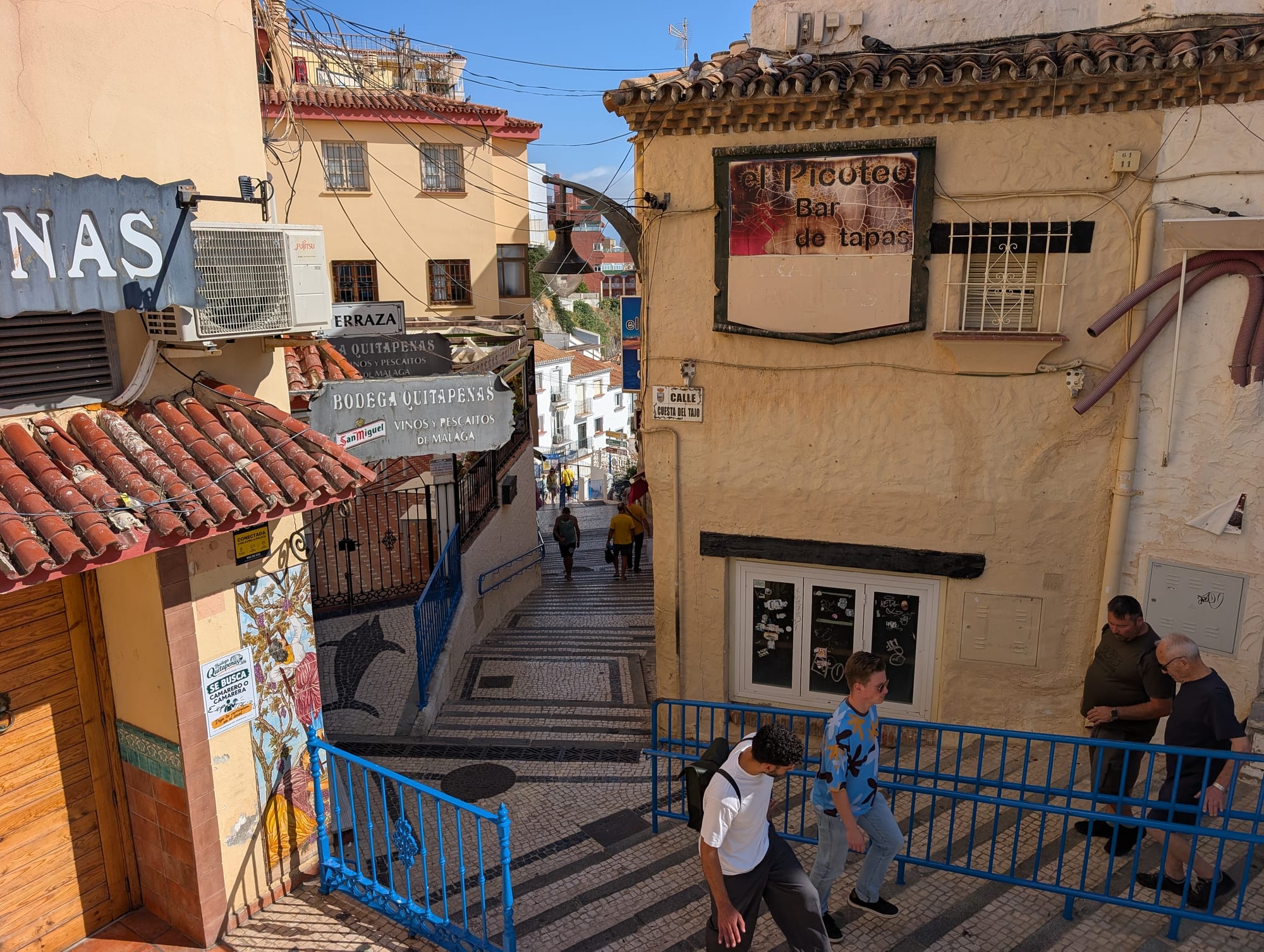
Shops on Calle Bajondillo near the beach and the Cuesta del Tajo steps.
The steps lead up to the medieval Torre de Pimentel, perched on the edge of the cliff. Built around 1300 to defend the town's water mills, this tower is the literal seed of Torremolinos ("Tower of the Mills"), the anchor around which a mill town, then a fishing village, and finally a resort grew up.
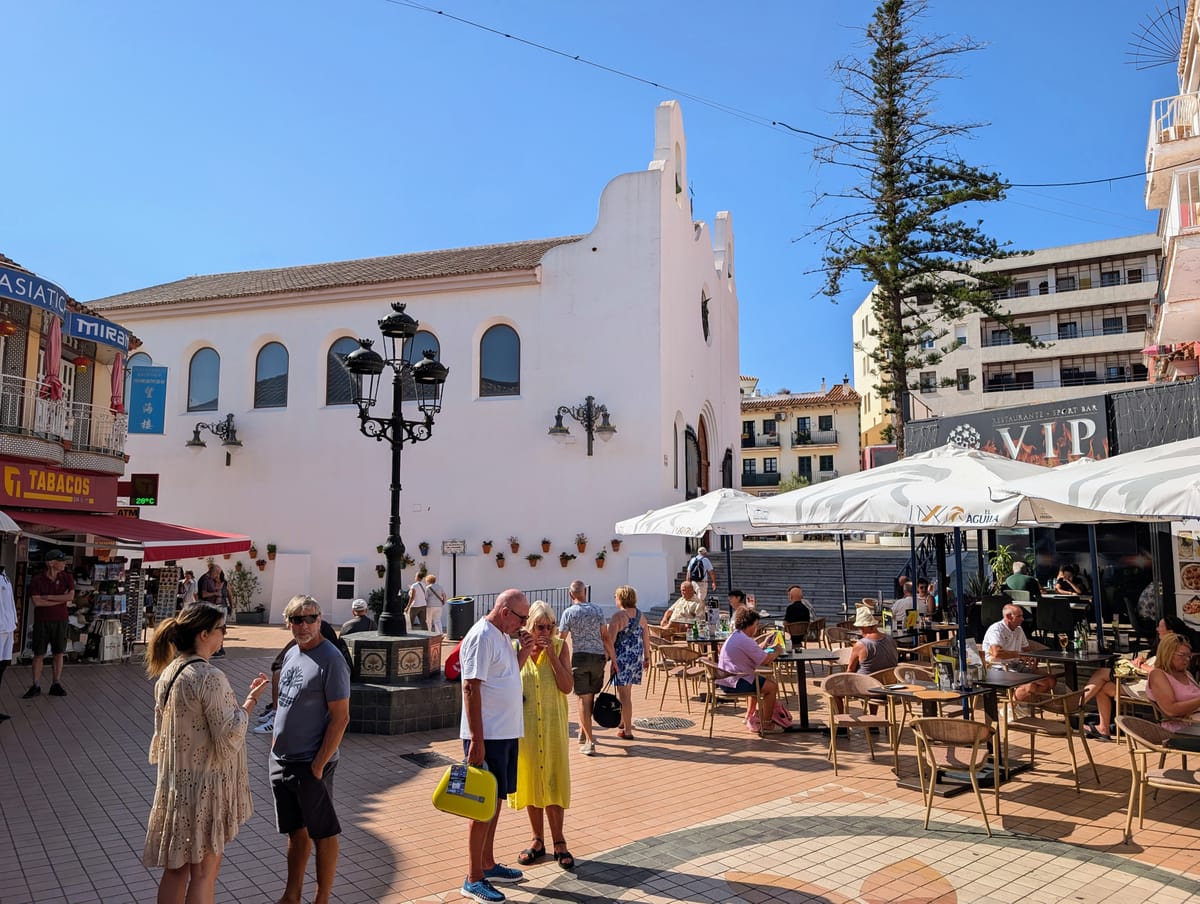
A few more steps lead to a small plaza next to a whitewashed church. The path transforms into Calle San Miguel, the town’s main pedestrian street, packed with local boutiques, souvenir shops, and open-air cafes.
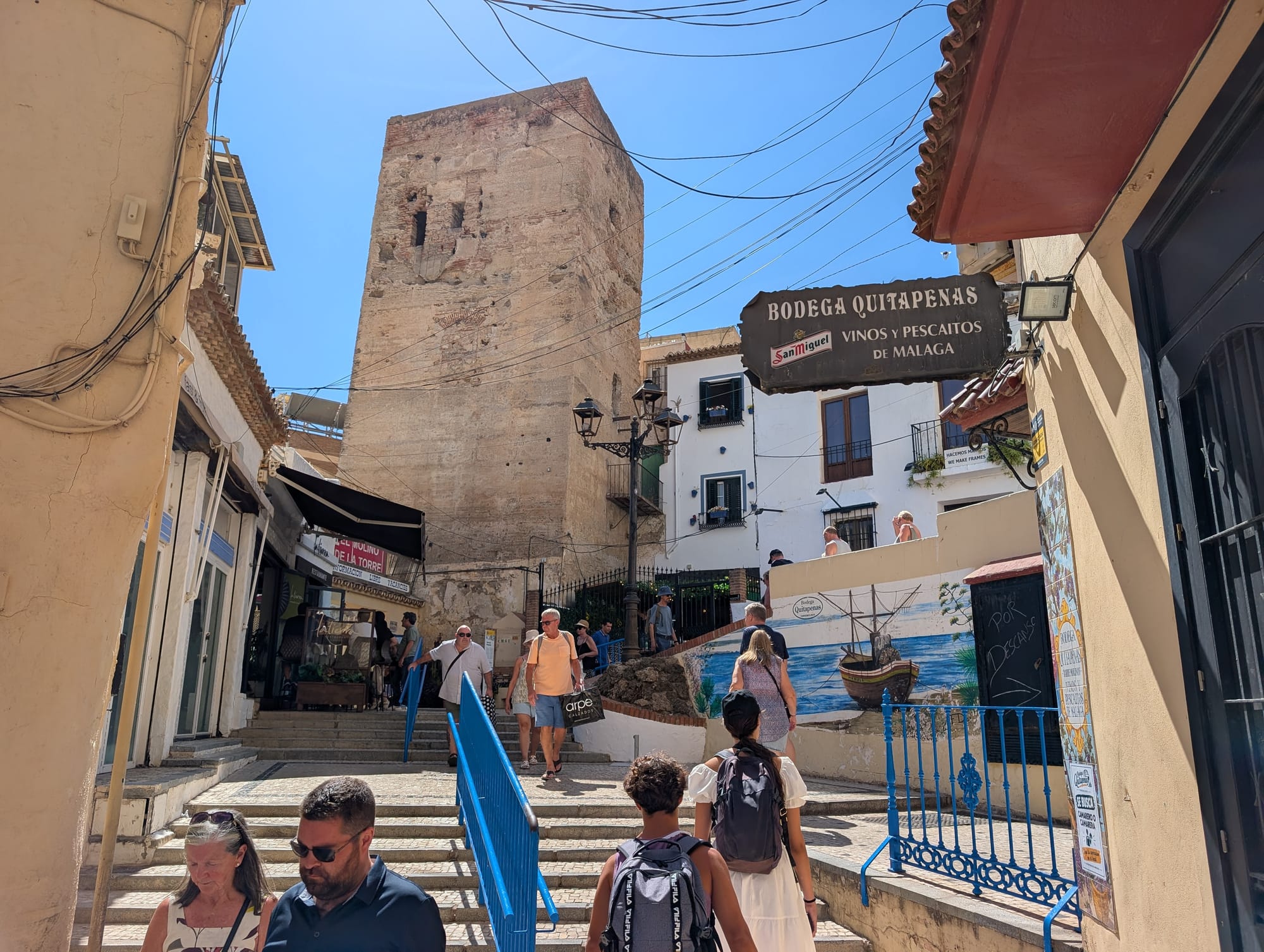
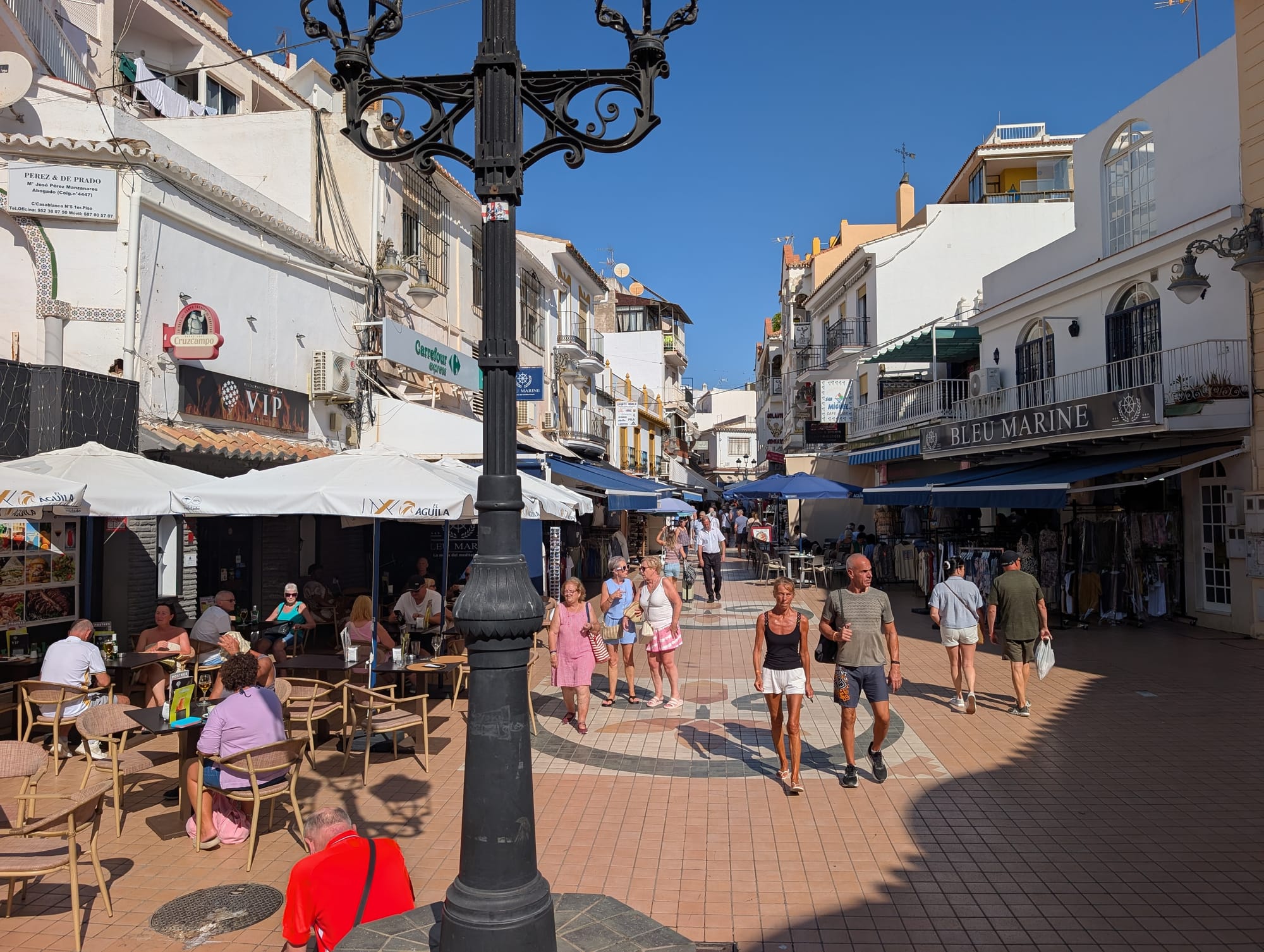
Torre de Pimentel. The start of Calle San Miguel pedestrian street.
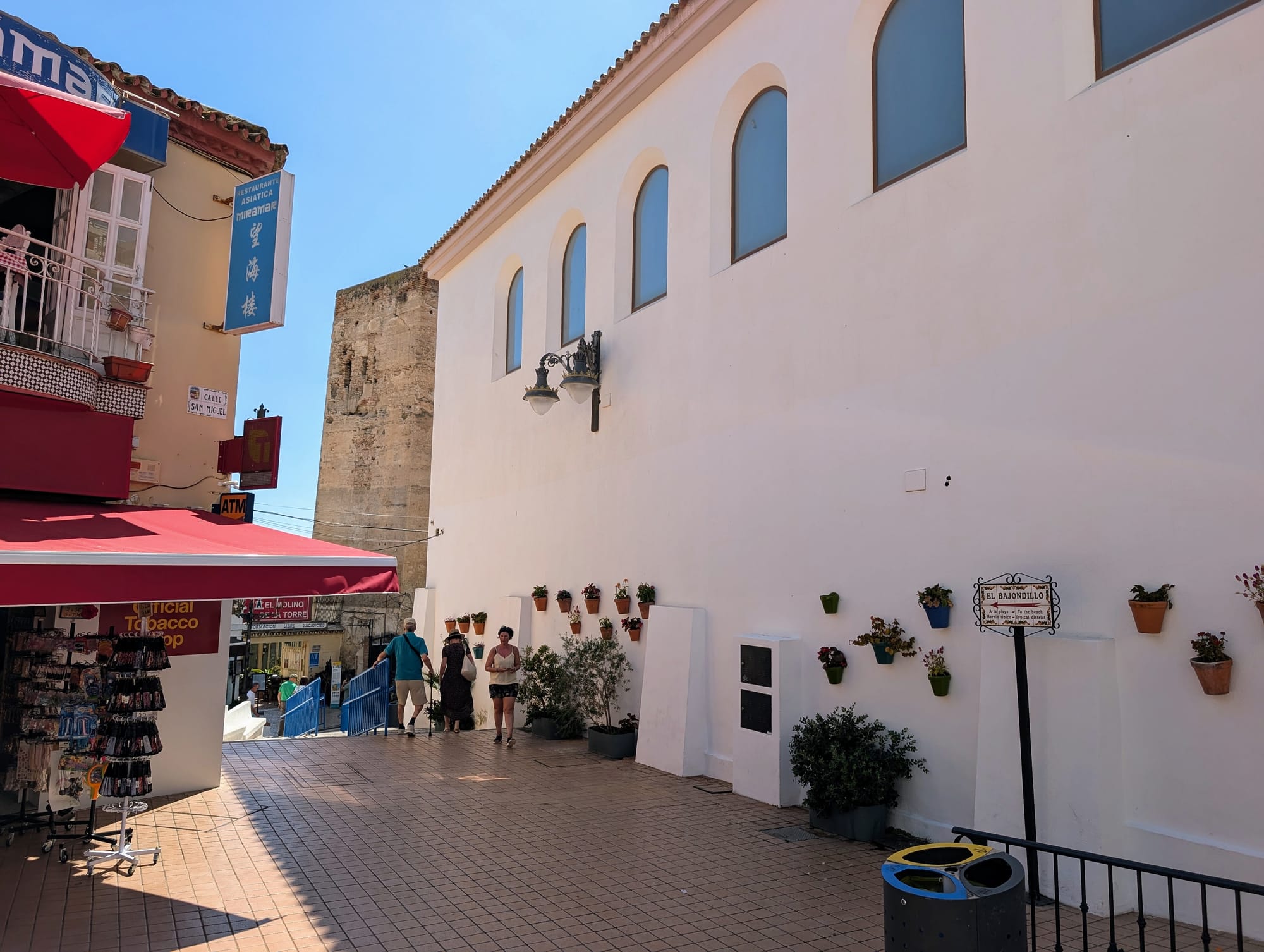
The church of San Miguel is easy to overlook. Tourists headed toward the beach pass the church at the exact moment their attention shifts to the start of the steps, which means most people never really notice the church at all. It's just a big white wall decorated with flower pots.
This week I started seeing Facebook posts for something called the Romería de San Miguel. Saint Michael is the patron saint of Torremolinos, and the festival in his honor is the biggest event on the town's calendar. It is a massive, multi-part celebration spanning a Sunday pilgrimage through the streets, a full week of daytime street parties and late-night fairgrounds, and a solemn procession on his actual feast day.
In Spain, a romería is a pilgrimage to a religious shrine, though it is not quite the solemn affair I had imagined.
This Sunday, September 20, close to two hundred thousand people will fill the center of town for ours. After morning mass, dozens of carts, some pulled by actual oxen and decorated by hand with paper flowers, will roll through the city. They will be trailed by horses and ruffled flamenco dresses, with rebujito flowing along the route. The whole procession moves slowly out of town to the shrine of Ermita de San Miguel in the pine groves of Los Manantiales, where it dissolves into one enormous, daylong picnic with dancing.
They call it the most important urban pilgrimage in Andalusia. I always imagine pilgrimages crossing mountains. This one crosses a roundabout.
Then the town keeps going for a week. By day the fair takes over the many plazas of the old town. One of them is the small square where the church stands. There are flamenco guitars in the afternoon sun, tapas, whole families dancing in the squares. By night it moves out to the fairground, where local clubs and brotherhoods run big canvas tents called casetas, serving food and music until dawn.
On Tuesday, September 29th, the feast day of St. Michael, a statue of the archangel comes out of the church of San Miguel. After morning Mass, it is carried through the center of town, accompanied by the IV Tercio of the Spanish Legion from Ronda, before making its way back to the church.
I assumed all of this was ancient. It has every marker of ancientness: oxen, a saint, sherry. It isn't.
I went looking for the year all of this began, and it turns out nobody quite agrees. Oral tradition insists the romería is old. A local historian, Carlos Blanco, went through the town's surviving fair programs from 1917 and the 1920s and found no romería in any of them. The surviving paper trail starts in 1940, when a fair program summoned the town to a "Gran Romería," promising prizes for the best-decorated carts and pointing everyone toward the Fuente de la Salud in neighboring Benalmádena. It wasn't dedicated to San Miguel until 1950.
For its first decades, the pilgrimage couldn't quite settle. It changed destinations, changed names, changed dates, nearly faded out altogether in the sixties, and only found its permanent home in the pine grove in 1972, just as mass tourism was remaking the town around it. Then it grew into what arrives this weekend.
Which makes the tradition, give or take, the same age as most of the sunbathers baking on the beach below it.
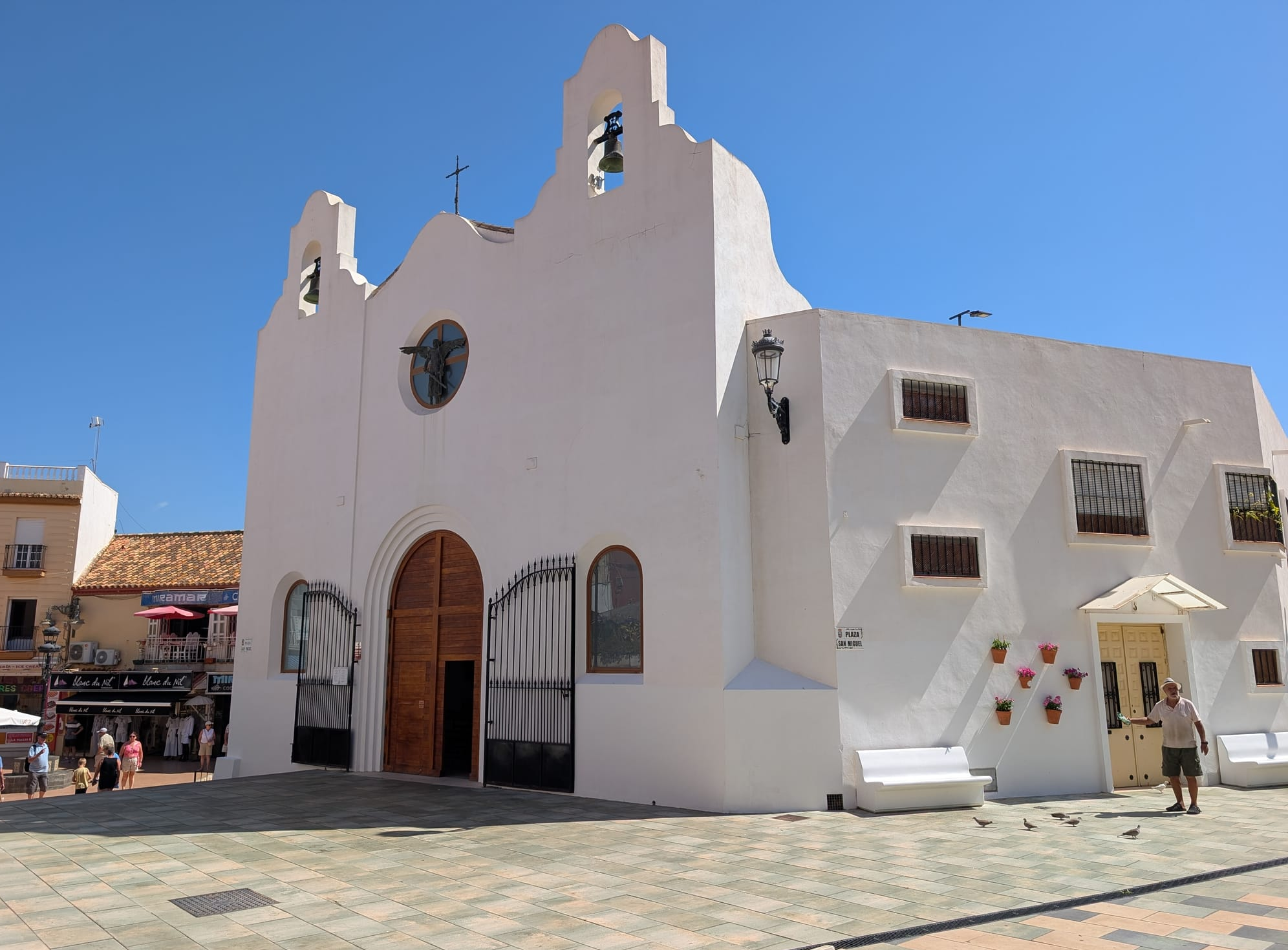
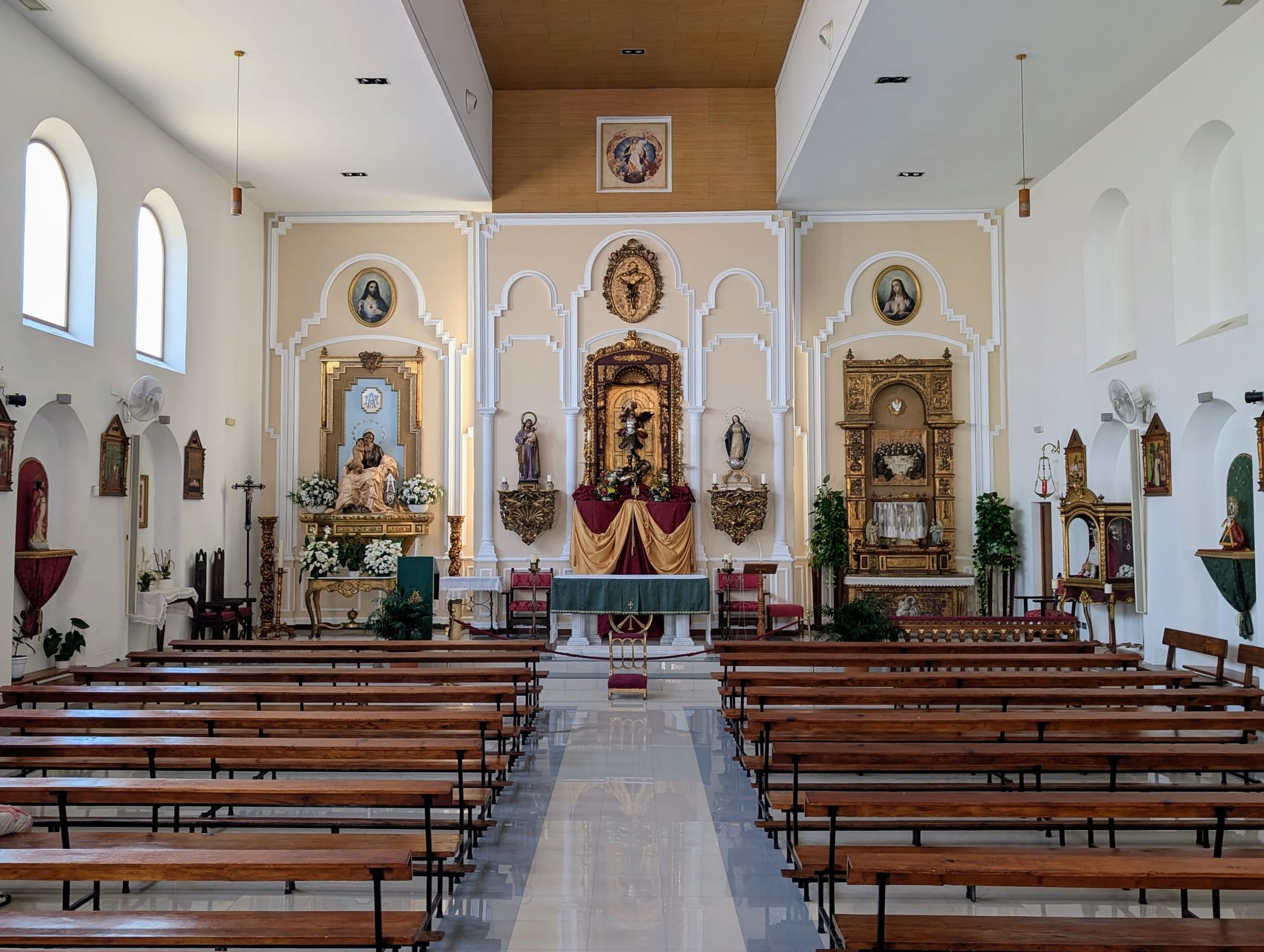
The church of San Miguel
A chapel went up on this cliff in 1718, which makes San Miguel the oldest church in town, though the building standing today owes most of its appearance to an 1896 rebuild. The mills disappeared, then the fishing boats. Apartments and luxury hotels swallowed what was left, but the church remains behind its tower.
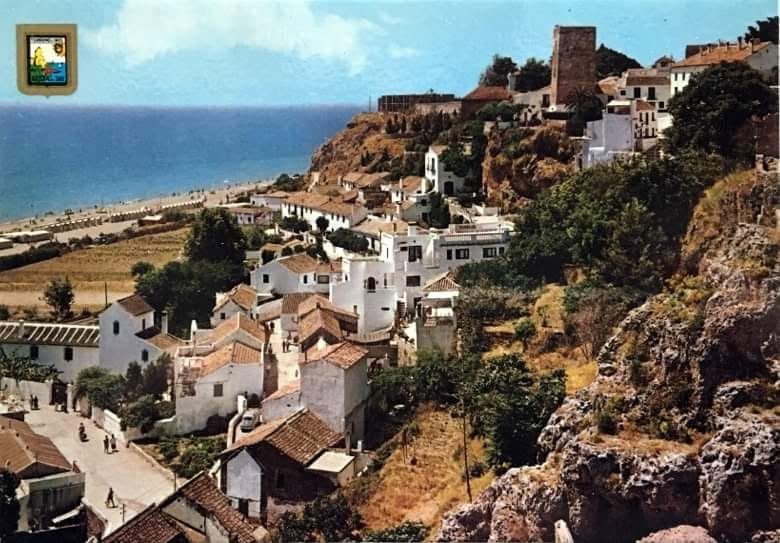
Sixty years later, the fishing village survives mainly in postcards. But the fair lands on the last days of September, the exact seam where the tourist season ends. All summer, Torremolinos performs: hotels full, restaurants changing languages from table to table, everything angled toward the sea. Then the crowds thin, and the town throws its biggest party of the year for streets full of people who actually live here.
Nobody planned that, as far as I can tell, but the festival makes the statement anyway. It's the week the town stops being a destination and goes back to being a place.
I've only lived in Torremolinos for a few months, On Sunday I'll be there as the pilgrims take the long road out to the pine grove.
On the 29th the statue comes out, and I’ll be climbing the 192 steps to see it.

Comments ()