

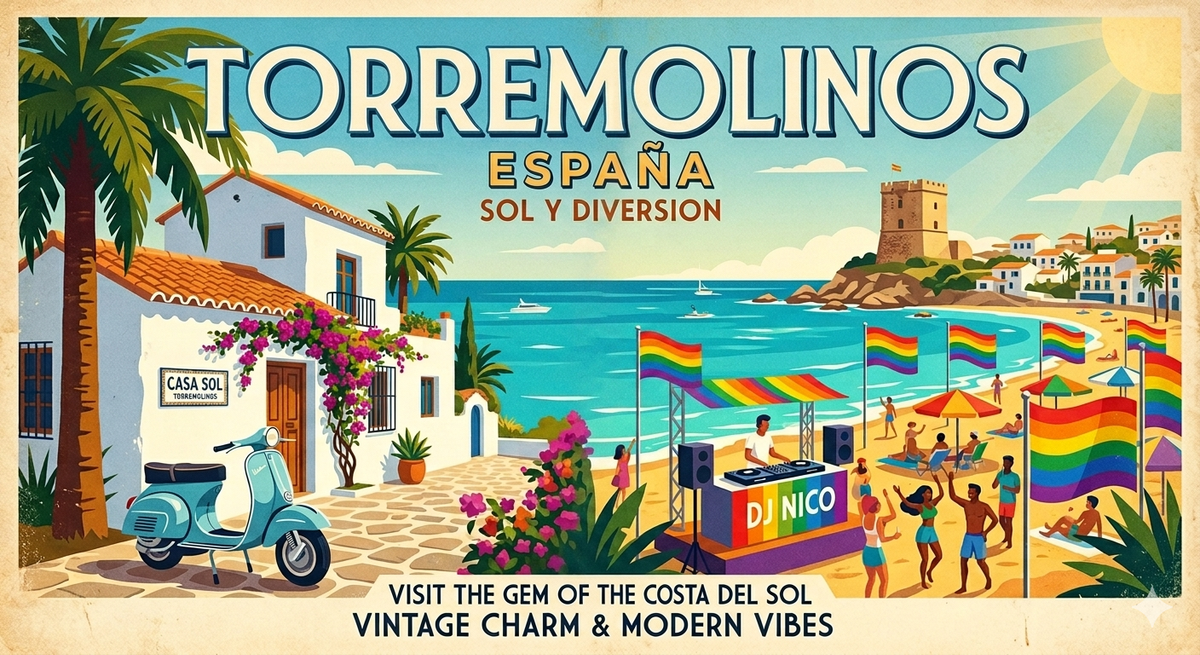
The gay neighborhood is mostly gone in America. Real estate ate it; the apps replaced it. But on a stretch of Spanish southern coast, the analog version of queer life is still running. Americans like us are moving there.
Most American men live their lives bouncing between two places: home and work. The sociologist Ray Oldenburg called these the First and Second places, and he argued that a healthy life requires a Third. A public space, separate from domestic and professional pressure, where community happens by accident. The corner bar. The gym. The diner counter.
For queer people, third places were never optional. They were how we found each other.
Before smartphones, we built gay neighborhoods like the Castro, West Hollywood, and Greenwich Village out of necessity. They were sanctuaries from police harassment and housing discrimination, and during the AIDS years they became the infrastructure of mutual aid. You could walk down the street, go to a gym, sit at a bar, and know you were among your people. Connection wasn't planned. It happened because you showed up.
Then a strange thing happened. We won marriage equality. We gained legal protections. And in roughly the same window, real estate ate our neighborhoods. The Castro became a destination for finance bros. Chelsea got a Whole Foods. We didn't choose to dissolve into mainstream American life so much as we got priced out of the alternatives.
Technology arrived to fill the void, and we pioneered its adoption. Hookup apps replaced cruising. Group chats replaced barstools. The whole apparatus of accidental, in-person queer life, the part where you'd run into your ex's roommate and end up at a dinner party, got outsourced to algorithms that, by design, optimize for transactions, not friendships.
A few months ago I arrived in Torremolinos, a popular gay tourist destination on Spain's southern Mediterranean coast, expecting a tourist beach town. What I found was something more interesting: a working model of what we lost.
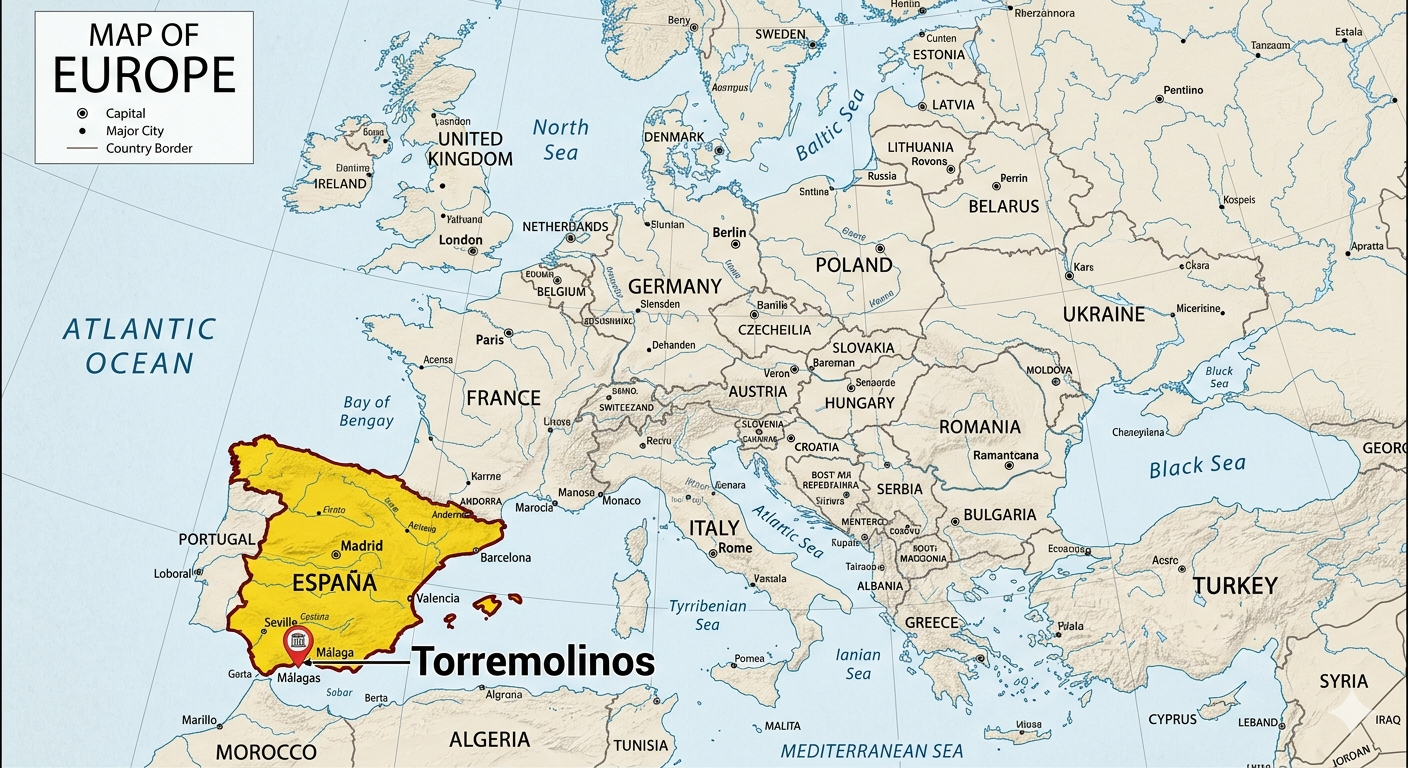
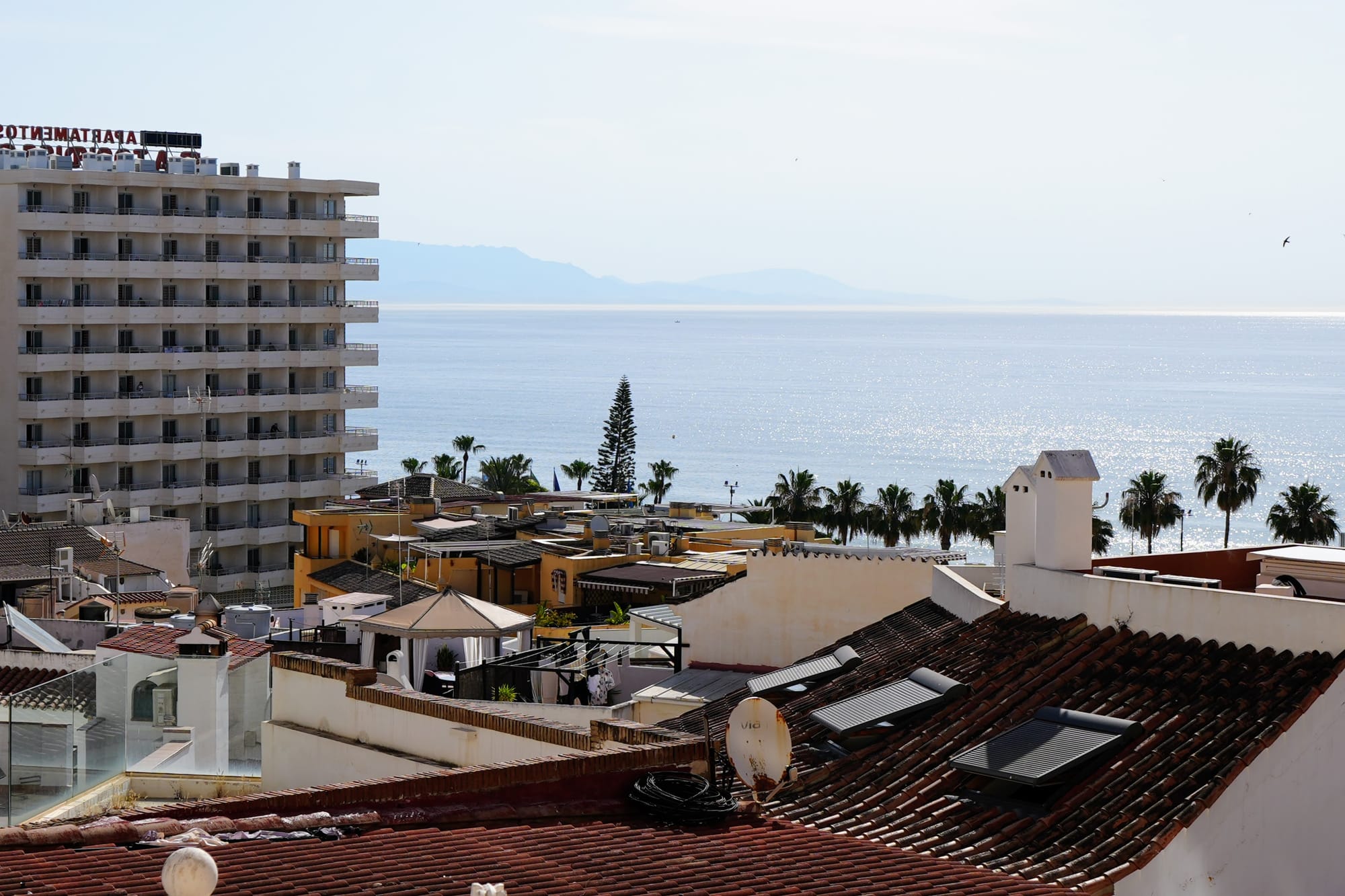
Torremolinos sits on the Costa del Sol just a short commuter train ride west of Málaga's airport. It is not one of Andalusia's pretty white villages. There is no cliffside drama, no postcard old town. It's a resort city of aging high-rise buildings that boomed in the Franco-era tourism push of the 1960s. Aesthetically, it's a mess.
But on a narrow alley called Pasaje Begoña, between 1962 and 1971, a handful of bars with names like Tony's (Spain's first gay bar), La Sirena, and Pourquoi Pas became some of the few places in Franco's Spain where gay men, lesbians, and gender-nonconforming people could gather openly. Foreign tourists mixed with locals. Word spread across Europe. Then on the night of June 24, 1971, the Guardia Civil raided the strip. Hundreds were arrested. Foreigners were deported. Spaniards were sent to "rehabilitation" prisons under the Ley de Peligrosidad Social.
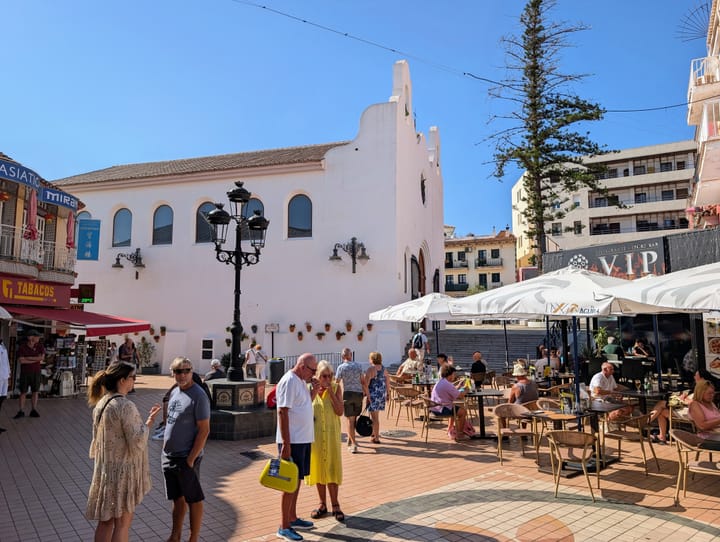
The strip never fully recovered. Walk it today and most of the original bars are gone, replaced by a small memorial plaque and a quiet stretch of shuttered storefronts. But the town's identity calcified around what happened there. A few hundred meters away in La Nogalera, the town's central plaza and gay district, that defiant social instinct is still operating, joined by something the United States no longer reliably produces: an unbroken tradition of public, face-to-face hanging out.
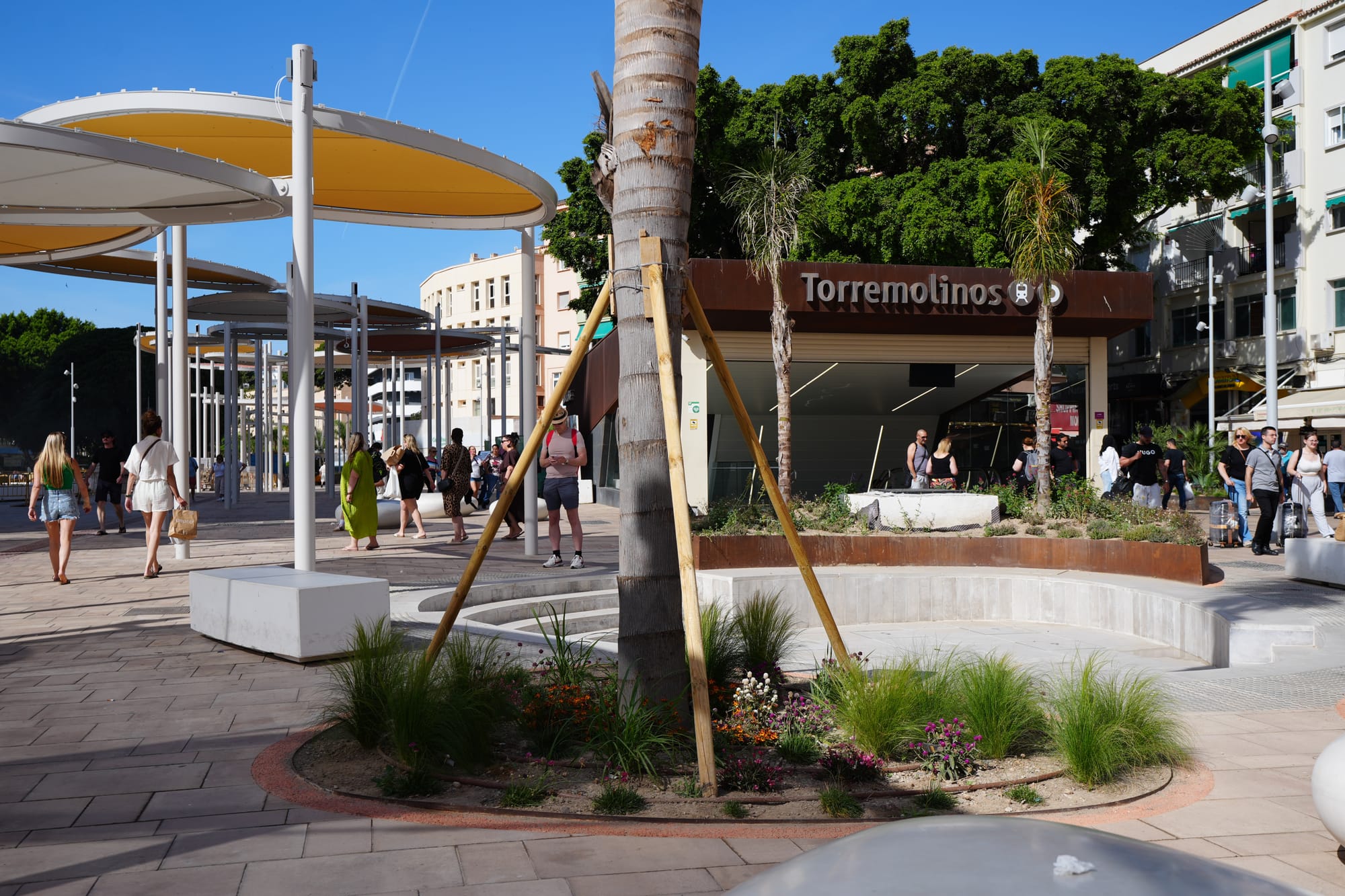
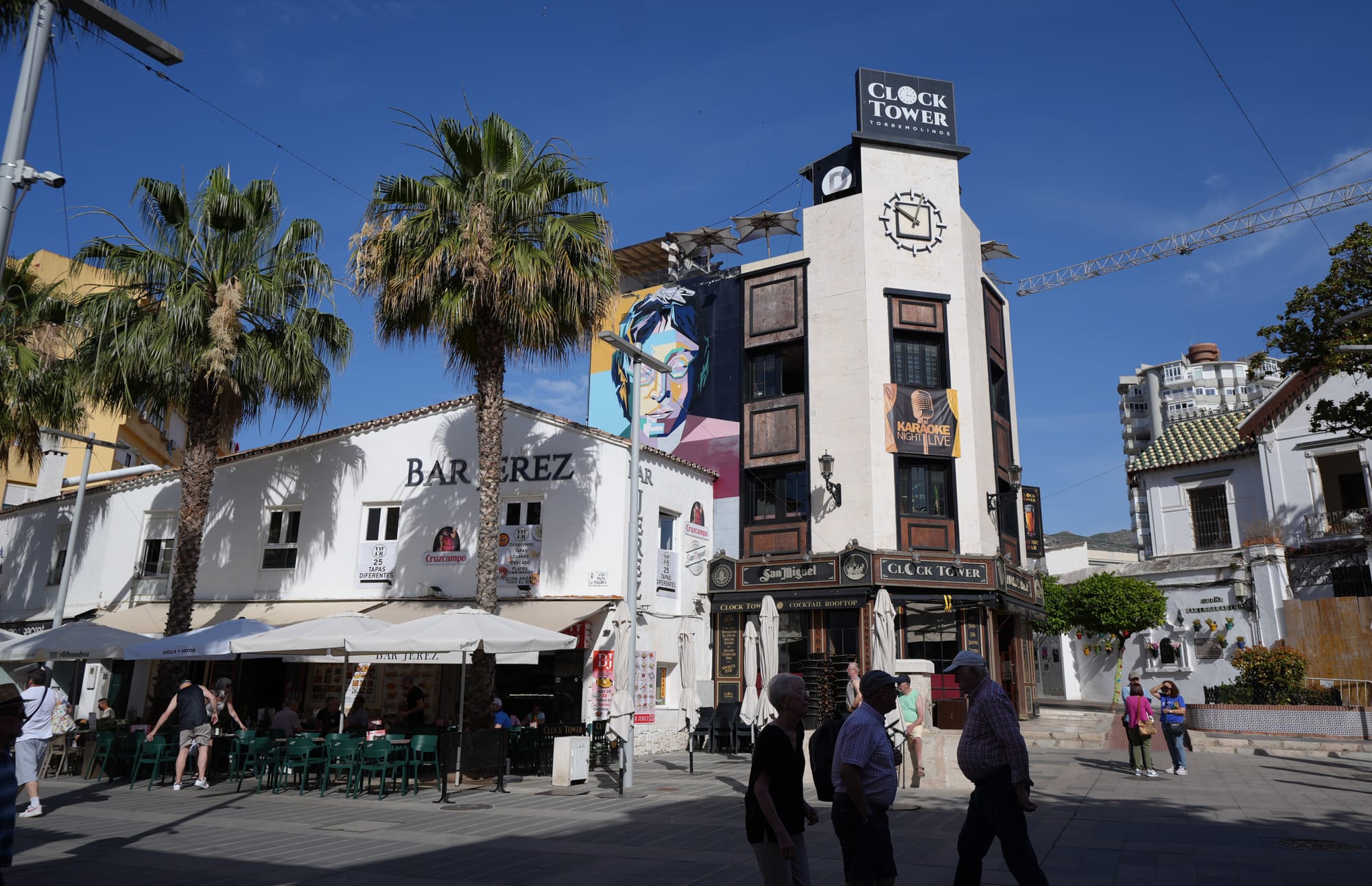
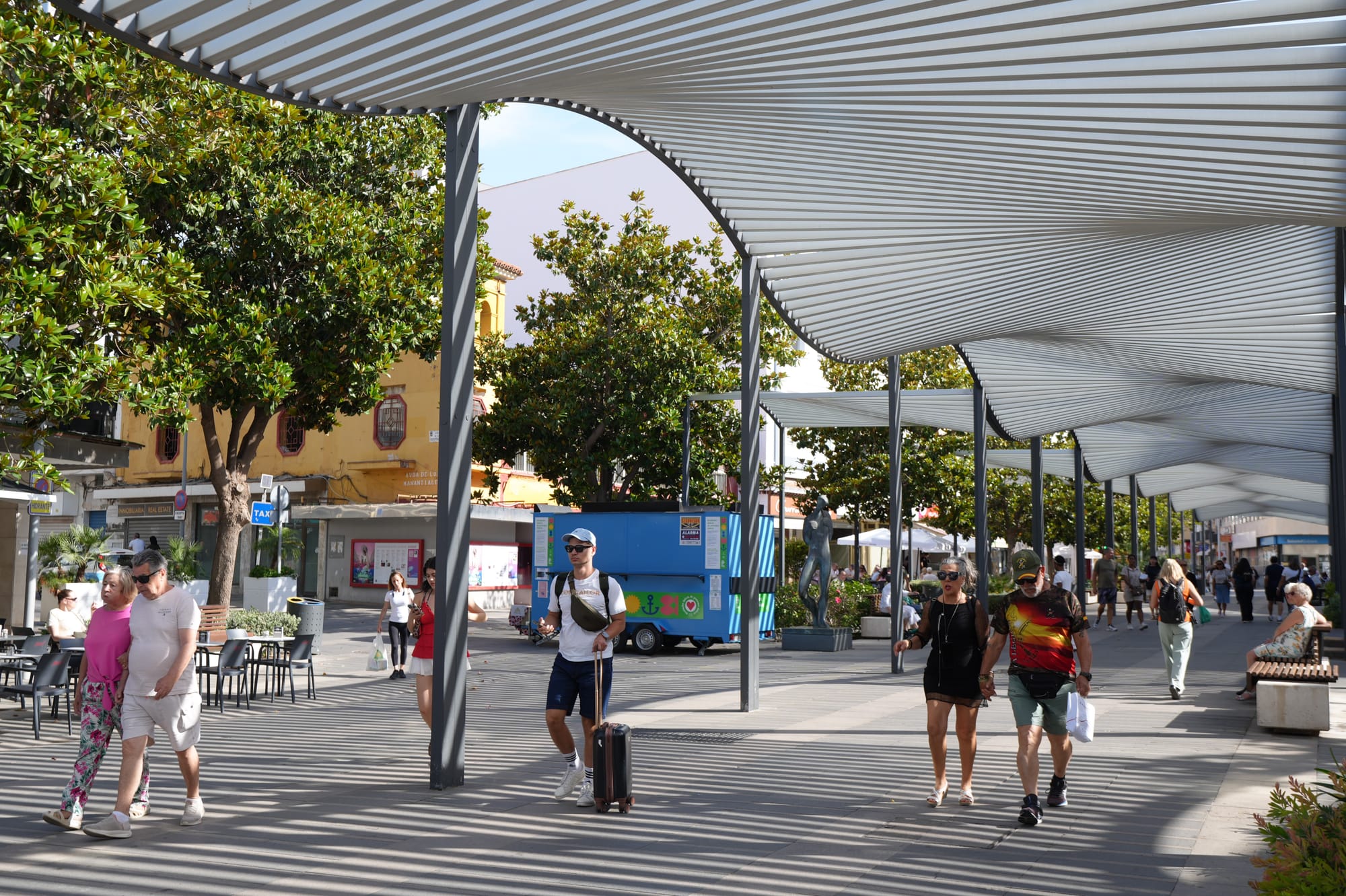
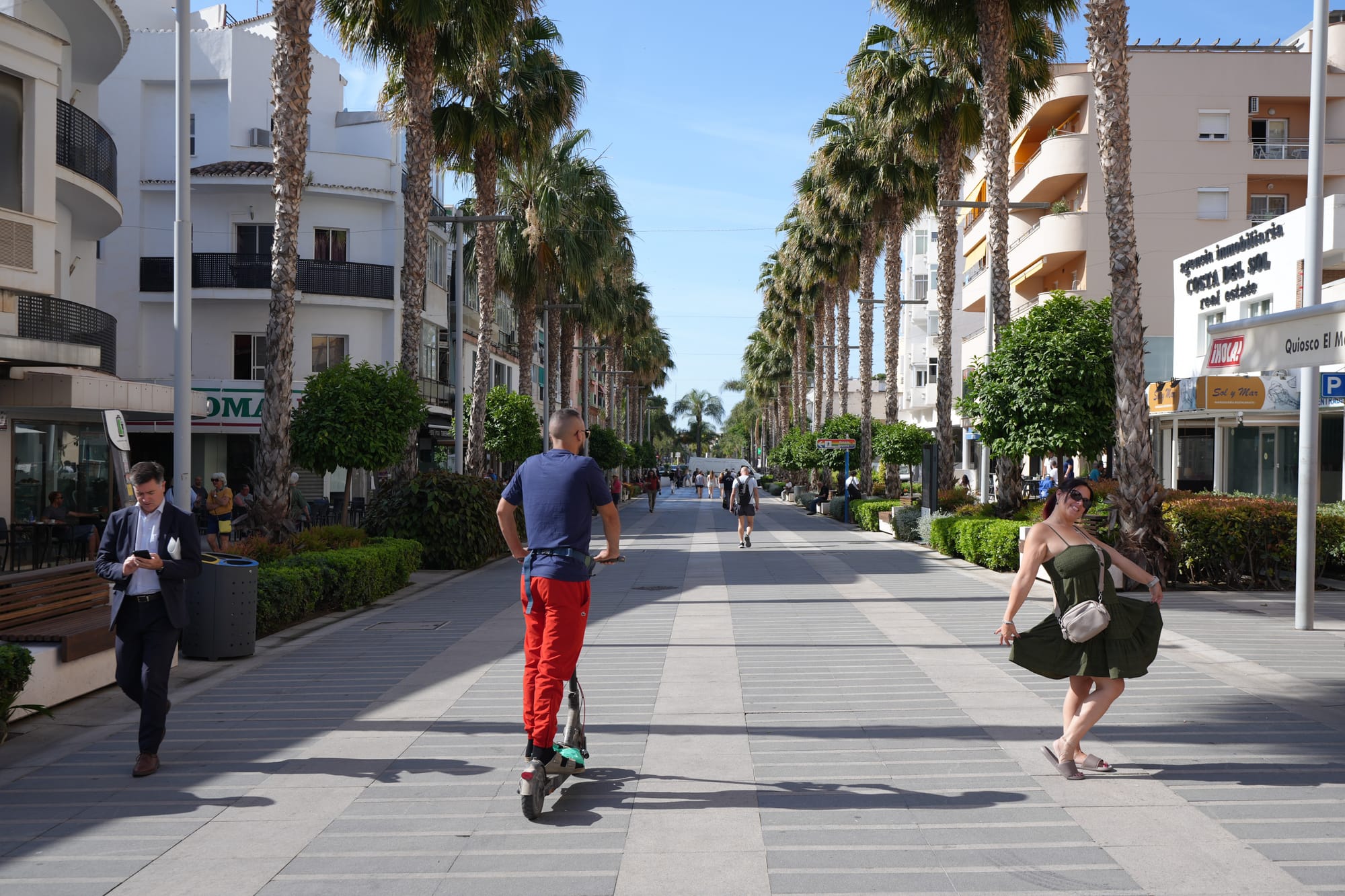
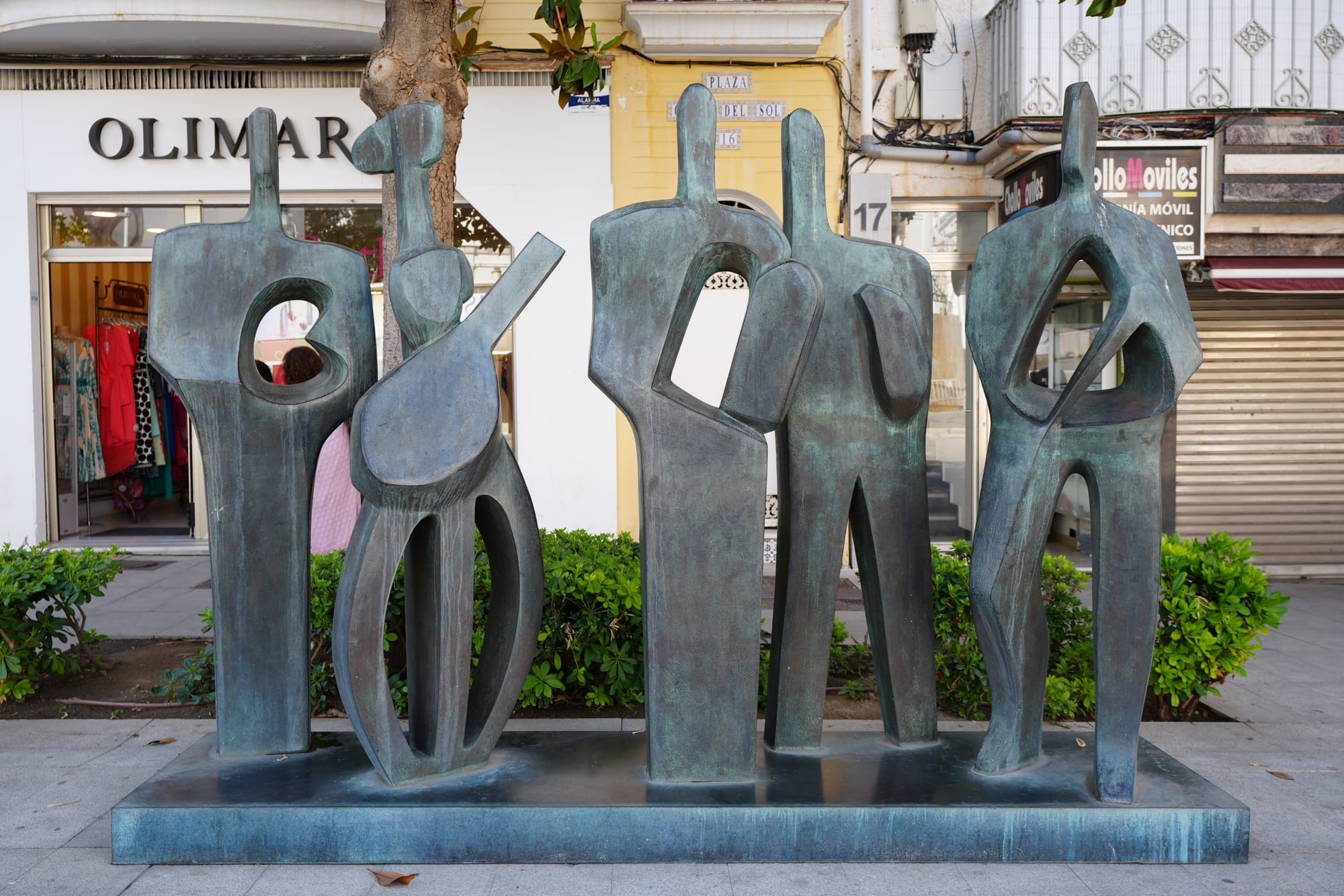
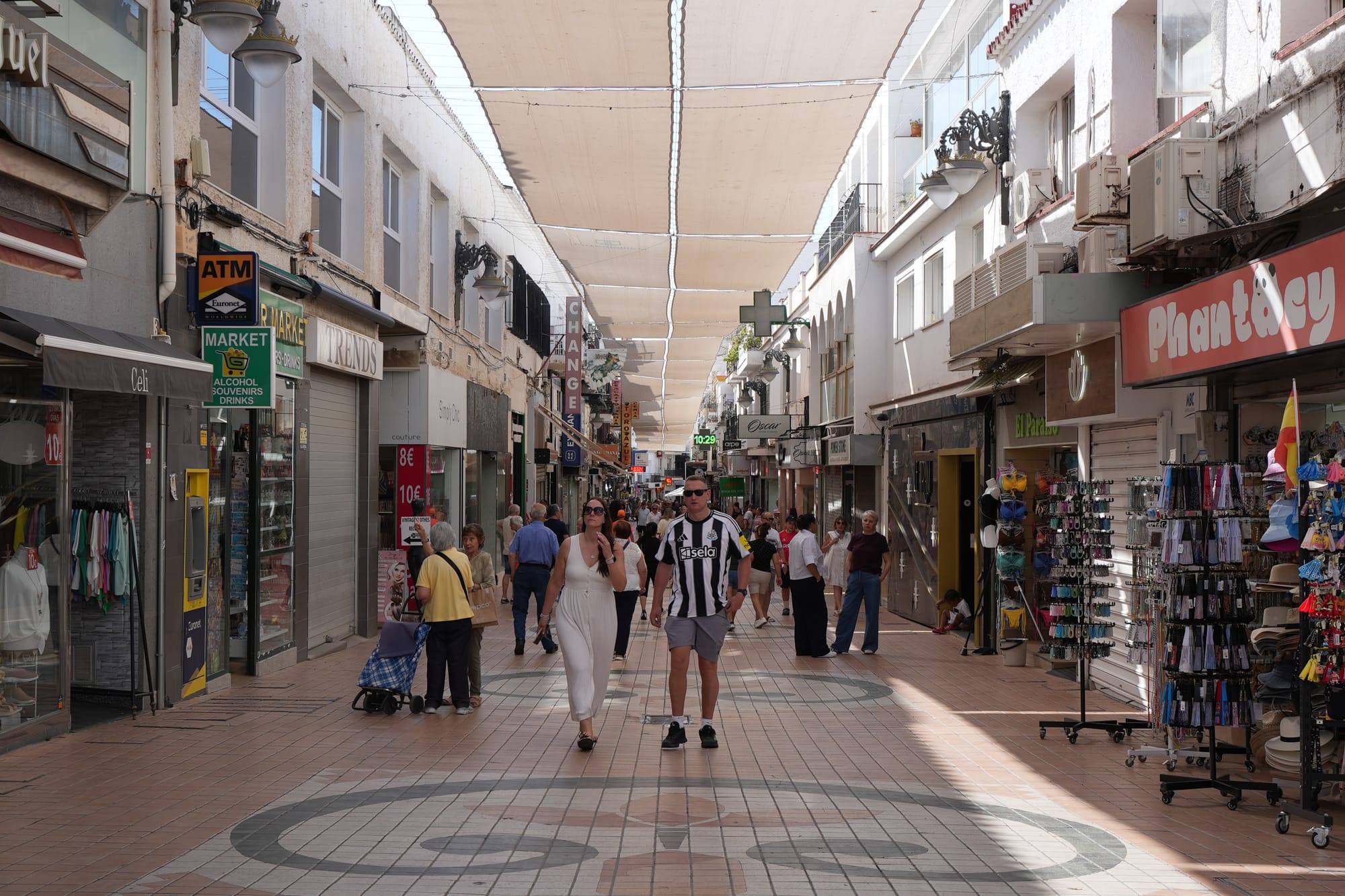
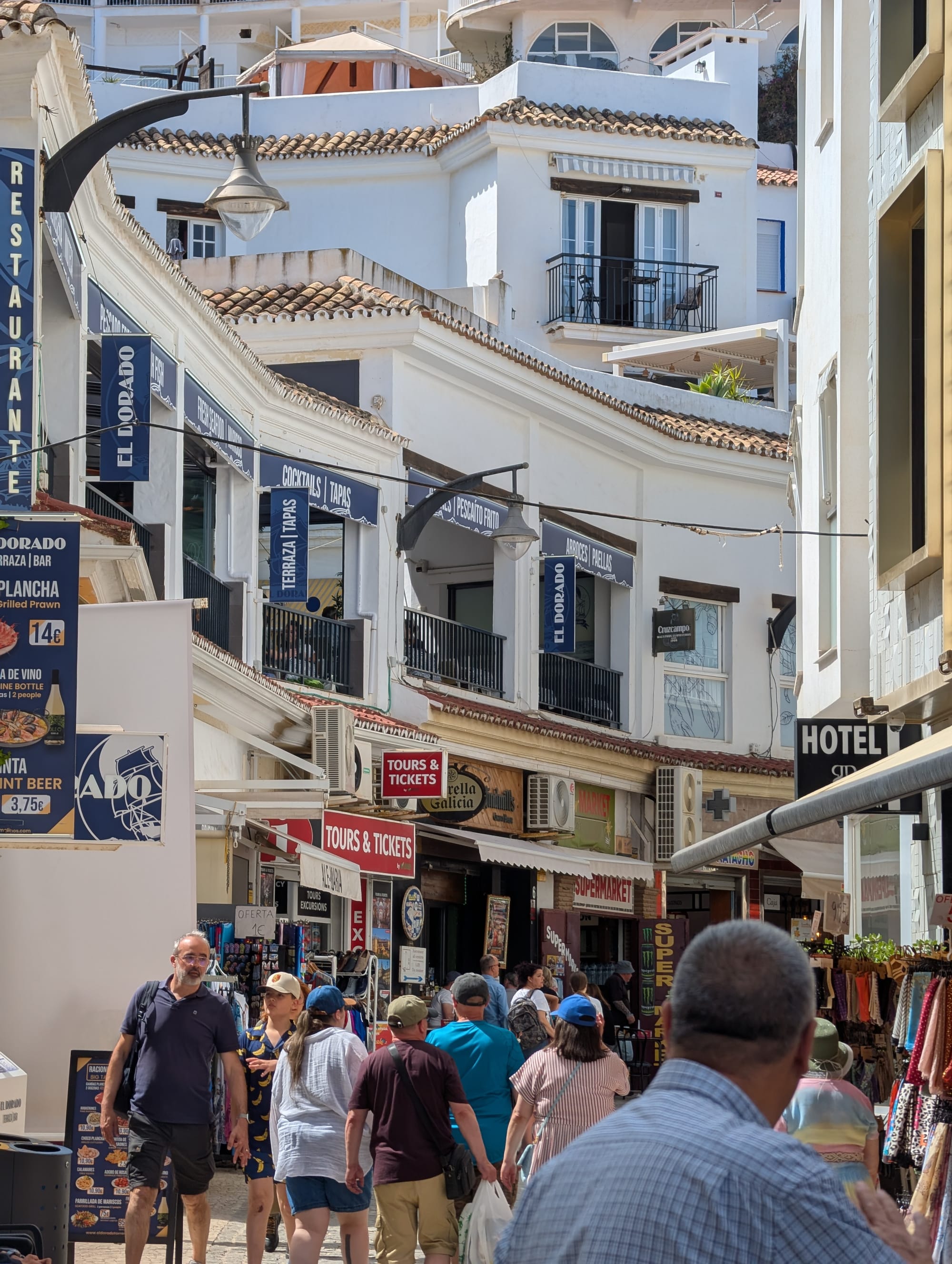
Like most town centers in Spain, the streets of Torremolinos are designed for walking.
The first bar I walked into in La Nogalera was half-empty at eight in the evening, and the first thing I noticed was that nobody was on their phone. People use WhatsApp here to coordinate where to meet. Once they're there, the phone goes in the pocket. Conversation is the entertainment.
The second thing you notice is who's there. A retired American couple at one end of the bar. An Irishman on holiday. A Dutch couple who bought a flat ten years ago. A bar owner who moved from London last year. English is the common language.
It helps that almost nobody in the bar is from Torremolinos. A resort town runs on a permanent low-grade version of the energy you had during freshman orientation. Everyone is slightly out of context, nobody has their established crew on hand, and the social cost of saying hello to a stranger is nearly zero. Americans are perfectly capable of talking to strangers. We're famous for it, actually. What we've lost isn't the skill, it's the room full of other people who showed up alone too.
You meet two kinds of Americans here. The first are men in their sixties and seventies who came up in the gayborhood era. They built friendships by showing up at the same bar on Thursdays for a decade. They know what they're looking at when they walk into the bar.
The second is men in their thirties who never experienced an analog gay neighborhood, who came of age on the apps, and who arrived in Torremolinos on a long weekend and are already thinking about their next trip back. They're not nostalgic for something they never had. They're tired of a social life that runs entirely through screens, and they've discovered, maybe for the first time, what it feels like when it doesn't.
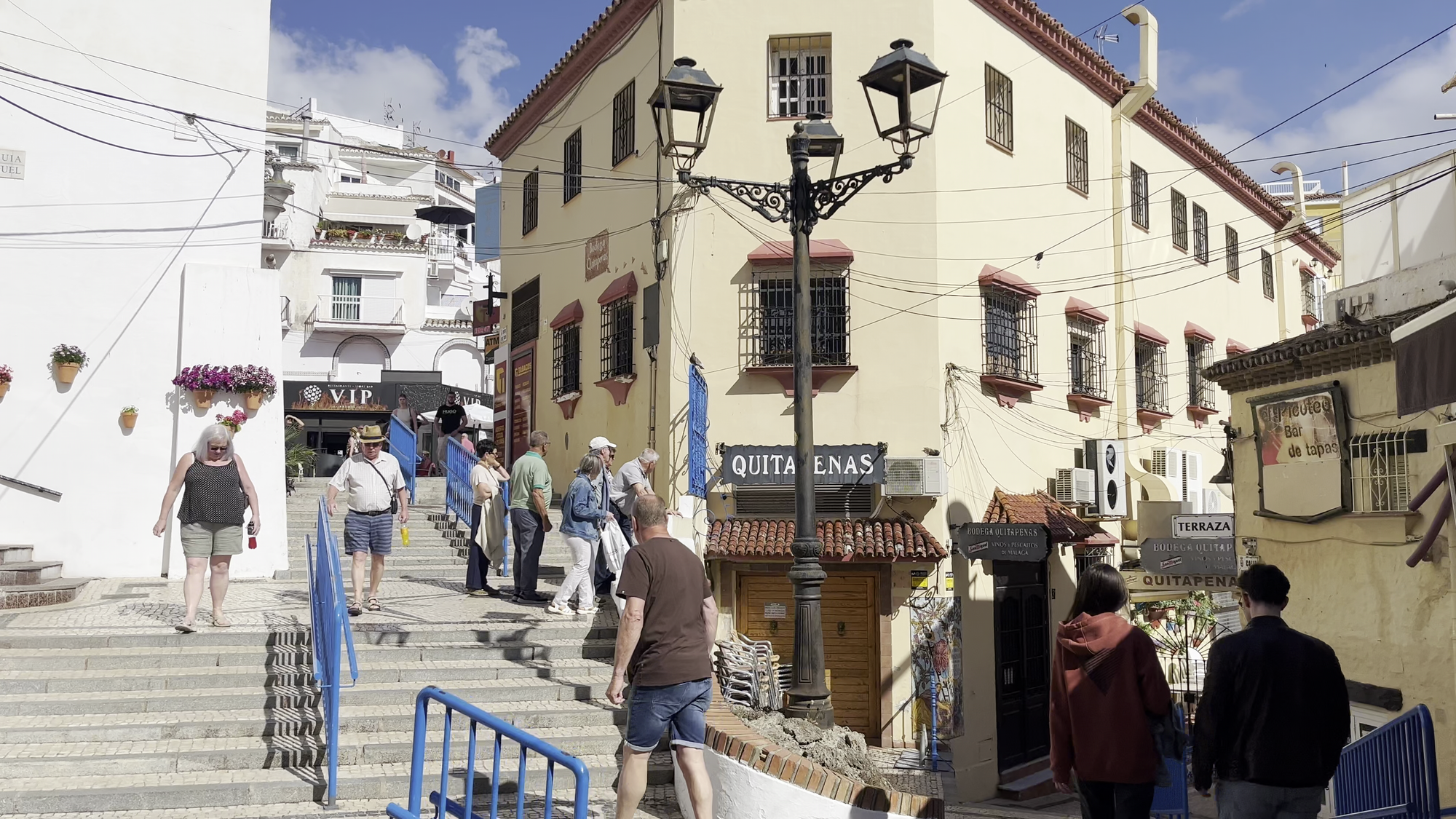
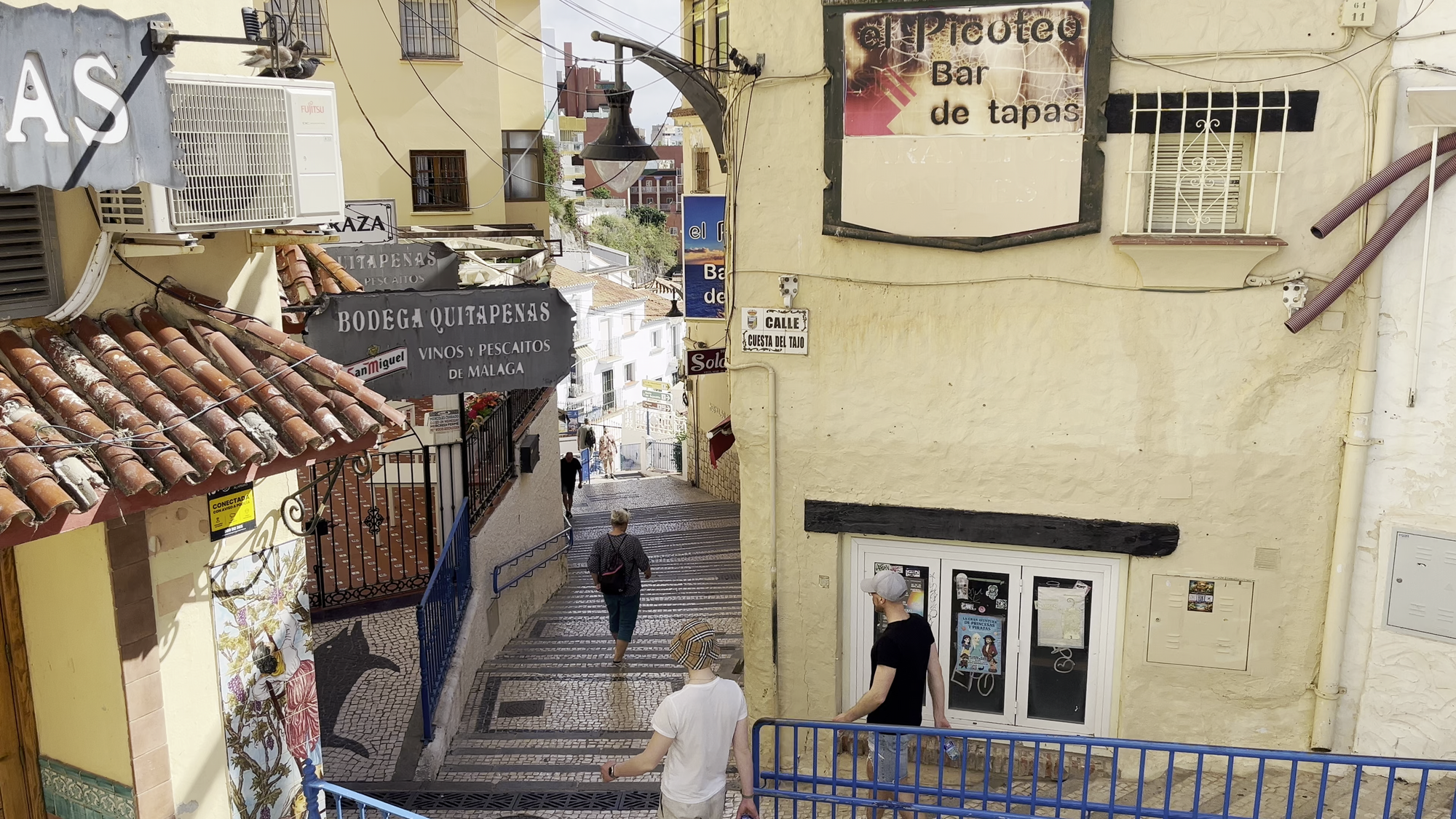
Steps down to Bajondillo beach.
My husband David and I moved to Spain a year ago without knowing where we'd land. The plan was to live in several cities long enough to actually know them. Three months in Madrid. Two in Seville. Significant stretches in Alicante and Valencia. Each of them have qualities that surpass Torremolinos: better architecture, prettier streets, more cultural prestige. By the conventional metrics of where a couple of gay men should retire in Spain, any of them was a more obvious choice, but we're buying a house in Torremolinos.
Torremolinos may not be the prettiest city, but it has the strongest sense of gay community we found anywhere in Spain. The thing we'd been looking for without quite naming it turned out to be here, in the city we'd visited last and almost skipped.
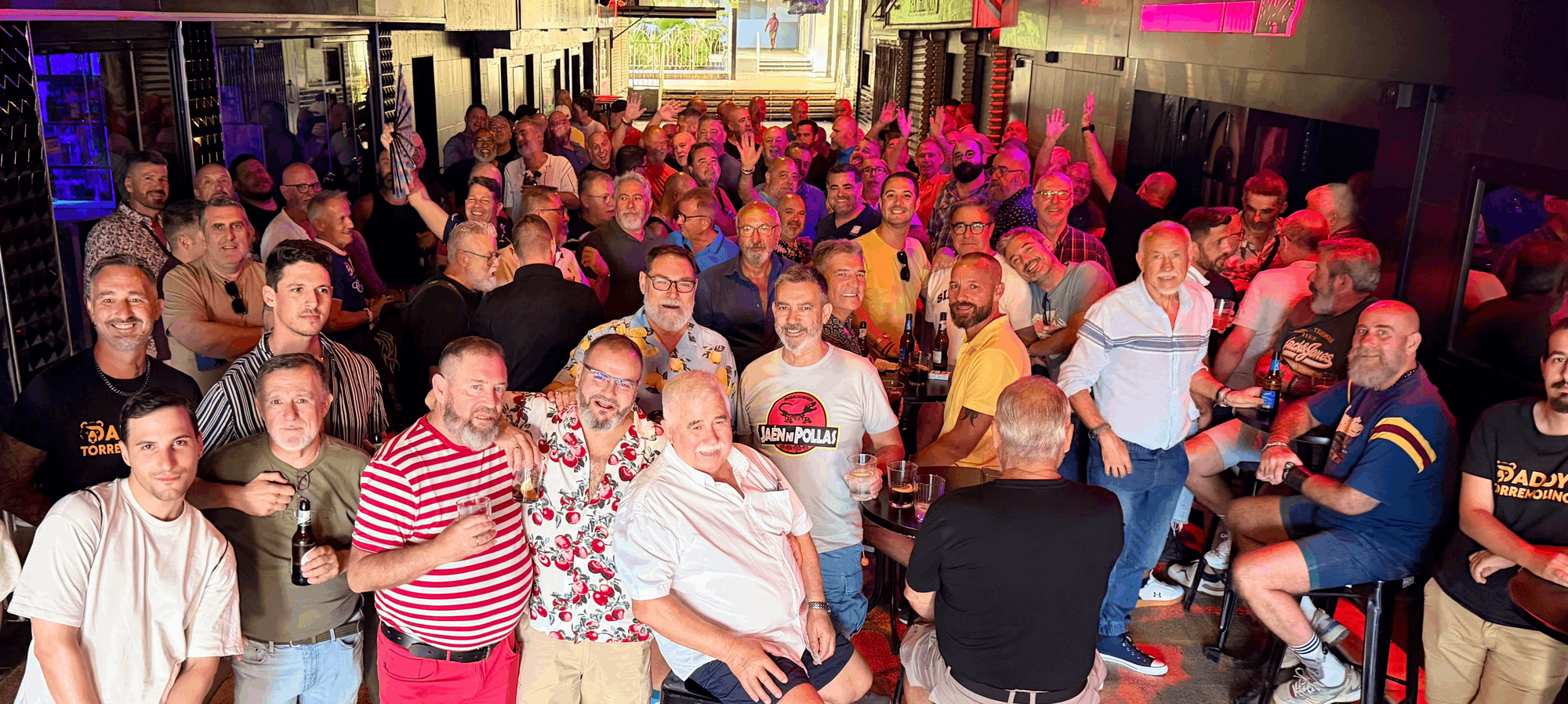
In our first couple of months we've gone to movie nights and a weekly Spanish-language learning meet-up organized through local WhatsApp and Facebook groups like Daddys Torremolinos. David started a hiking group that has already brought people together for several treks through the nearby mountains. None of this is unusual here. It's what people do. Somebody plans something, somebody else shows up, and the next time around the somebody-else has brought a friend. It's the most ordinary thing in the world, and it's also the thing American gay life has been quietly losing the muscle for.
We are not unusual in moving here. Almost every American gay couple we've met in the process of moving has the same biography. They lived in Wilton Manors or Palm Springs, sometimes both at different points in their lives. They were the kind of people who had always sought out gay community, who organized their adult lives around it, who knew the difference between a gay neighborhood and a neighborhood with gay people in it. They came to Torremolinos for a vacation or a long stay and recognized something that had quietly disappeared from the American versions over the last decade or two.
The mechanics are not as hard as you'd think. Spain's Non-Lucrative Visa lets retirees and people with passive income stay for a year and renew. The Digital Nomad Visa, introduced in 2023, opened a parallel door for younger remote workers. Some people split the year using the ninety-day Schengen rule and never get a visa at all. Spending less than six months a year in Spain prevents you from becoming a tax resident and subject to Spains taxes on world-wide income and assets. None of these paths is frictionless. Spanish bureaucracy is slow and occasionally absurd, and the paperwork for buying property tests the patience of people who thought they'd developed patience. But it works. People do it every week.
There are honest trade-offs as well. English will get you most of the way through life on the Costa del Sol, which means a lot of Americans never learn enough Spanish to have a real conversation with a Spaniard. That also means the community they're building skews expat-heavy. The summers in Spain are hot, although a little more tolerable here on the coast. But when you've lived in South Florida, Washington, D.C., or Palm Springs, the summer temperatures don't seem all that bad. The Spanish state will, sooner or later, ask you to do something at a government office that makes no sense.
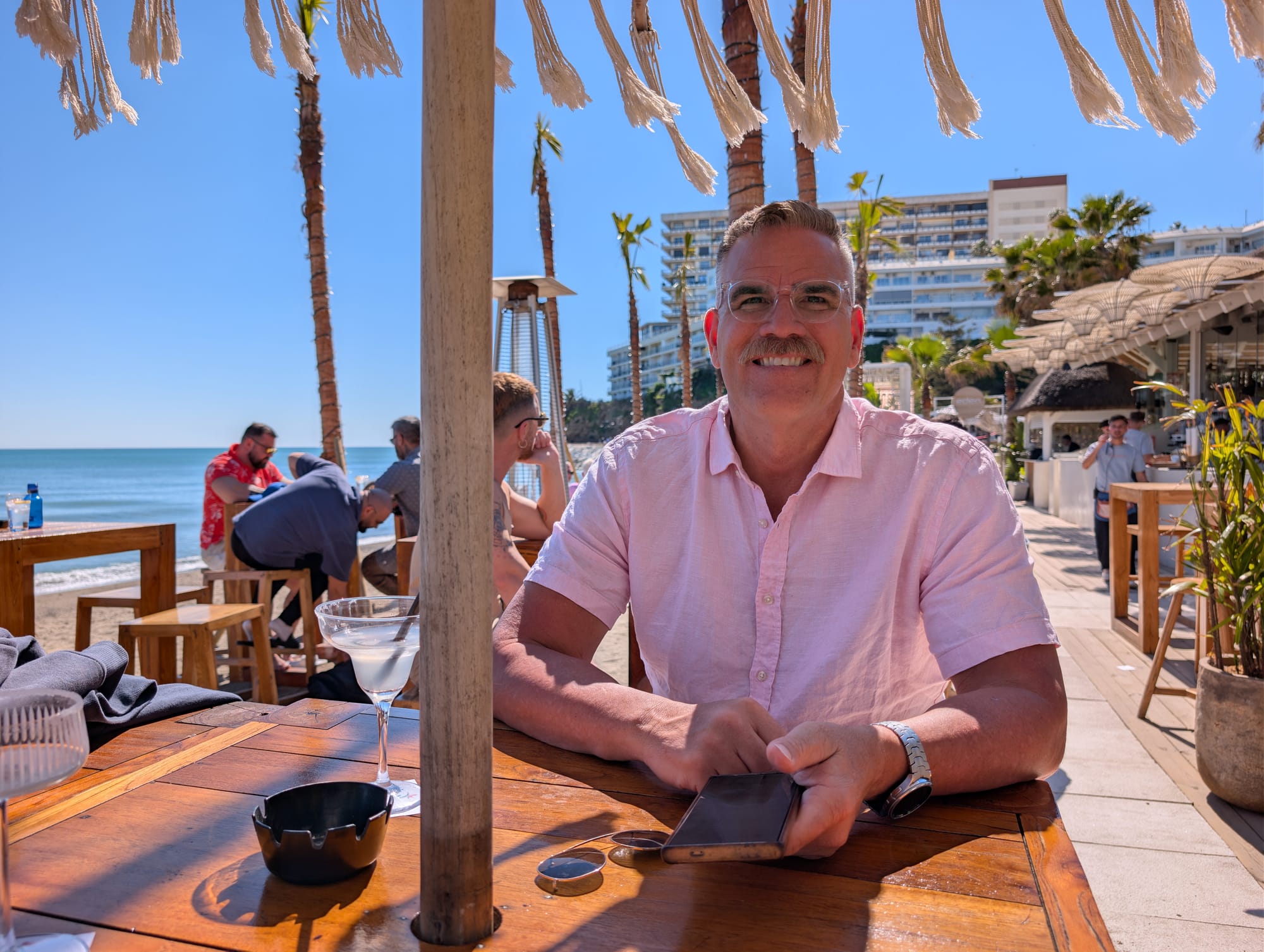
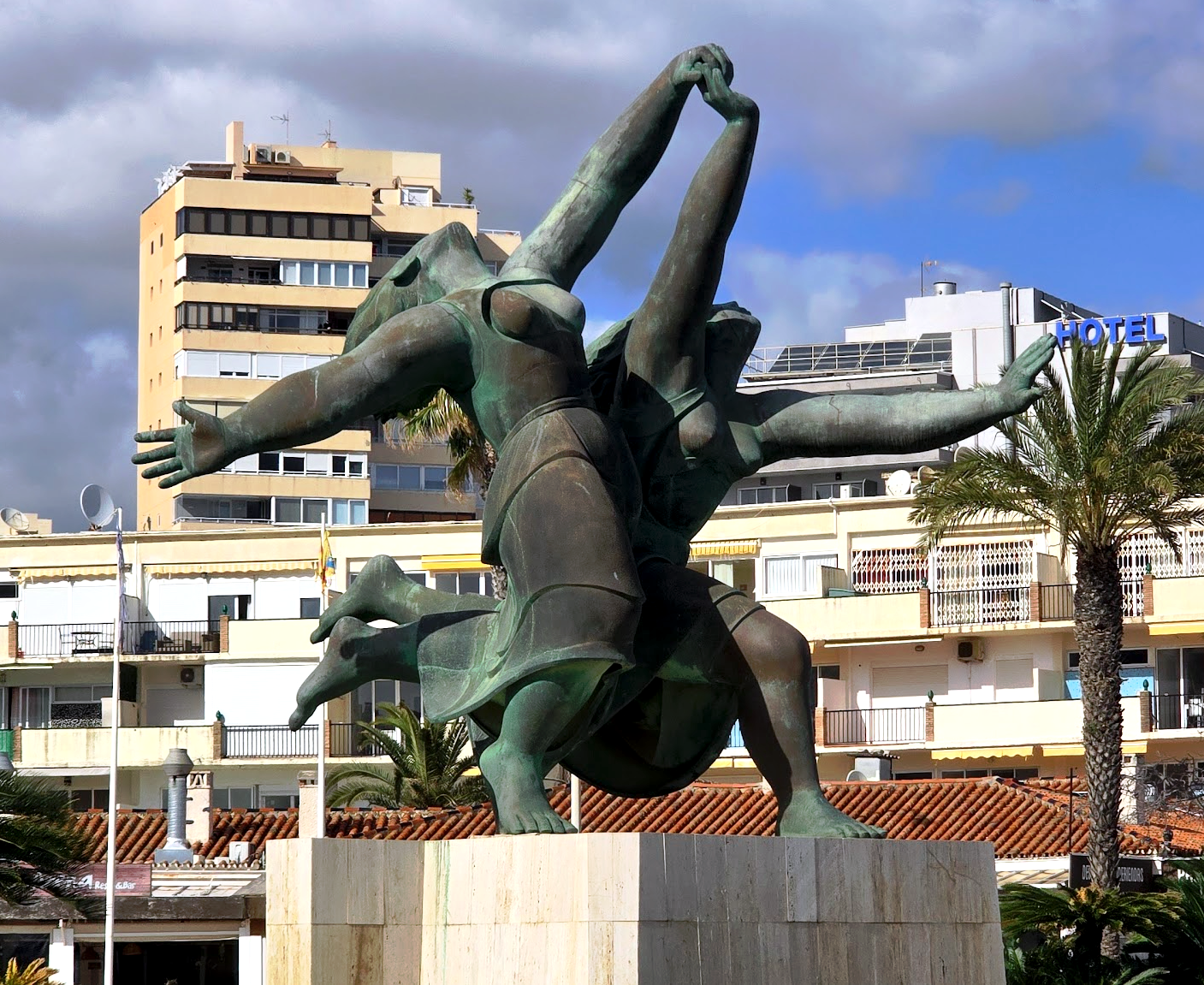
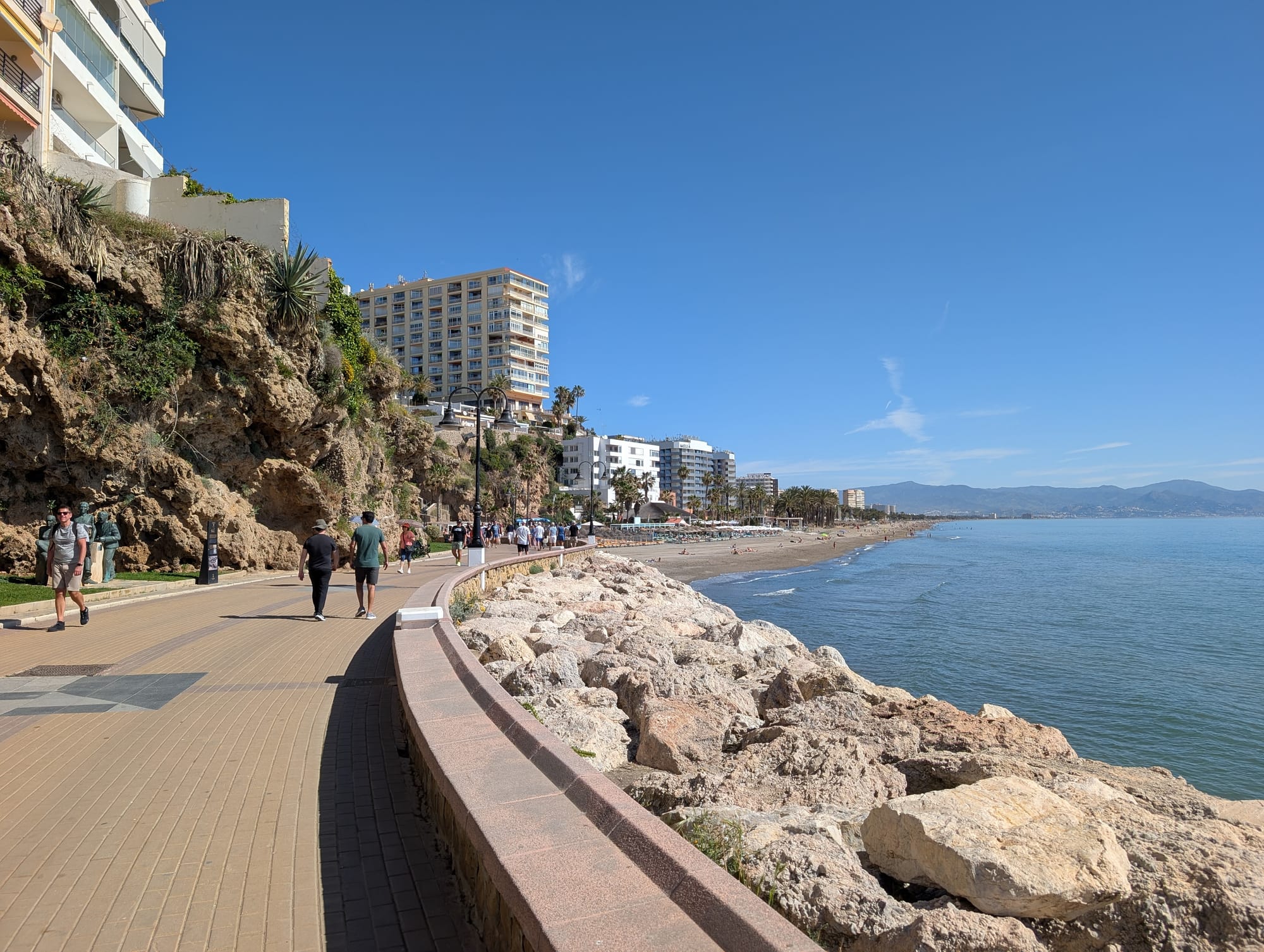
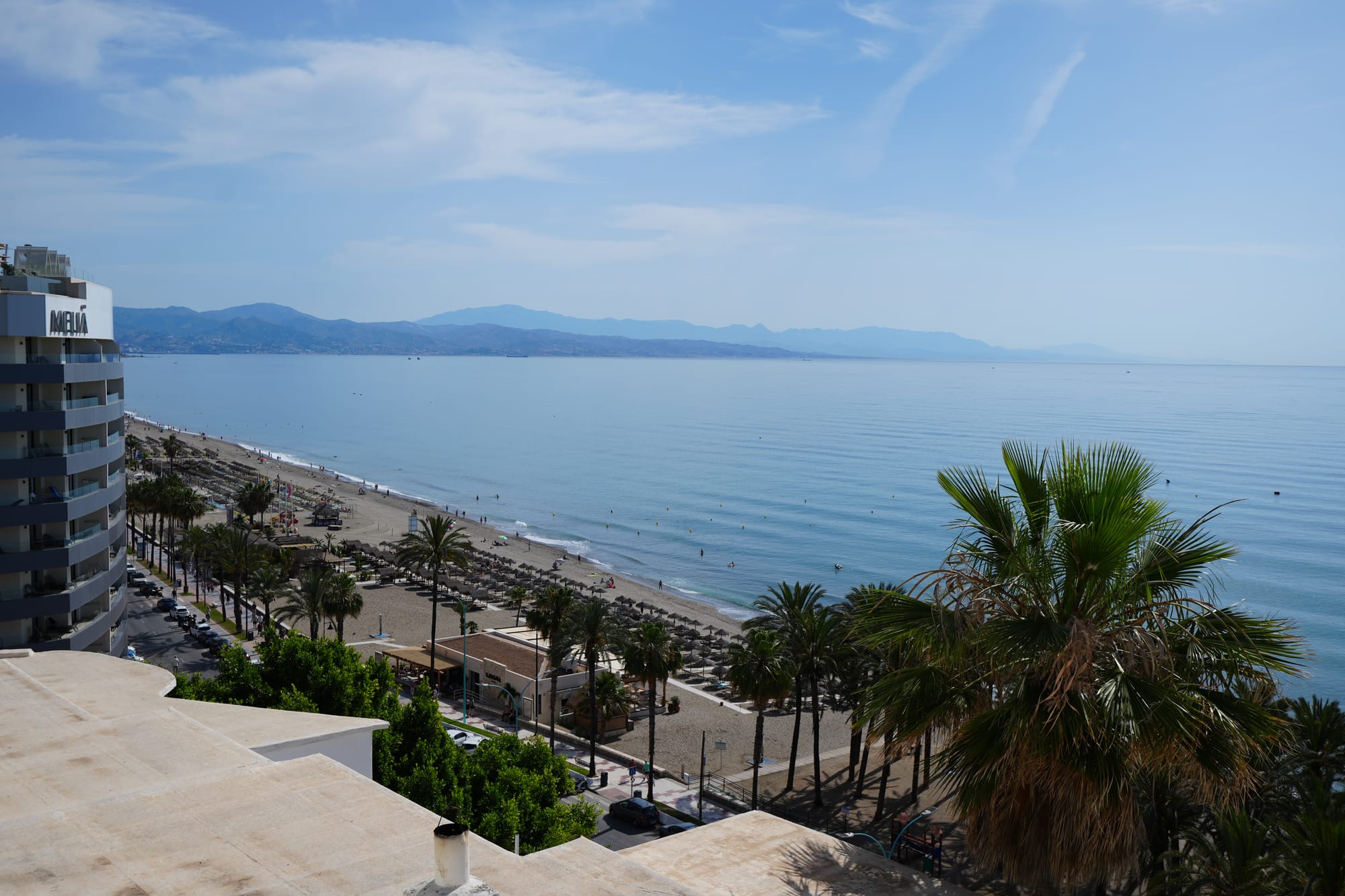
Bajondillo Beach
I should be careful about claiming Torremolinos is unique. I haven't lived in Wilton Manors in a decade, but the photos I see of a recent Friday night bear bust show hundreds of men gathering in one place. The community there is still vibrant, but it is operating under pressure. Florida has spent the last few years passing laws designed to make gay life smaller and quieter: 'don't say gay' in schools, rainbow crosswalks scraped off the asphalt, a constant background hum of legislative hostility. It's exhausting to feel like you're under attack as a baseline condition of your daily life. Some of the men we've met here came not because their community had thinned out but because they were tired of having to defend it.
So Torremolinos may not be the only place rediscovering how to balance life and technology. The pendulum swung hard toward the disconnected version, and a lot of people are now quietly figuring out how to swing it back. Some are doing it where they already live. Some are moving.
Gay men have often been on the front lines of cultural change. Community has never been a default for us; we had to build it deliberately. What we figure out about how to live, the rest of the culture sometimes figures out a few years later. If a generation of gay men is now relearning how to leave the house and meet each other in person, that's worth paying attention to. It may be the first expression of a larger societal desire for the kind of connectedness that comes with a physical community instead of a virtual one. The reclaiming of our Third Places.
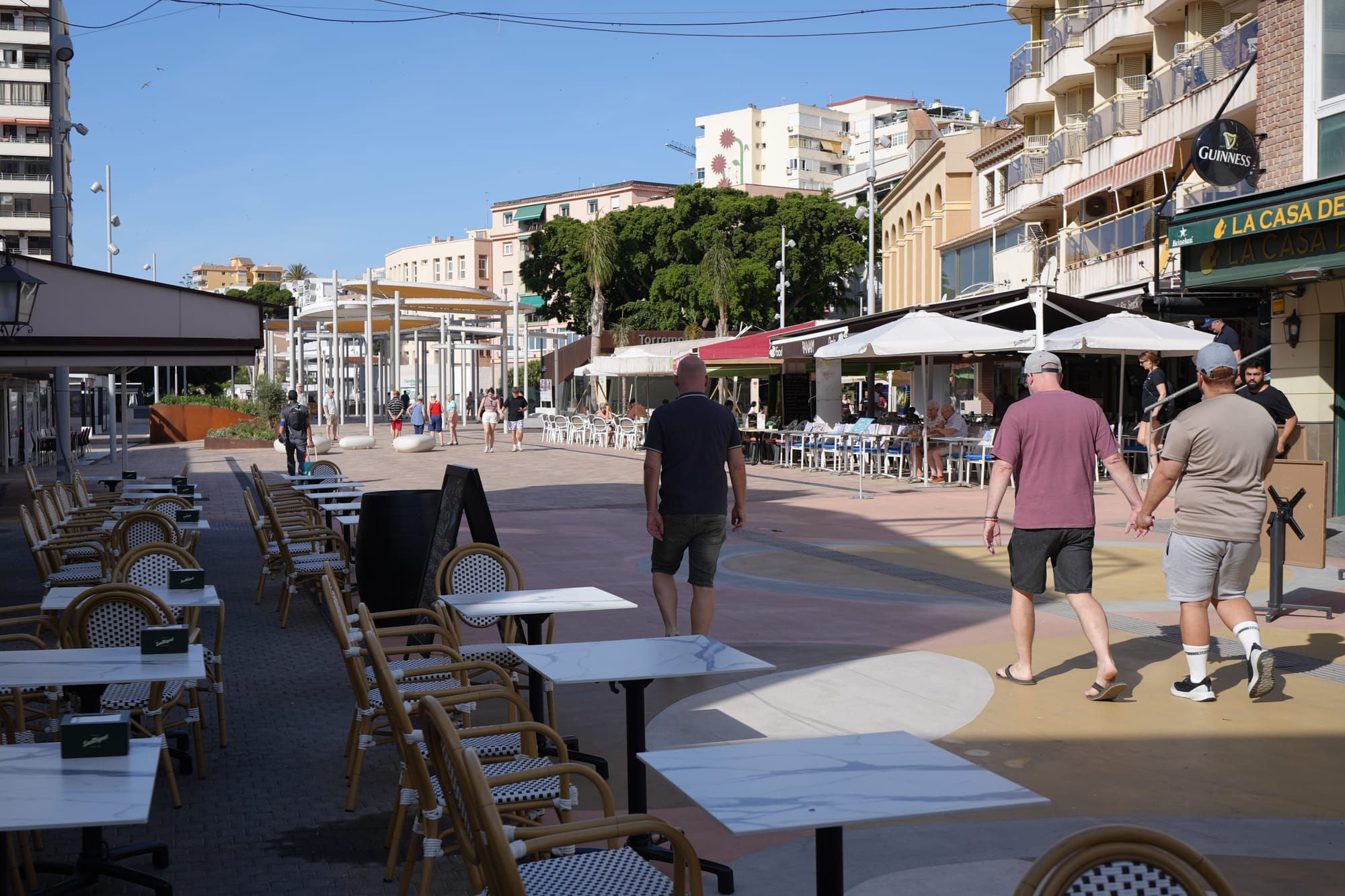
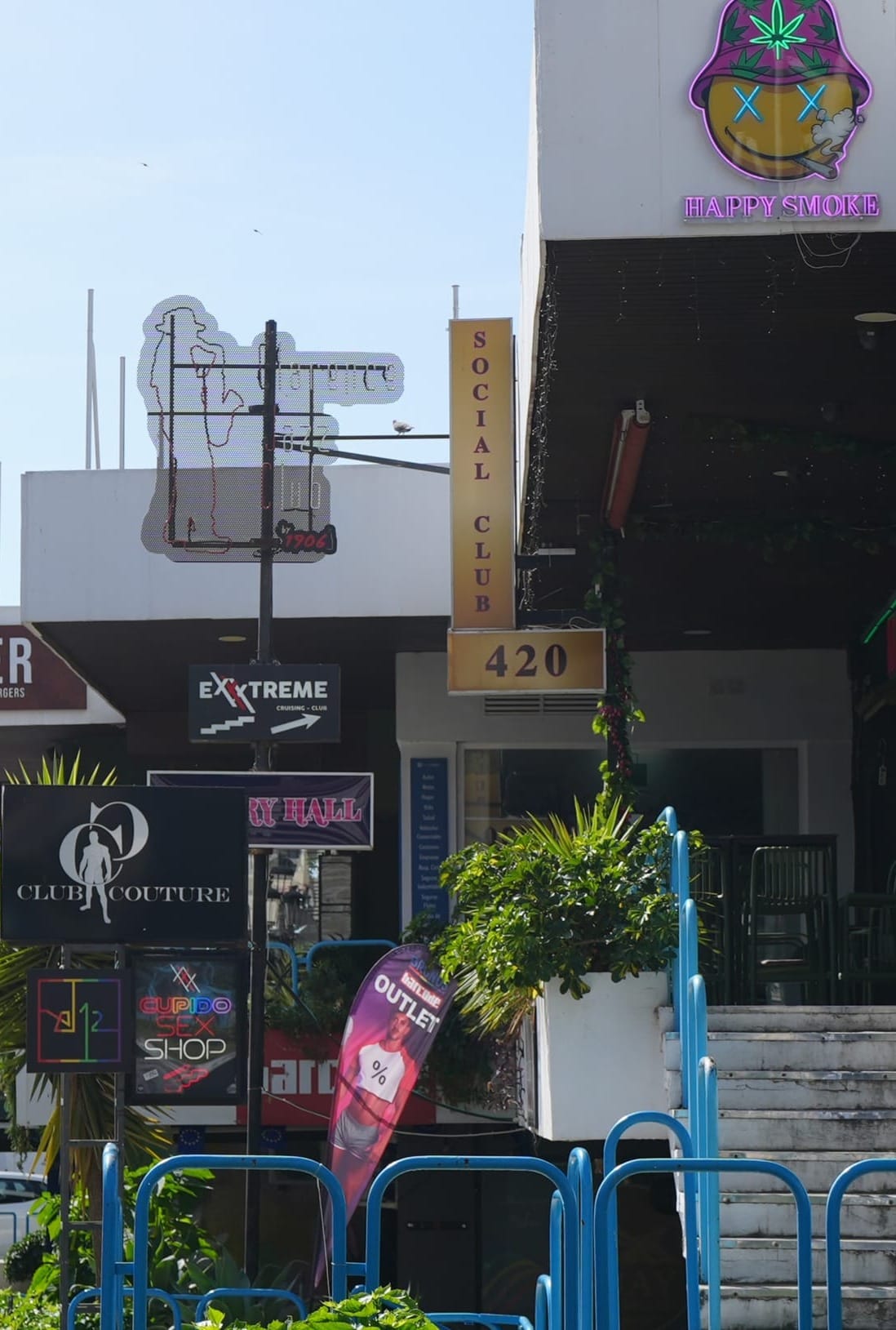
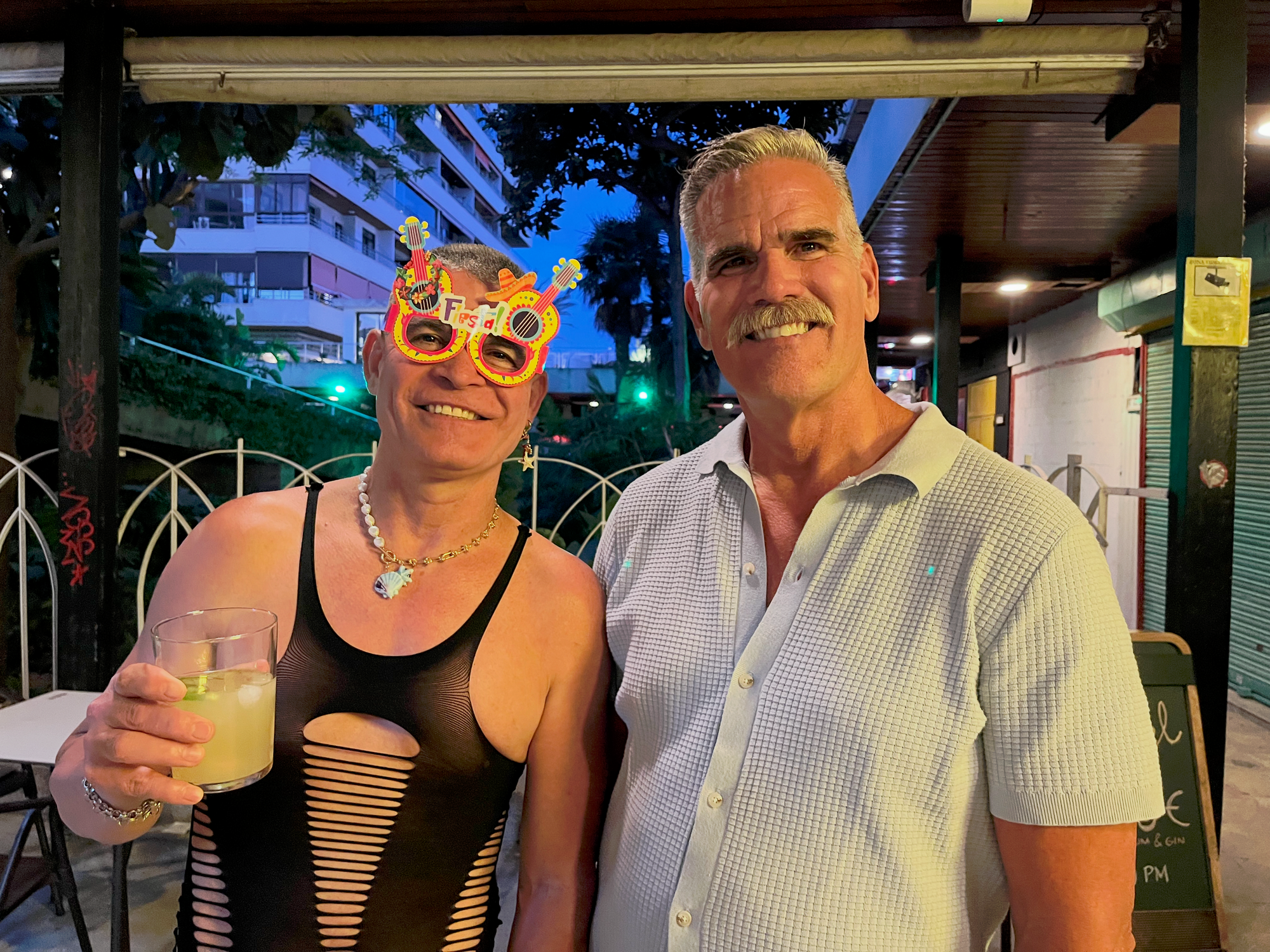
La Nogalera | Bar owner Carlos & David
Torremolinos has plenty of drinking, plenty of sunburns, plenty of dimly lit back rooms. It's not a wellness retreat. What it offers is more specific: a place where the basic infrastructure of casual gay life, the part you can't replicate on an app, is still intact. You can walk into a bar alone and leave with plans for tomorrow. You can have a conversation that doesn't end with someone asking what you do. You can be sixty-five and still part of the scene rather than aged out of it.
If you're visiting for a weekend, the trick is to slow down. Skip the headline clubs the first night. Find a small bar in La Nogalera, order something, put your phone away, and stay for an hour longer than you meant to. That's the entire technology. It works because everyone else is doing it too.
The lesson Torremolinos has to teach isn't really about Spain. It's about what we've let go of, and what it takes to get any piece of it back. We didn't realize how much of the loneliness of late American life we'd accepted as normal until we were once again reminded that it could be different. Life is much better here. And I think we're about to learn, all of us, that life is better when we just show up.

Comments ()