

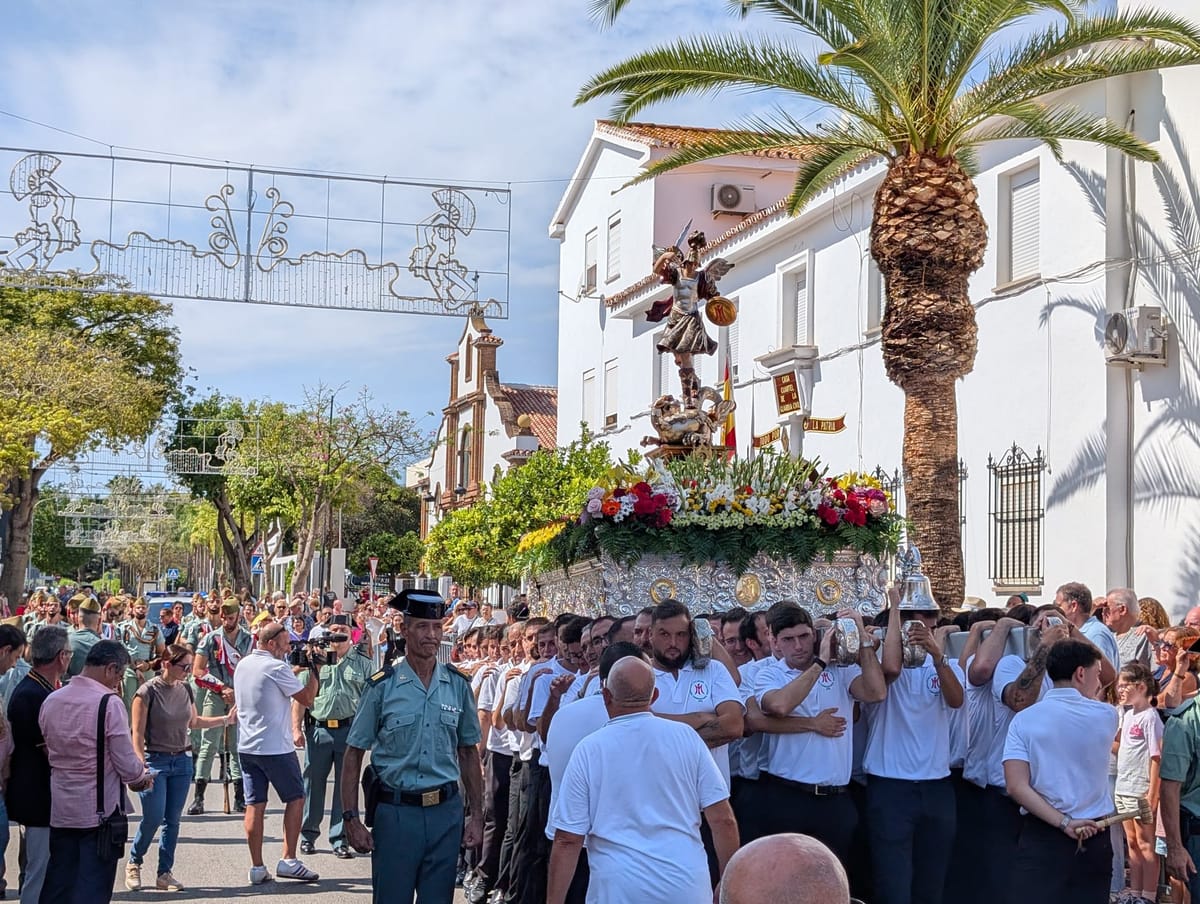
Every September 29, on the Feast of Saint Michael, a warrior angel leaves his church in Torremolinos and is carried through town on the shoulders of over 60 bearers. Accompanied by the mayor and the Spanish Legion, the procession closes the town's biggest celebration of the year.
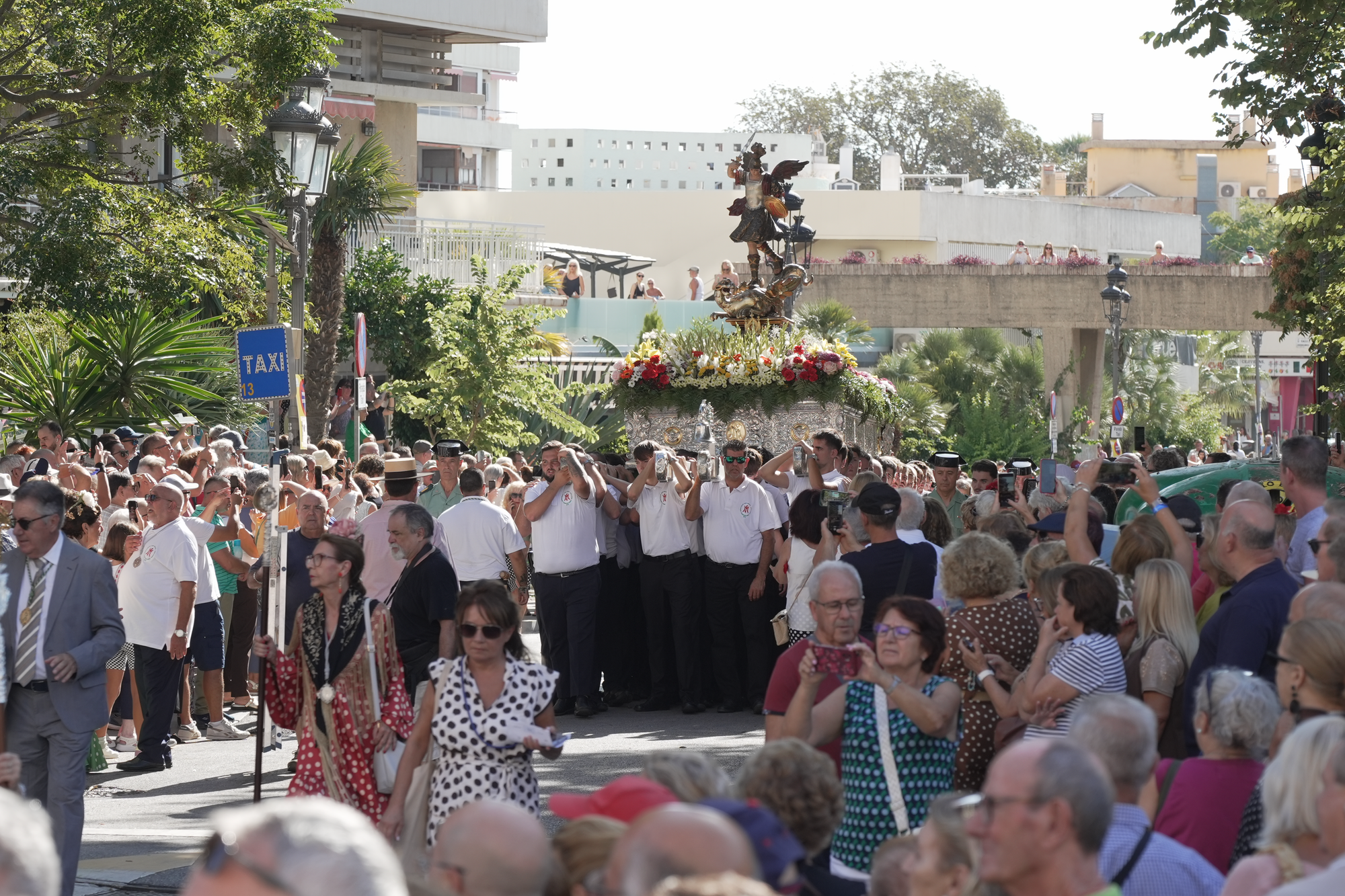
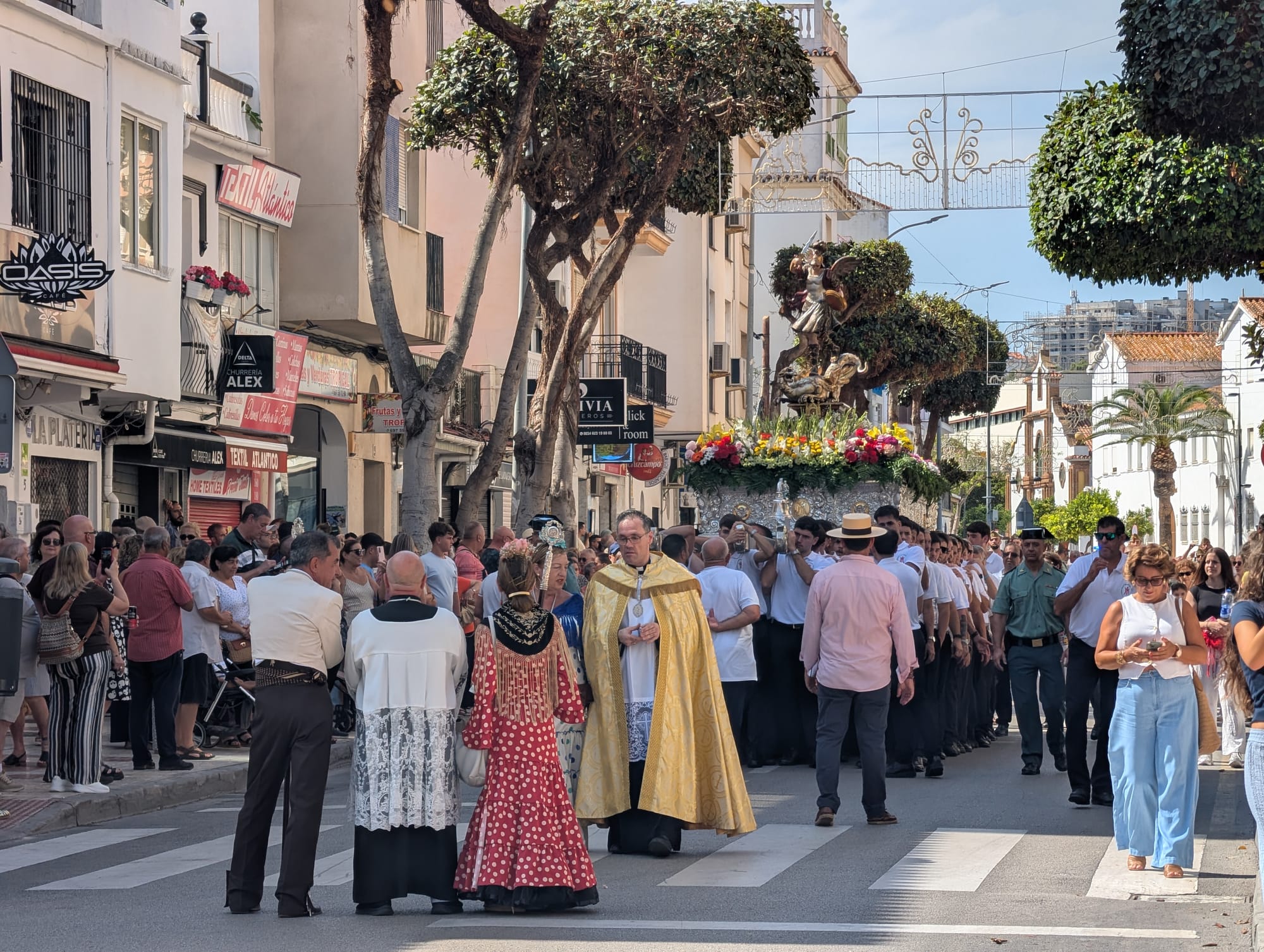
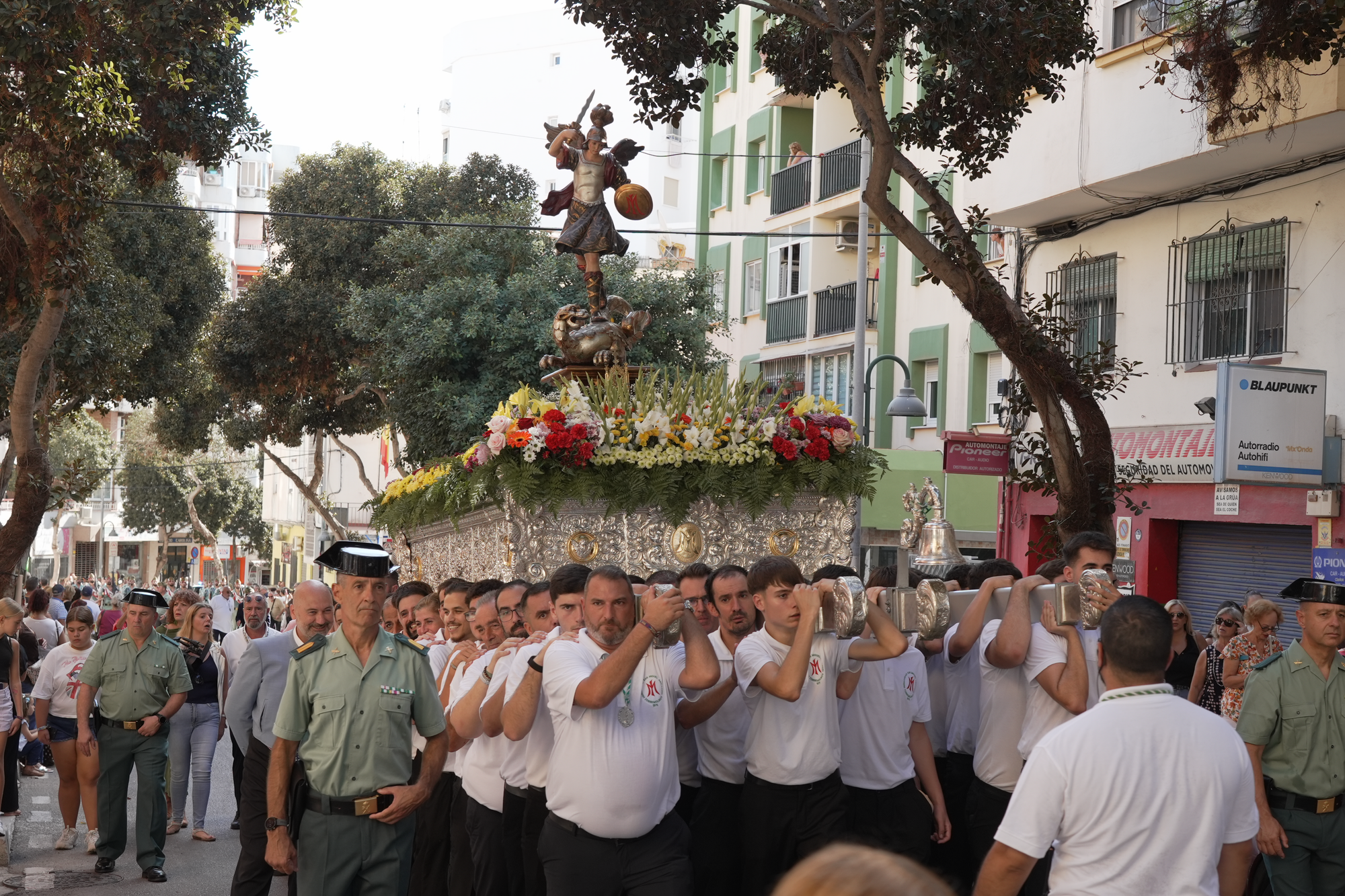
At ten in the morning of September 29, Saint Michael came out of his church in Torremolinos. He is the town's patron, and every year on his feast day his statue is carried through the streets: a warrior angel with his sword raised over a defeated demon, standing on a flower-covered platform called a trono, on the shoulders of more than 60 bearers. If your idea of Torremolinos is a beach resort of high-rise hotels and nightclubs, it is a strange thing to see. Saint Michael has been here longer than any of that.
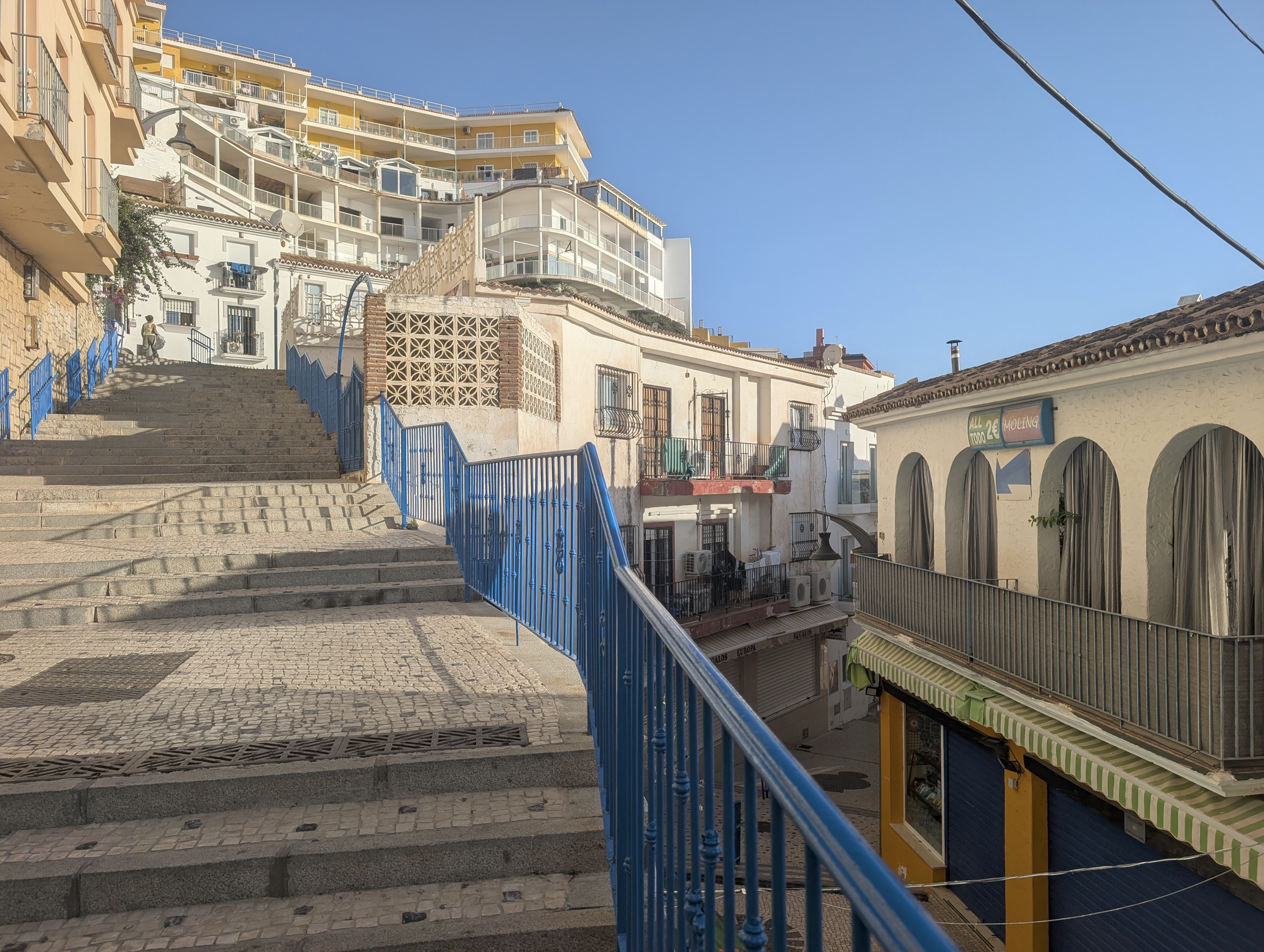
His church is the small white one at the top of the 192 steps between my front door and the center of town. I wrote about it last time, in "The Church at the Top of the Steps," when I had just learned that a festival was about to take over my street. I said I'd be walking up, and I did.
The festival is the biggest of the Torremolinos year, and it comes as the summer season winds down. It opens with a pilgrimage, the Romería, continues with a town fair, the Feria de San Miguel, and ends on the saint's feast day, the 29th, which is one of the town's two local holidays.
The Romería
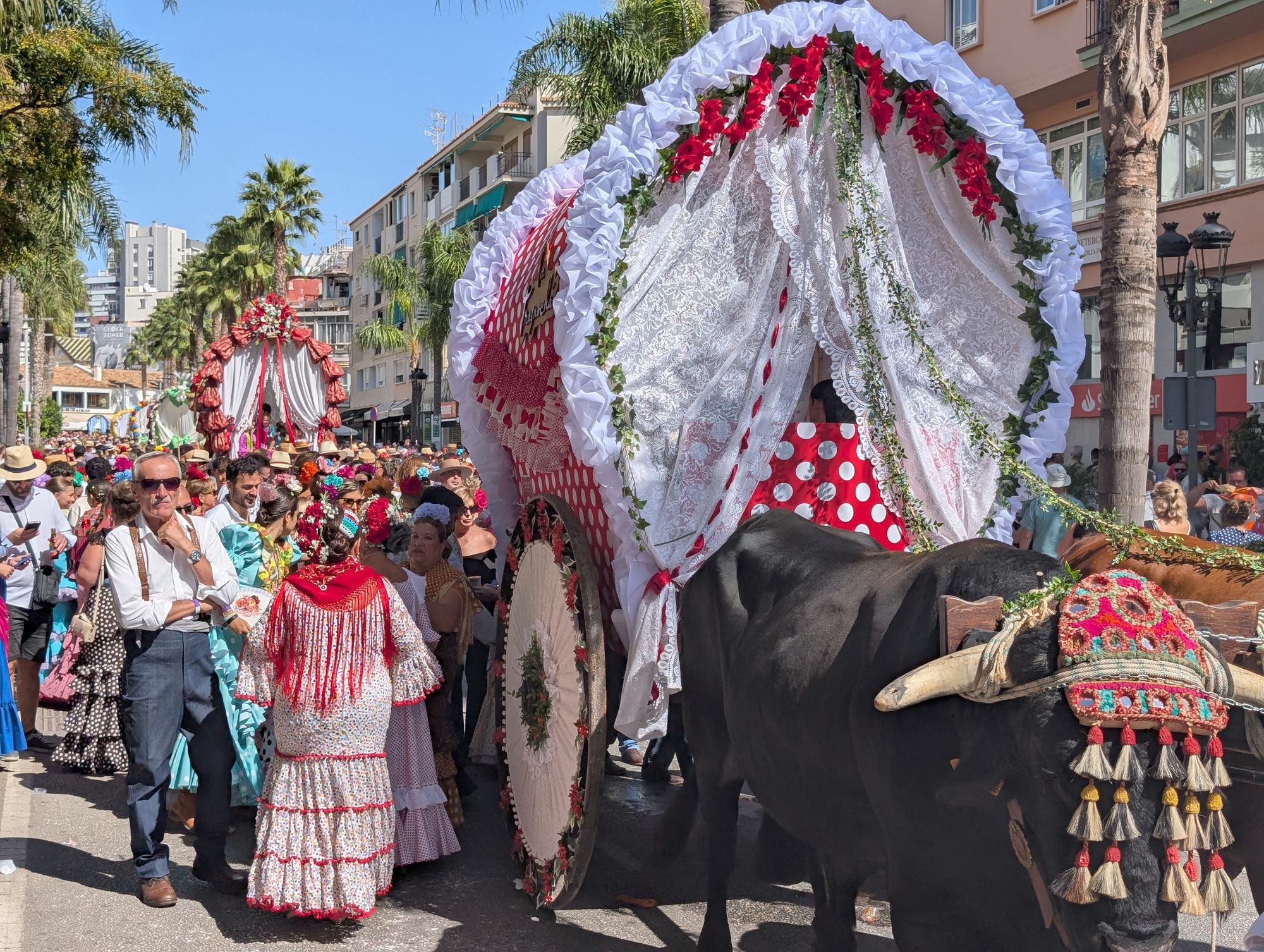
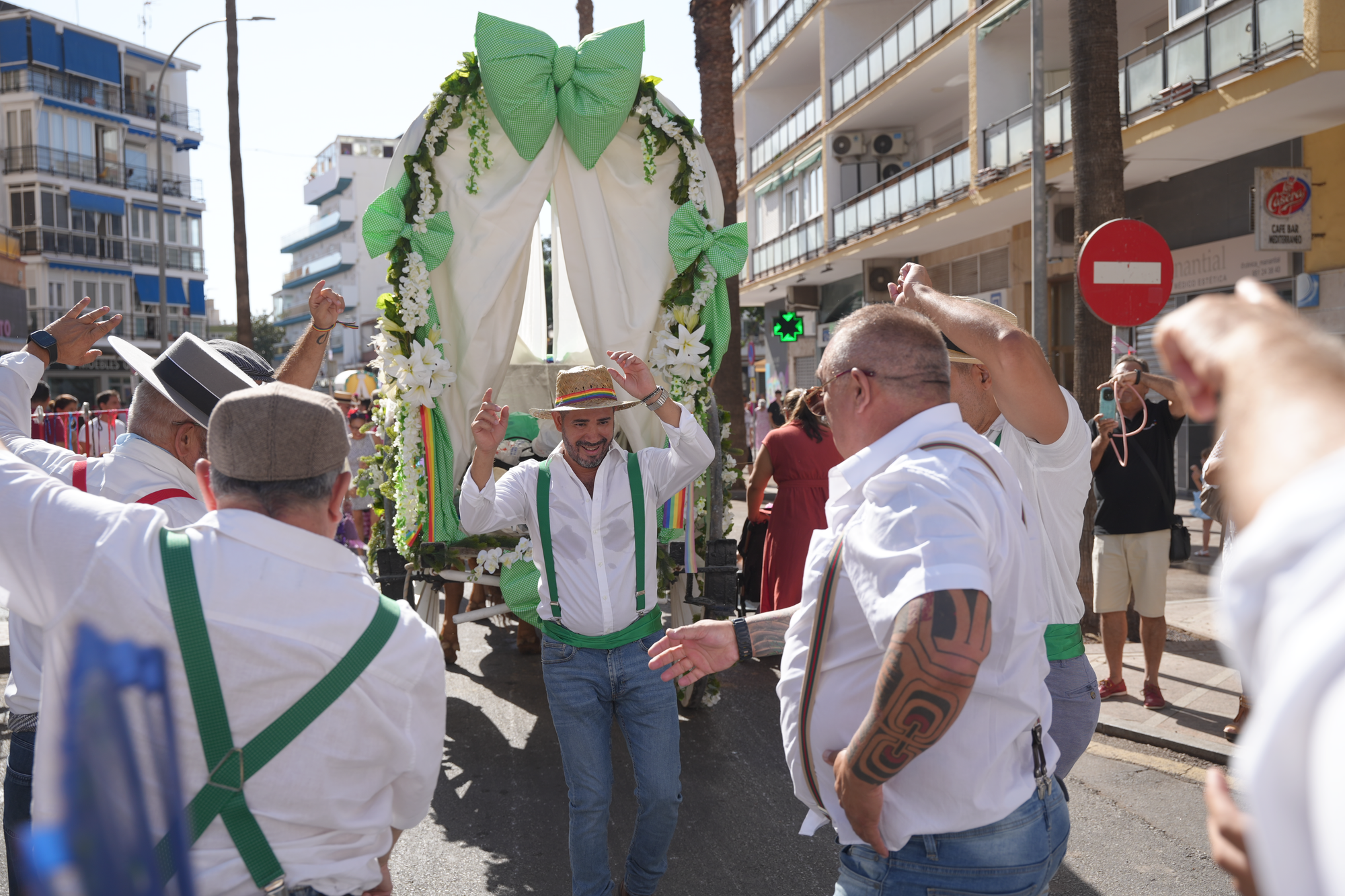
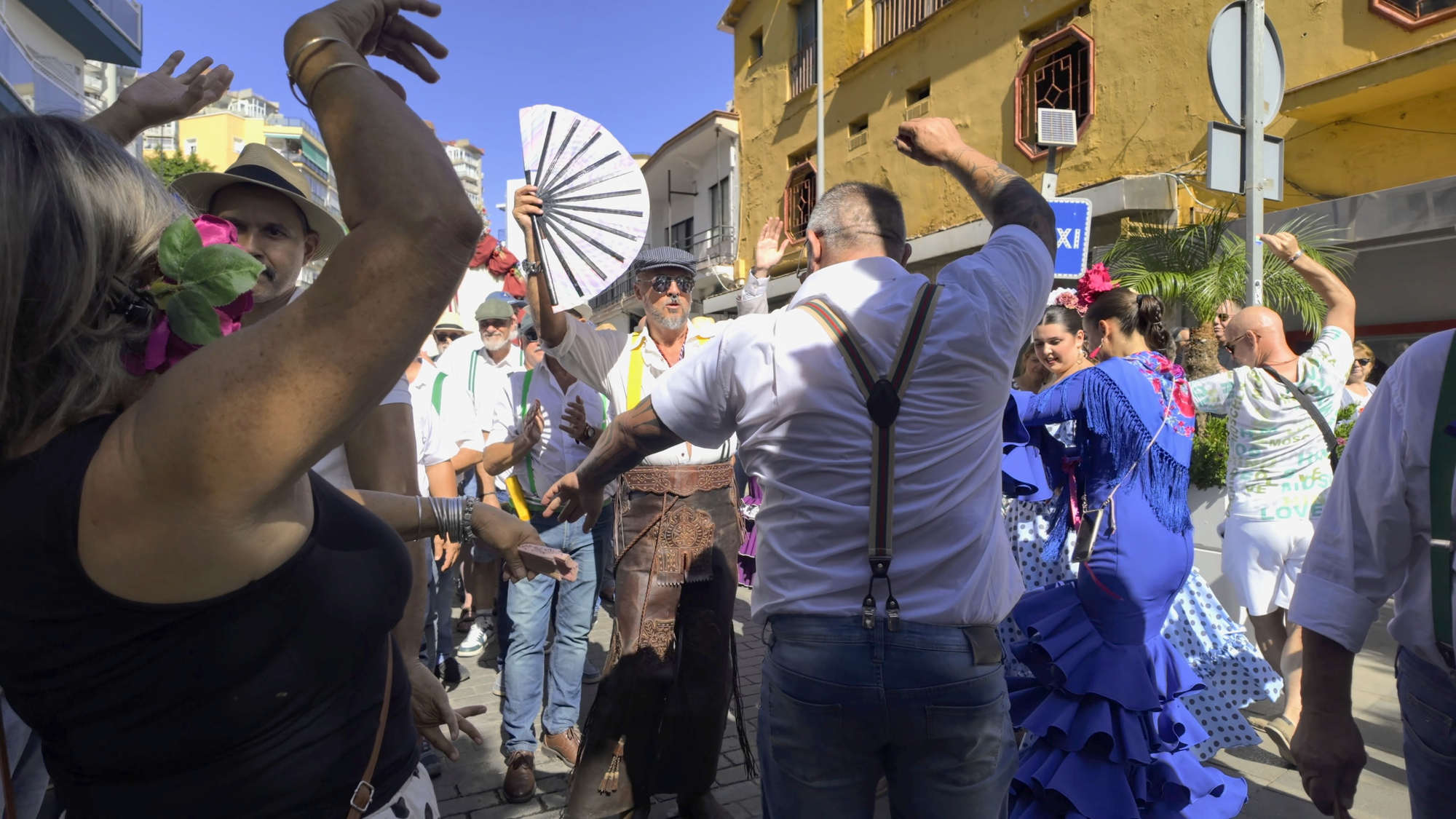
This year's Romería fell on Sunday, September 20. The pilgrims gathered in town, on Avenida de Los Manantiales, with their carts, horses and tractors. After an open-air Mass, sung by a choir in the style of Andalucía's pilgrimage songs, they set off. Their route wound through the center of town and then out to Los Pinares, the pine woods on its edge, where there is a small chapel, the Ermita de San Miguel.
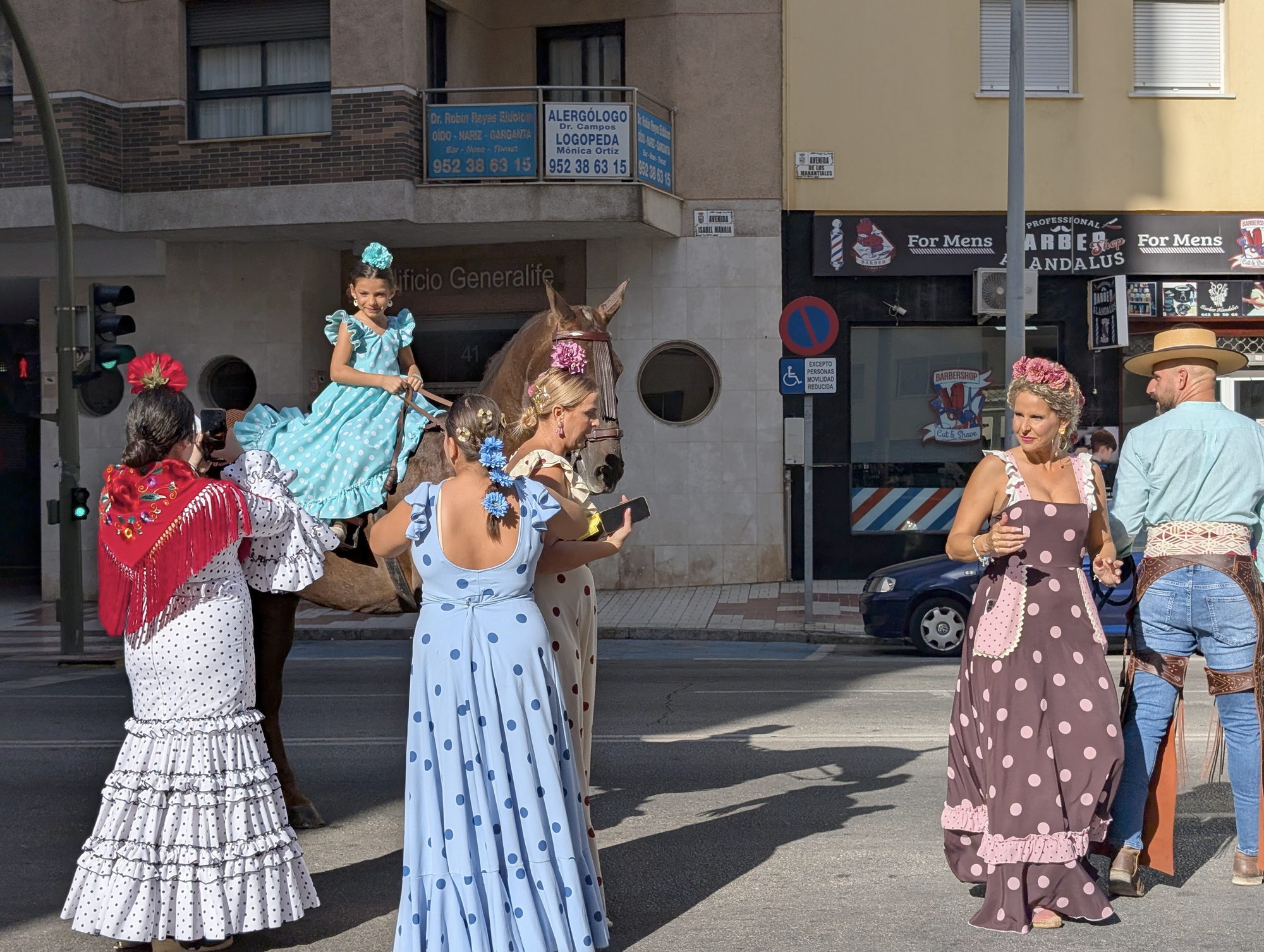
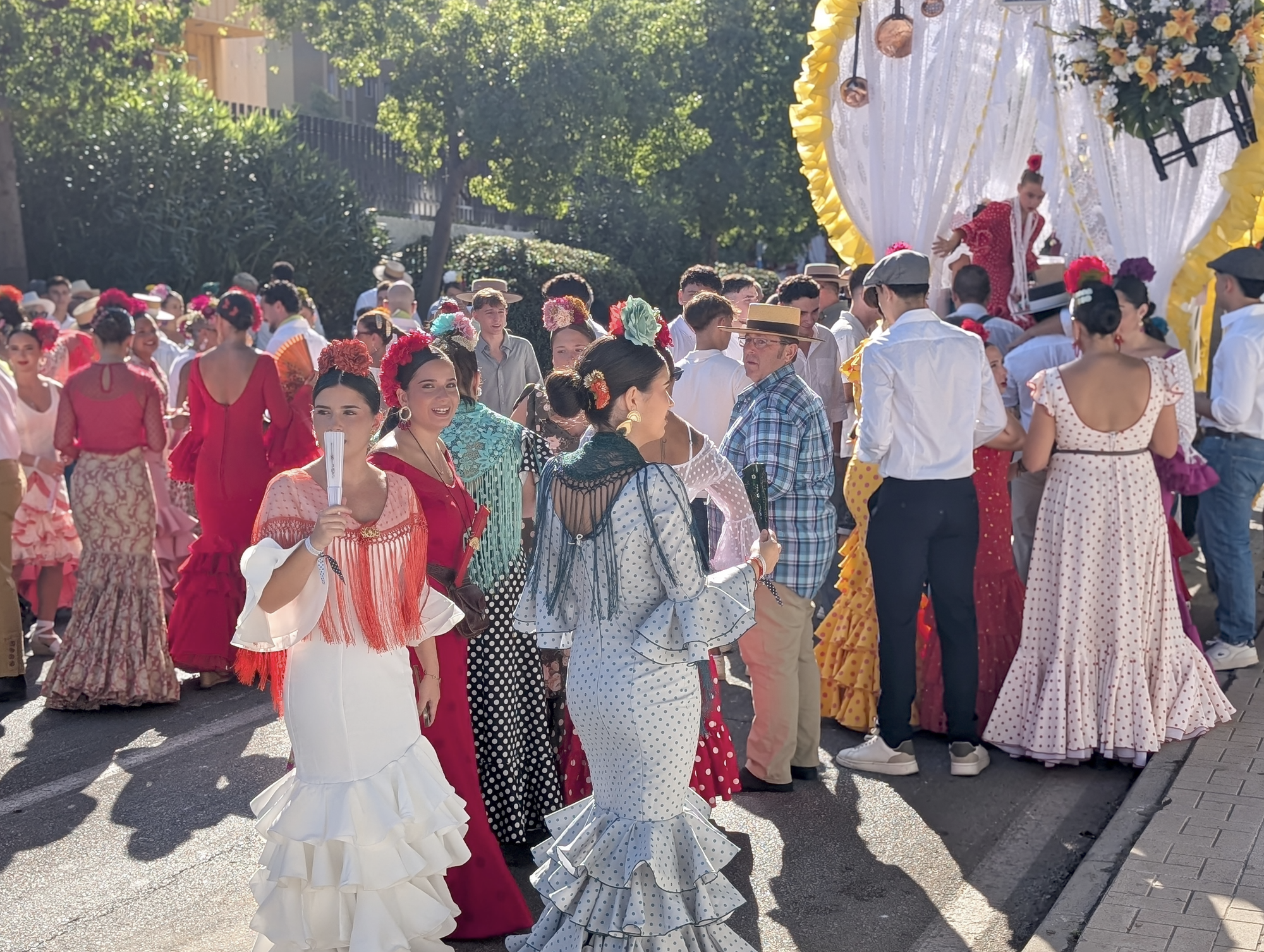
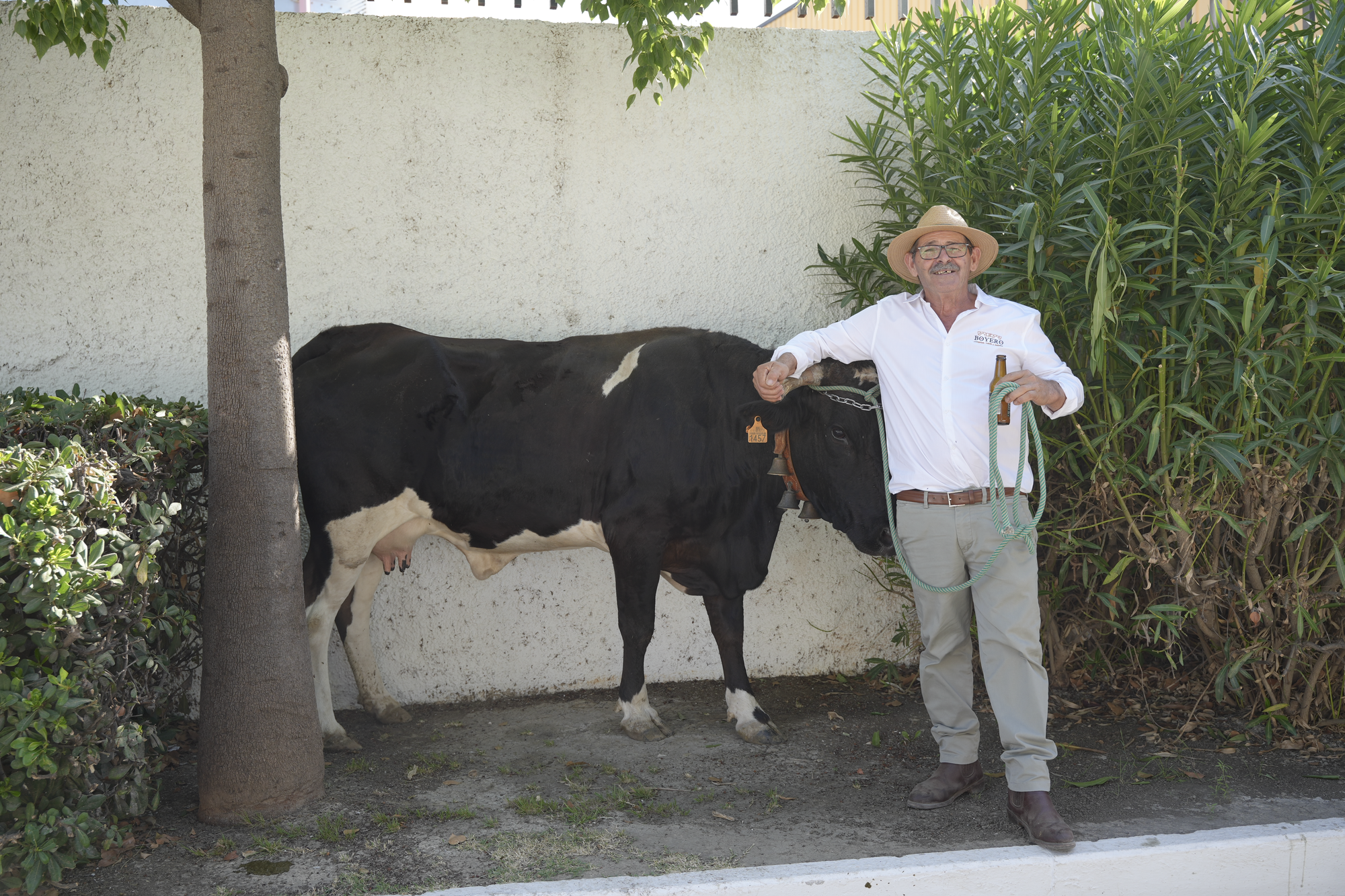
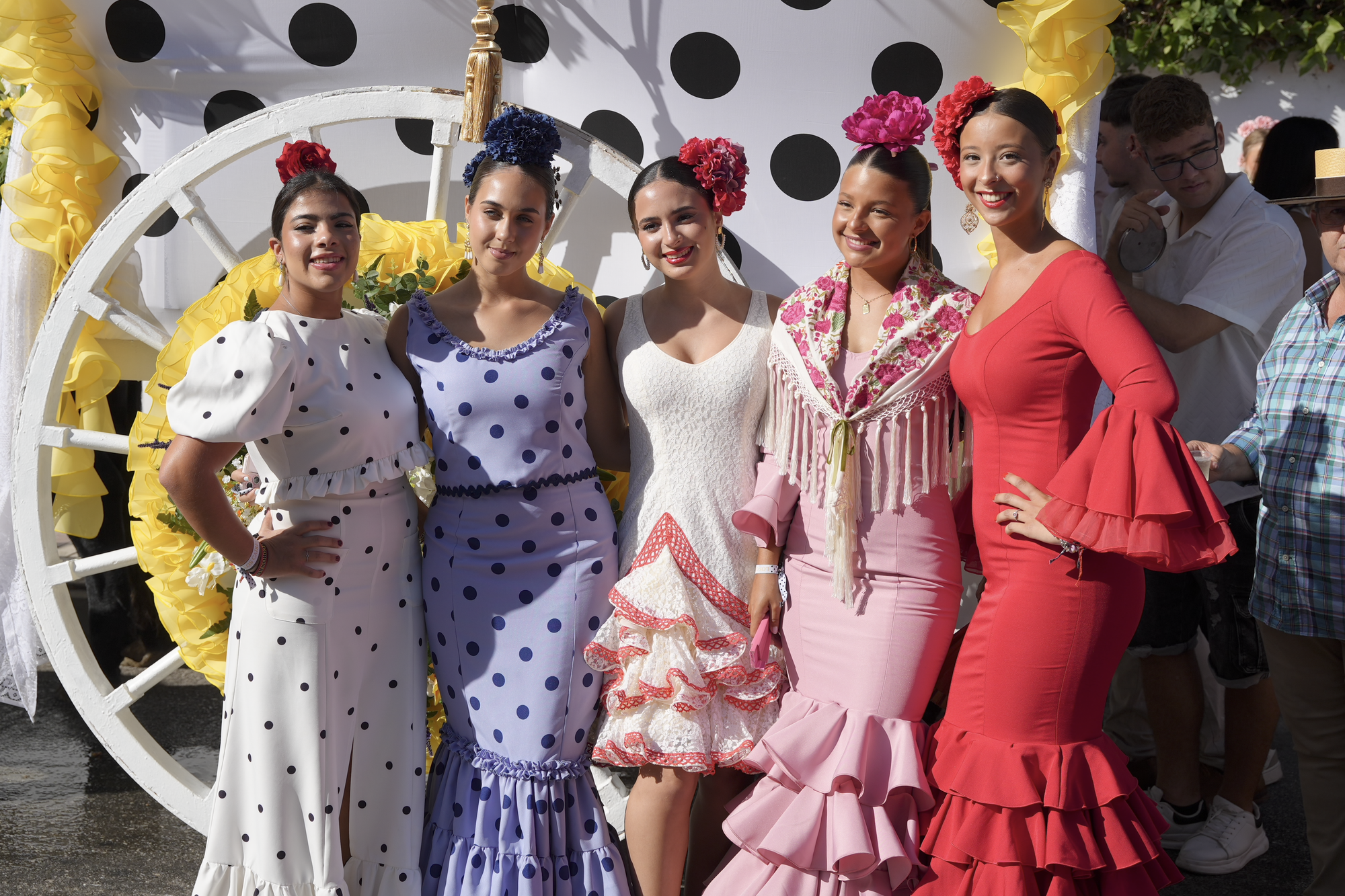
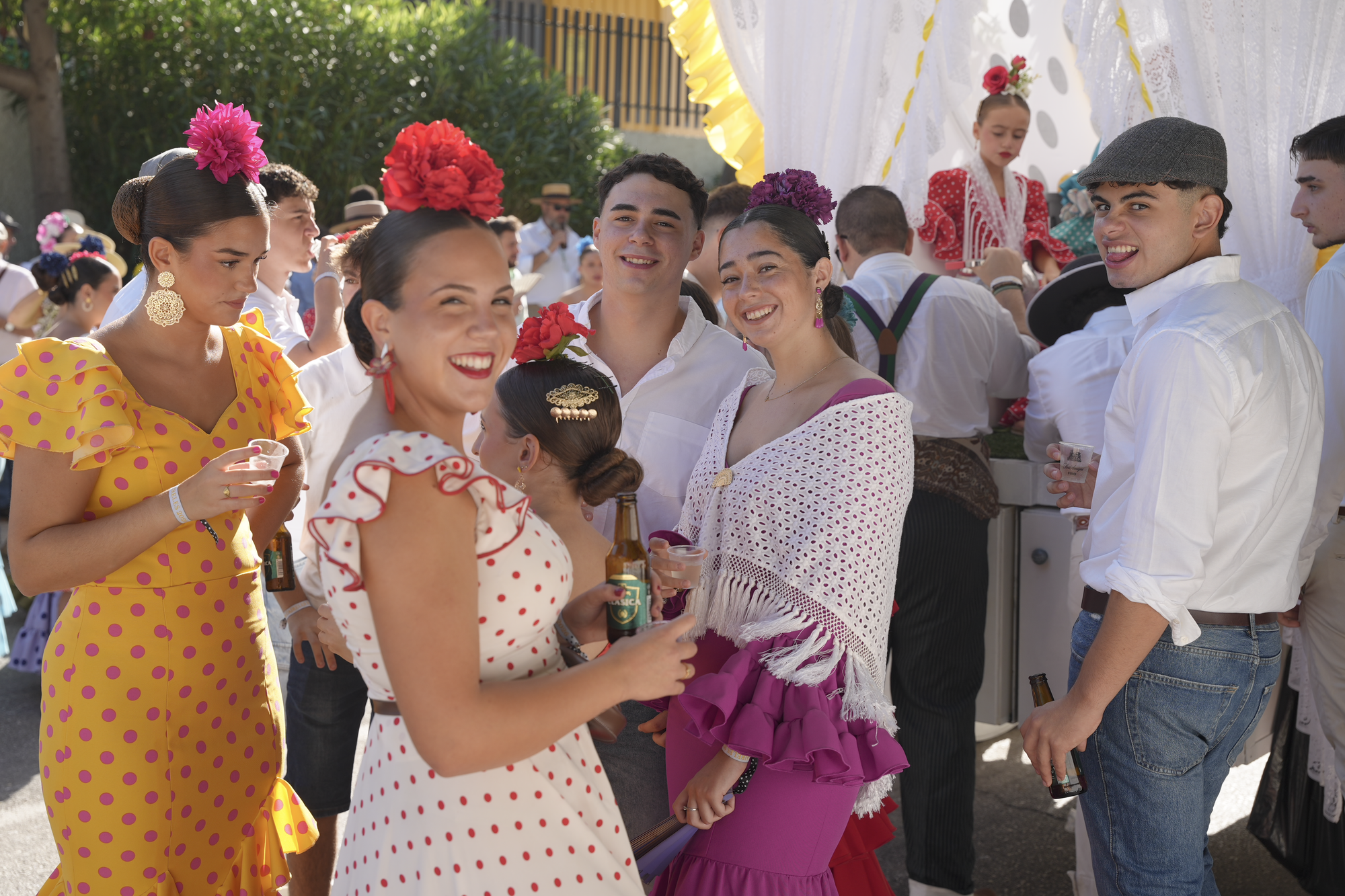
The carts compete. The town gives one prize for the best-decorated cart or tractor and another for the most cheerful and lively, which as far as I can tell goes to whoever is having the best party.
At the hermitage the procession gave way to food, music and dancing. The afternoon's headliner was Los del Río, the Sevillian duo who recorded "Macarena." Nobody here seems to think a pilgrimage and a party need to be kept apart.
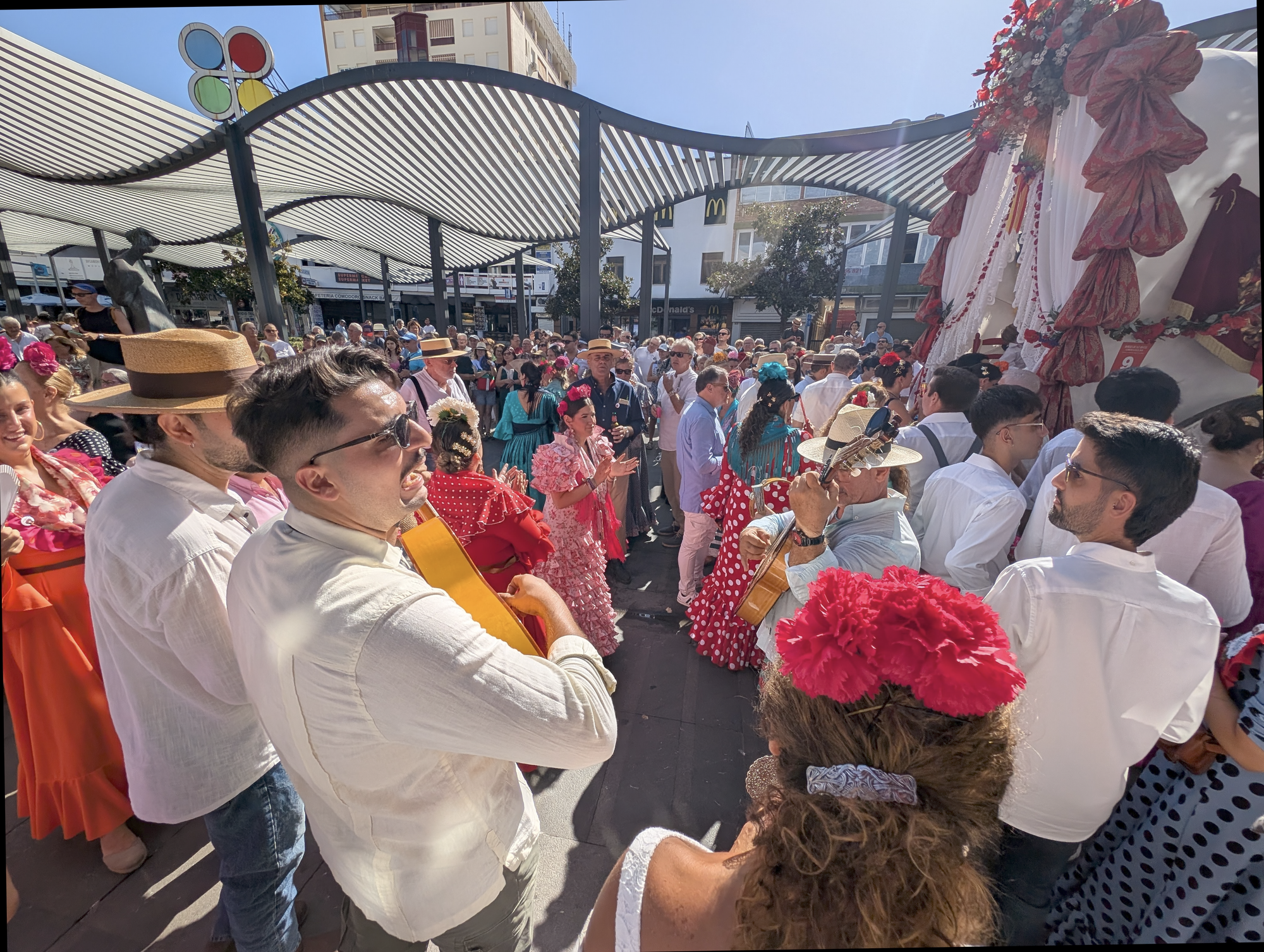
For all its oxen, the Romería is not old. The organized pilgrimage dates to 1940. It was dedicated to San Miguel in 1950 and settled on its present route in 1972. Through all of that, Torremolinos was legally part of Málaga, which had annexed it in 1924, and it did not become a municipality again until 1988. The people decorating the carts were, officially, residents of Málaga. The town's signature festival took shape while, on paper, the town didn't exist.
The procession
San Miguel's Feast Day is an official holiday. Every Spanish municipality chooses two local official holidays. Torremolinos selects September 29 for San Miguel and July 16 for the Virgen del Carmen. San Miguel belongs to the historic mill town on the hill, while the Virgen del Carmen protects La Carihuela, the coastal fishing quarter where her statue is paraded by boat each summer to bless the sea. Together, this patrón and patrona represent the two distinct settlements that formed the modern town.
The day began with an open-air Mass in Plaza San Miguel next to the church. At 10:30 the bearers gathered to carry the trono with the statue of San Miguel on a loop through the center of town.
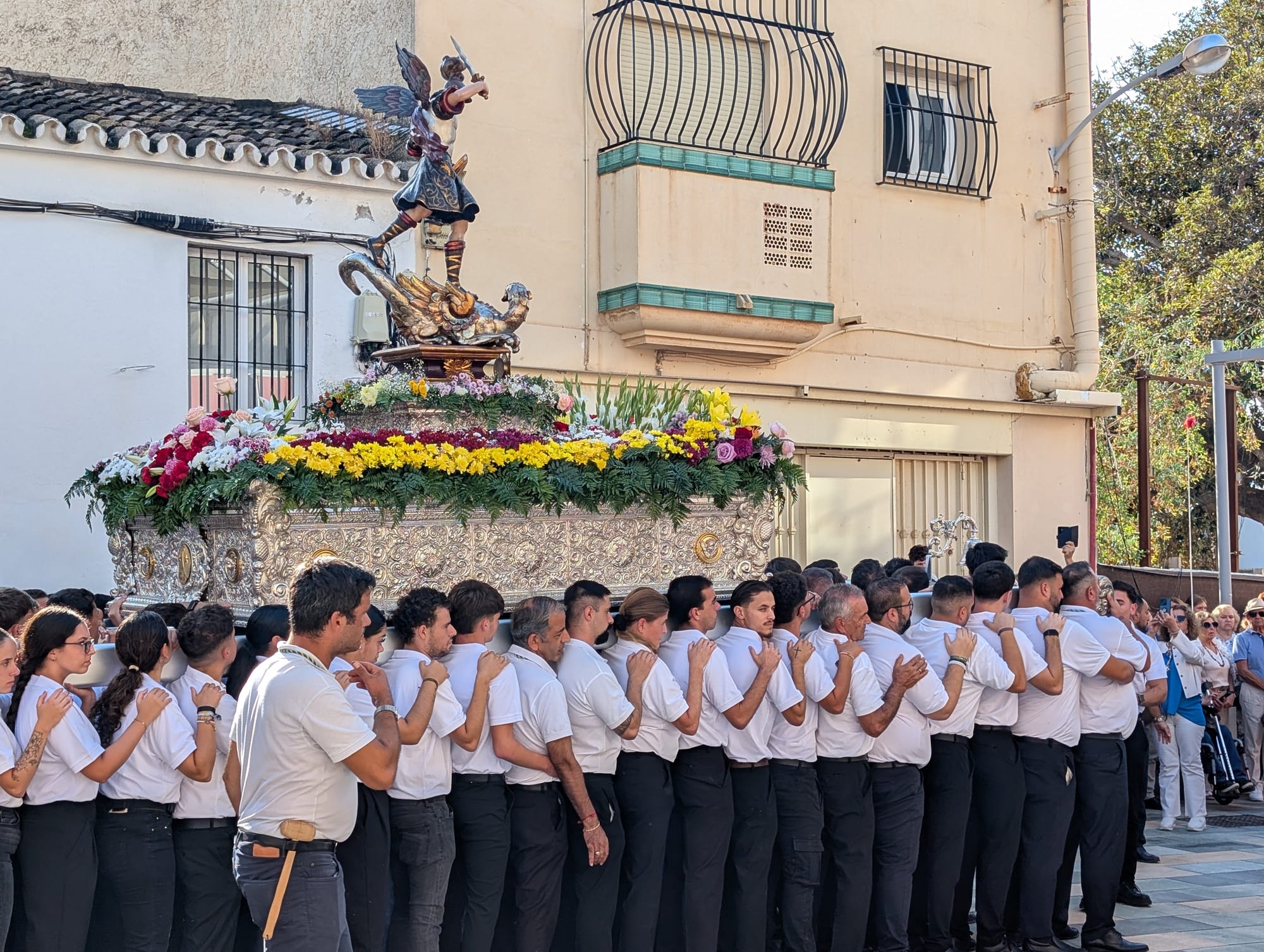
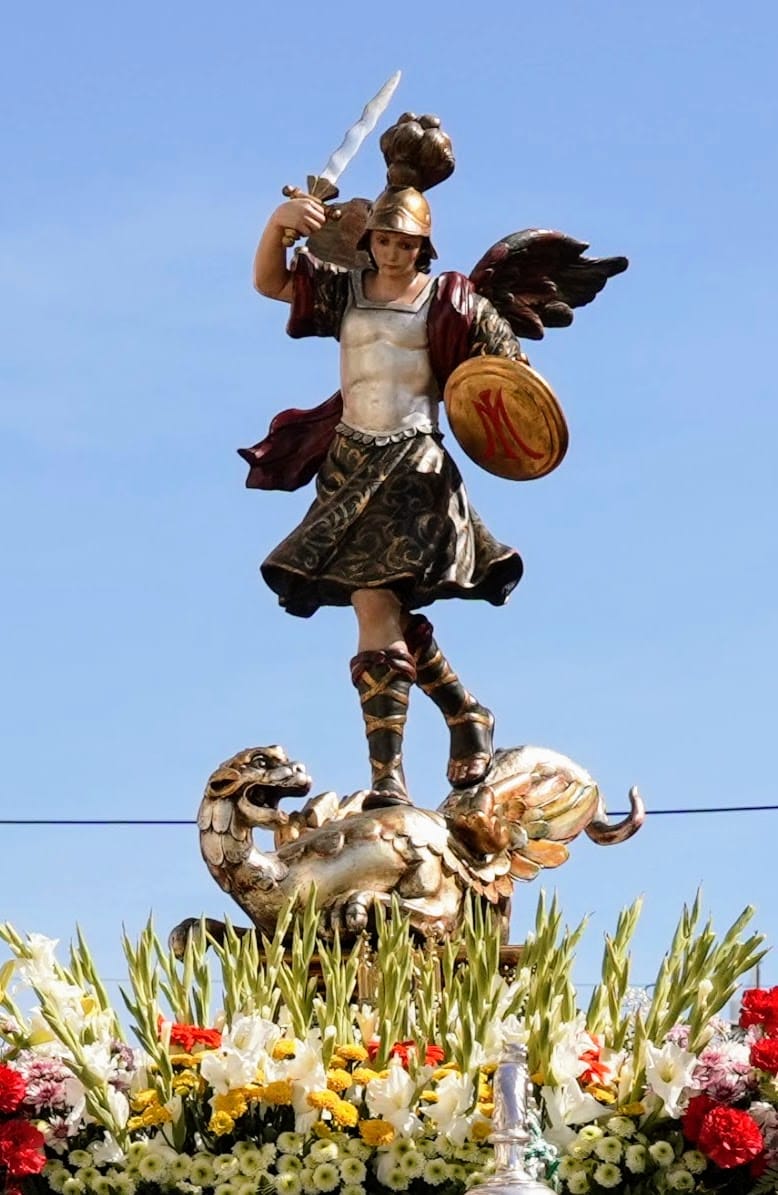
The statue, called an imagen, is the reason for the event, and walking behind it is an act of devotion. Some people walk because they are devout. Some belong to the brotherhood, some come because their grandparents did, and some, like me, are curious.
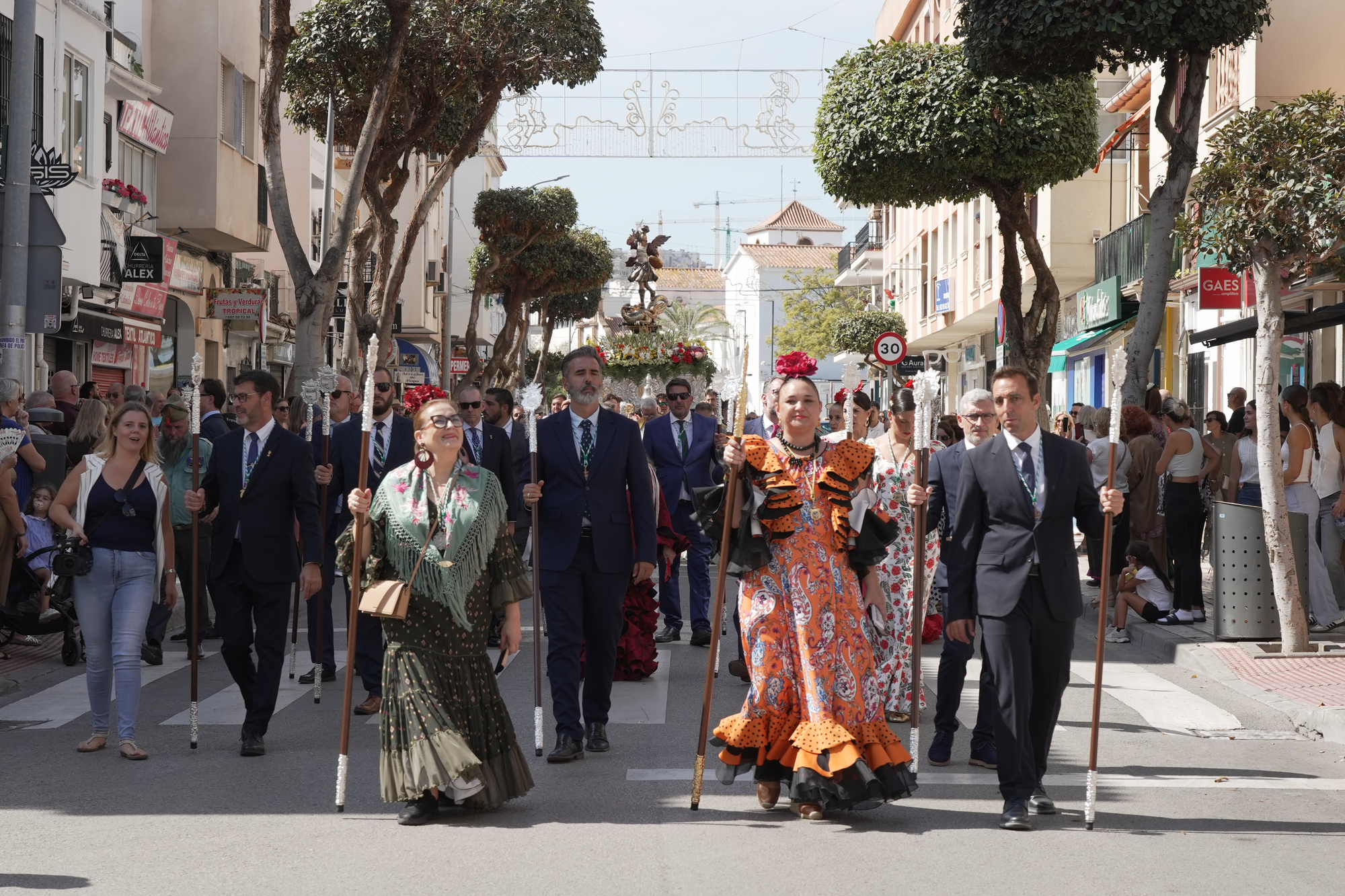
The mayor, Margarita del Cid, The Bishop of Málaga, local religious brotherhoods, local councilors were just some of the people participating in the procession. The route takes several hour. The bearers require frequent breaks, especially when maneuvering up and down the hills.
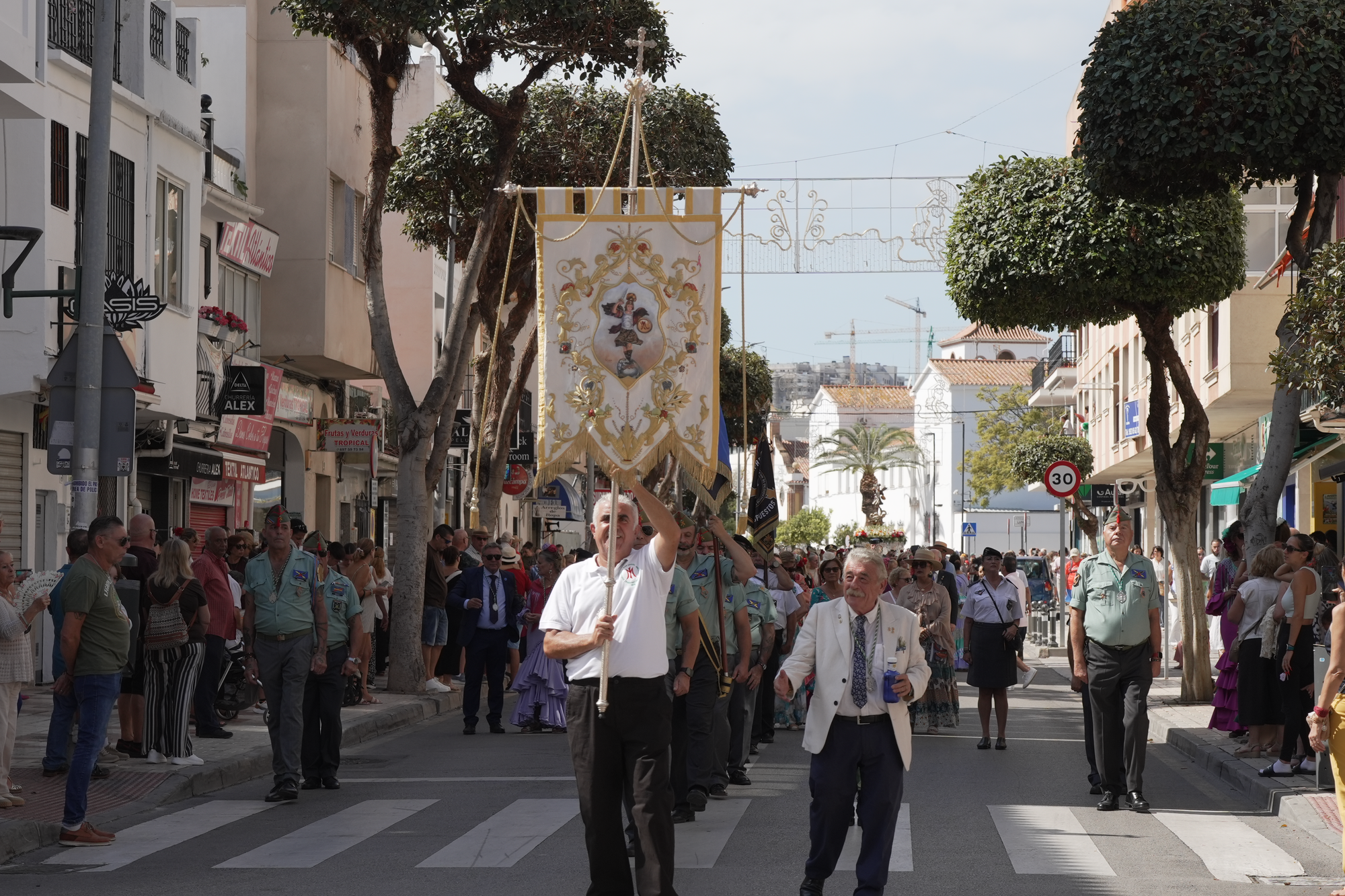
The music came from the Spanish Legion. The escort was the IV Tercio "Alejandro Farnesio," based in Ronda, about an hour and a half inland, and its band supplied the bugles and drums. The Legion was founded in 1920 as Spain's answer to the French Foreign Legion and fought its early wars in Morocco.
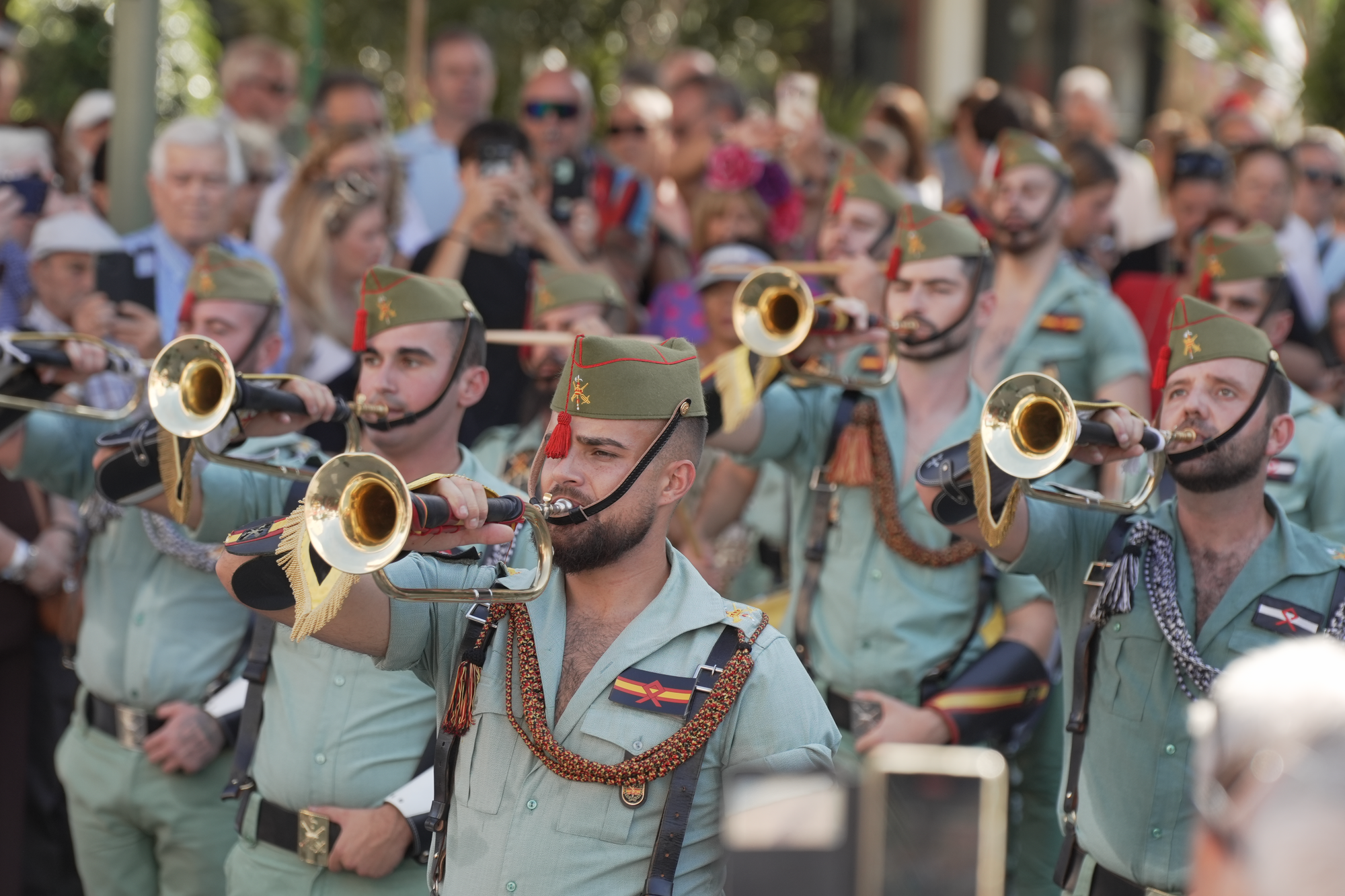
Today it is an elite unit of the regular army, recruited mostly from Spaniards, and it looks like no other unit an American is likely to have seen. Legionnaires wear their shirts open at the chest and a small cap with a red tassel. They march at around 160 steps a minute, much faster than ordinary troops, and their mascot is a goat.
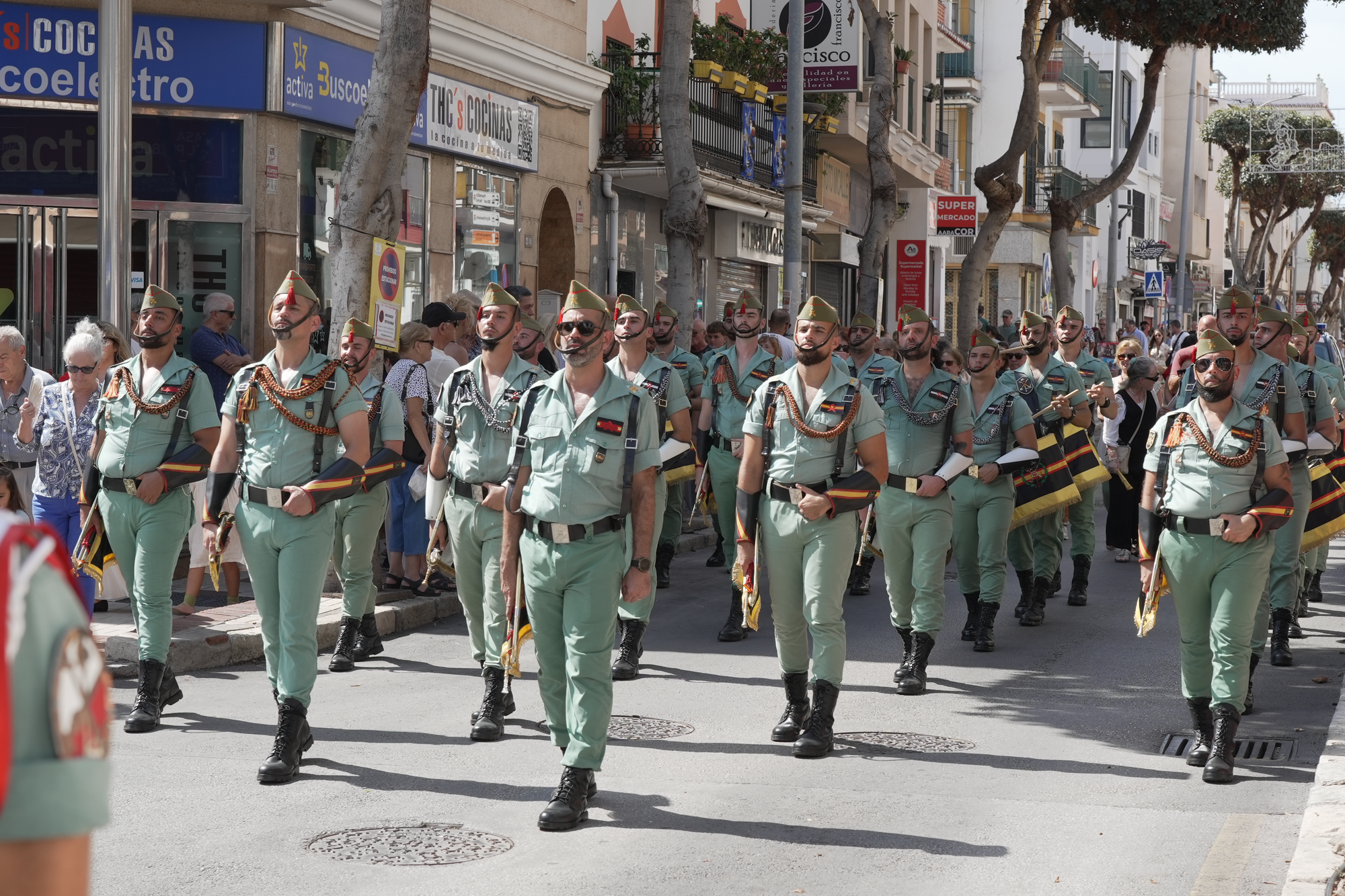
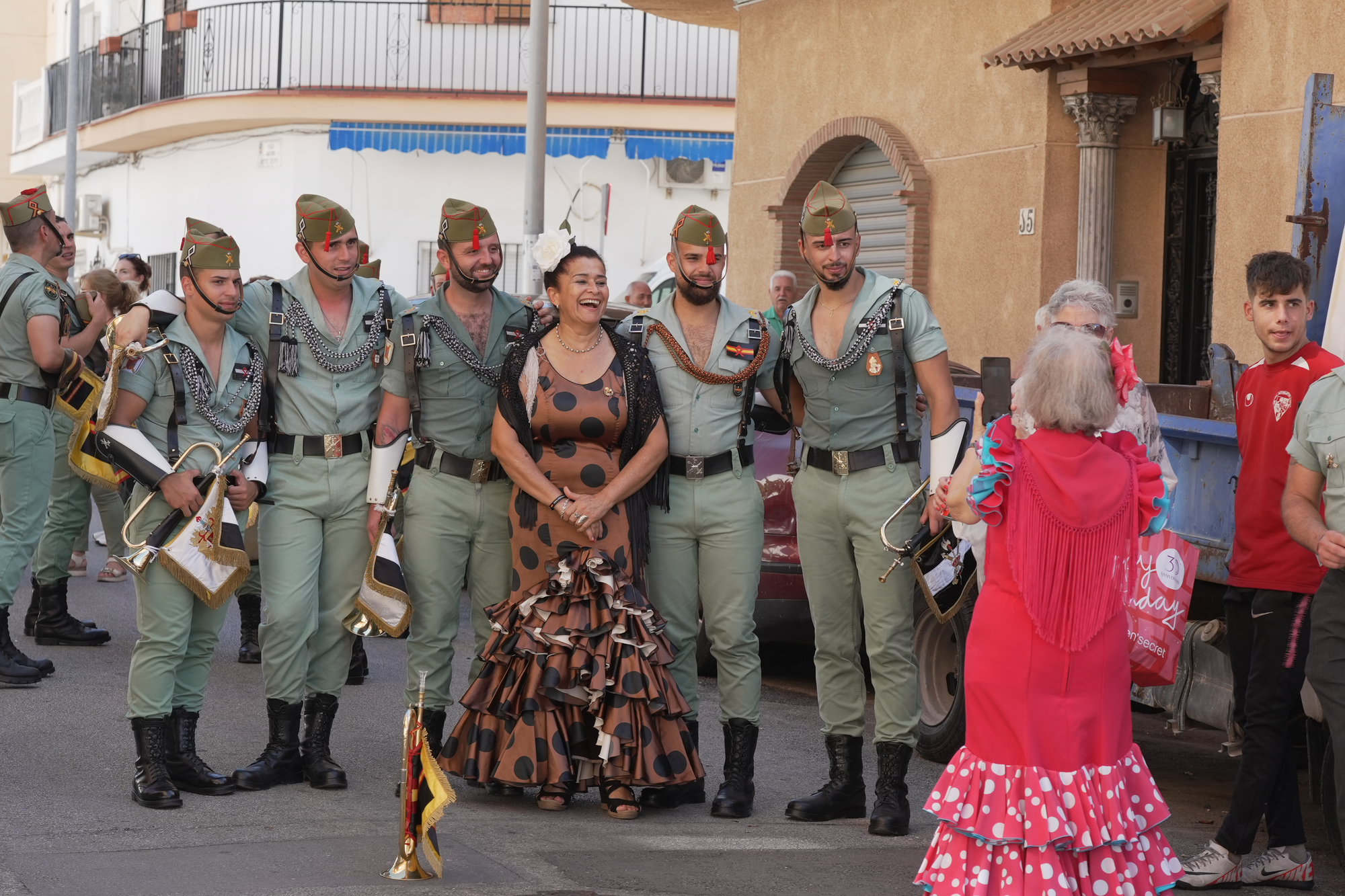
The Legion and religious processions go back a long way. In Málaga, every Holy Week, legionnaires carry the Cristo de la Buena Muerte, the Christ of the Good Death, through the city. A regiment of soldiers walking with a soldier saint belongs to the same tradition.
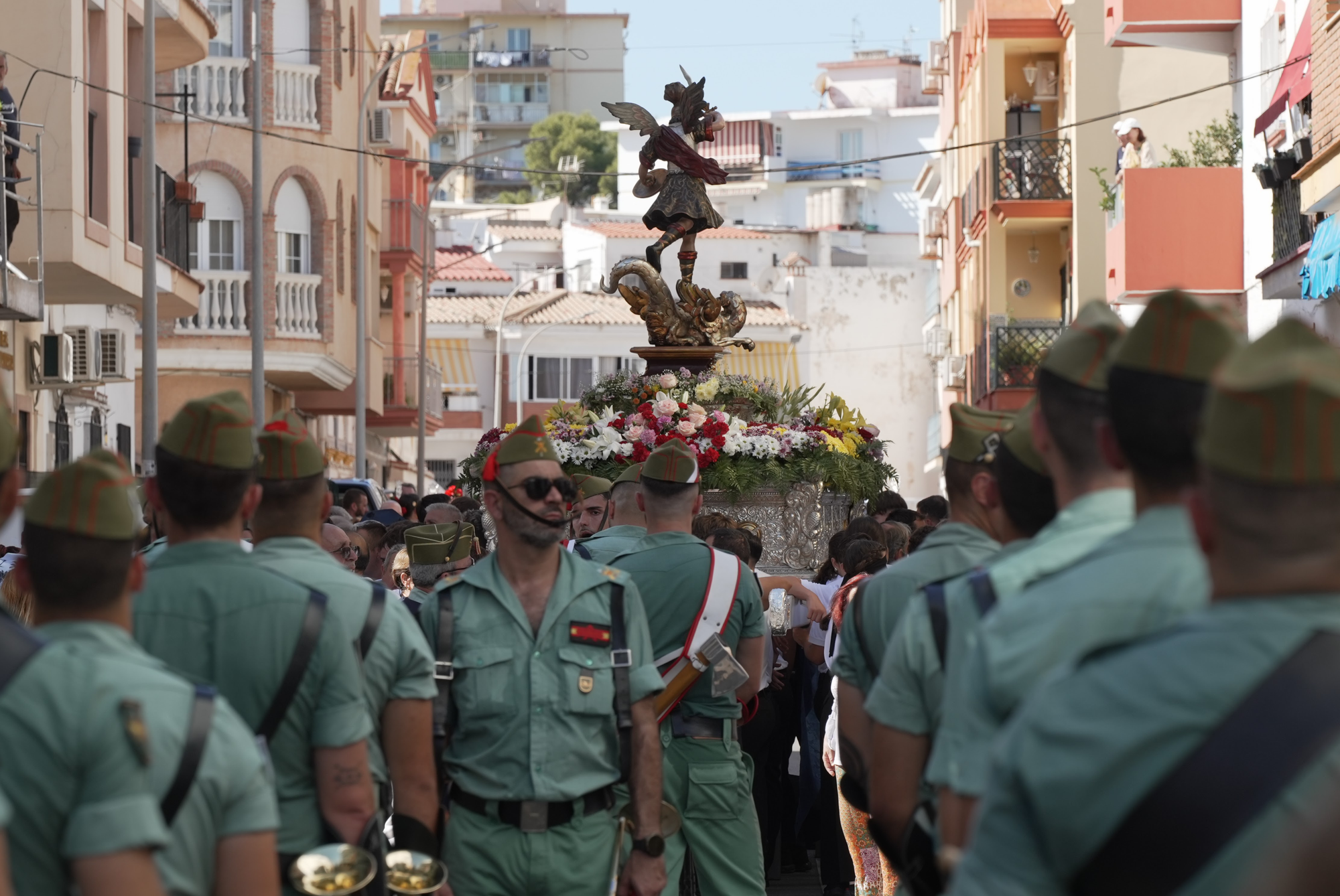
An American watching will still wonder why the army is escorting a Catholic saint. Spain has been working on the answer for half a century. The 1978 constitution says there is no state religion. It also commits the government to cooperating with the Catholic Church and other faiths, and military units have kept their old ties to particular saints and brotherhoods while the country around them has grown much more secular.
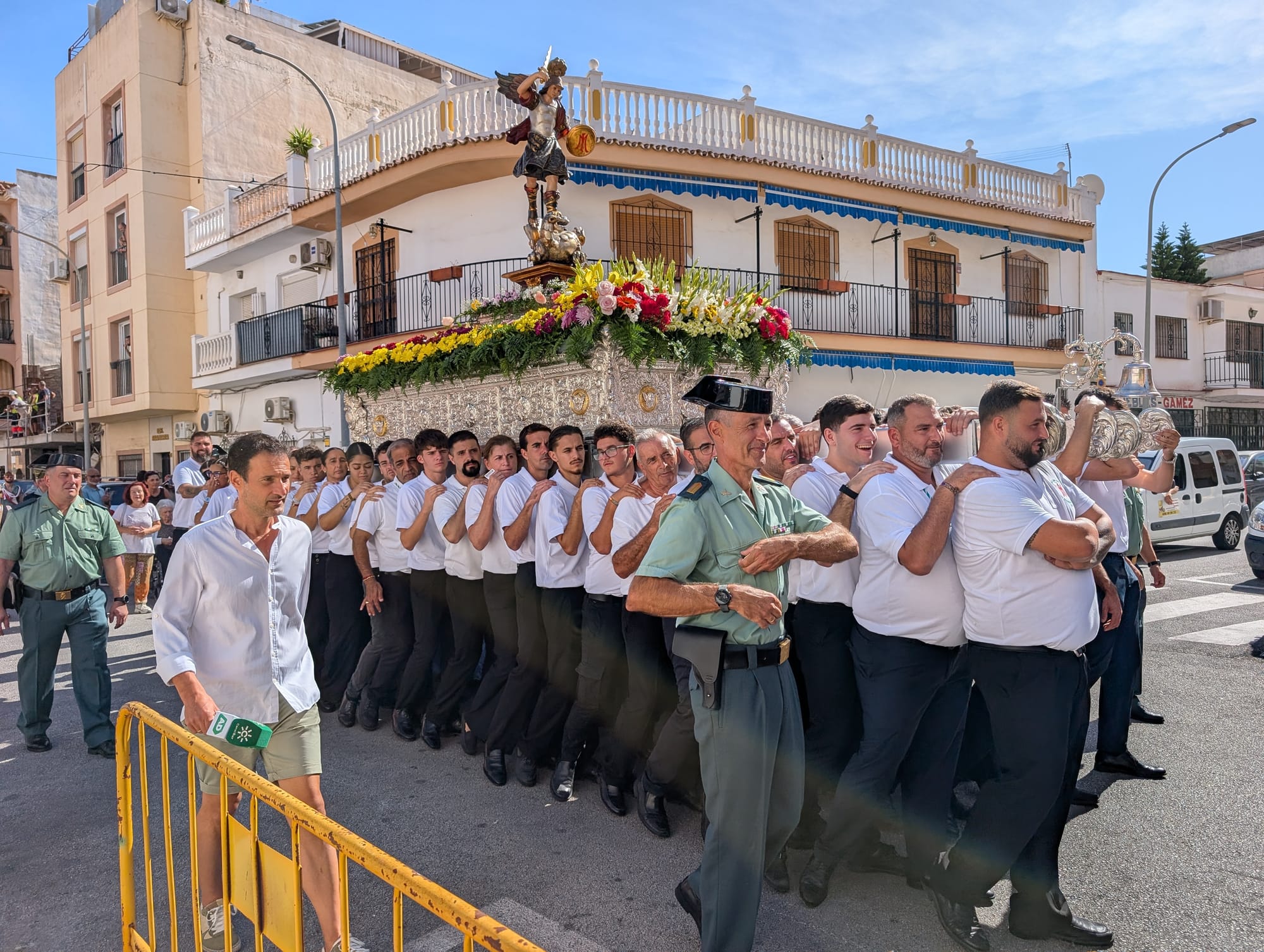
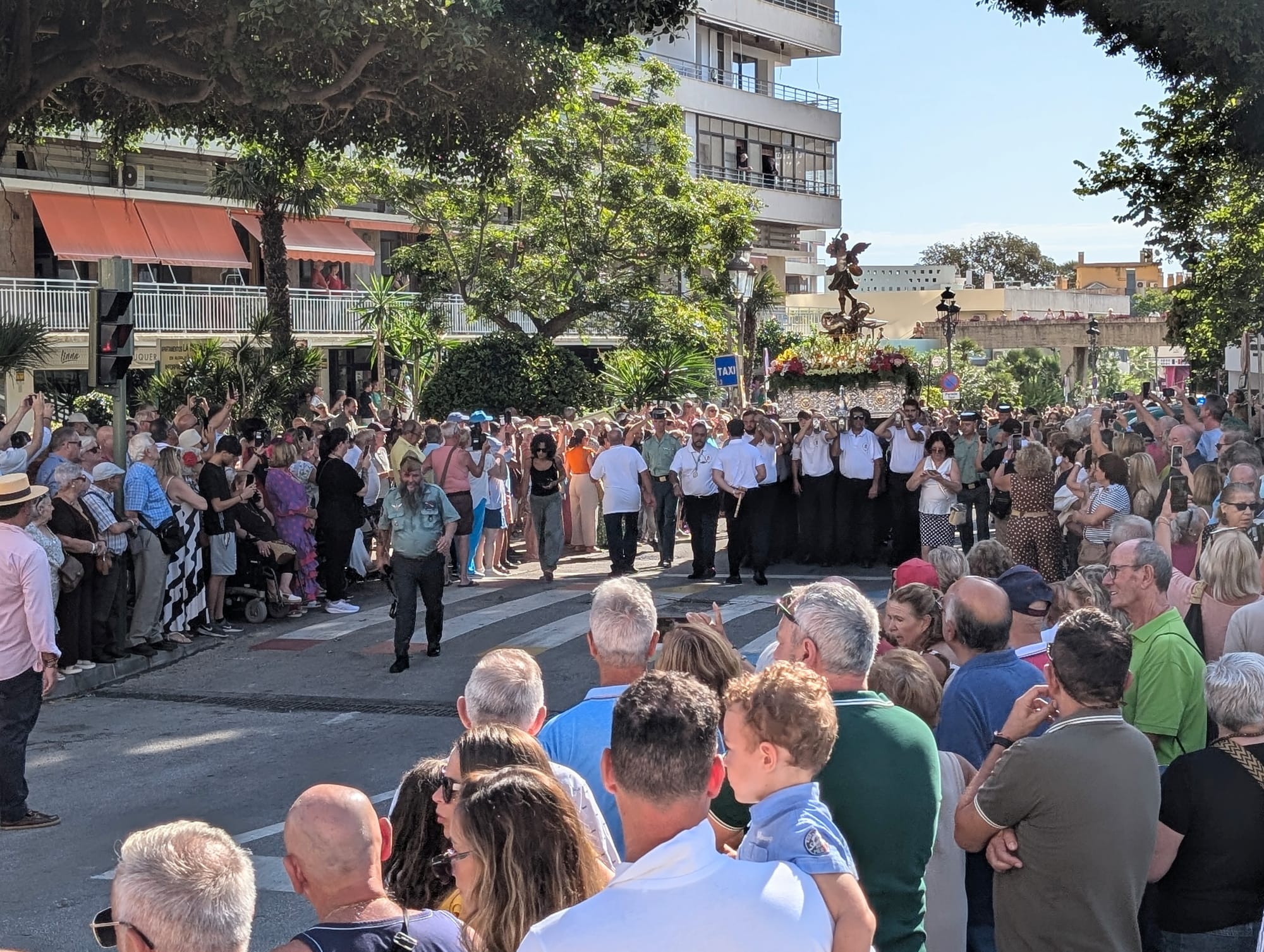
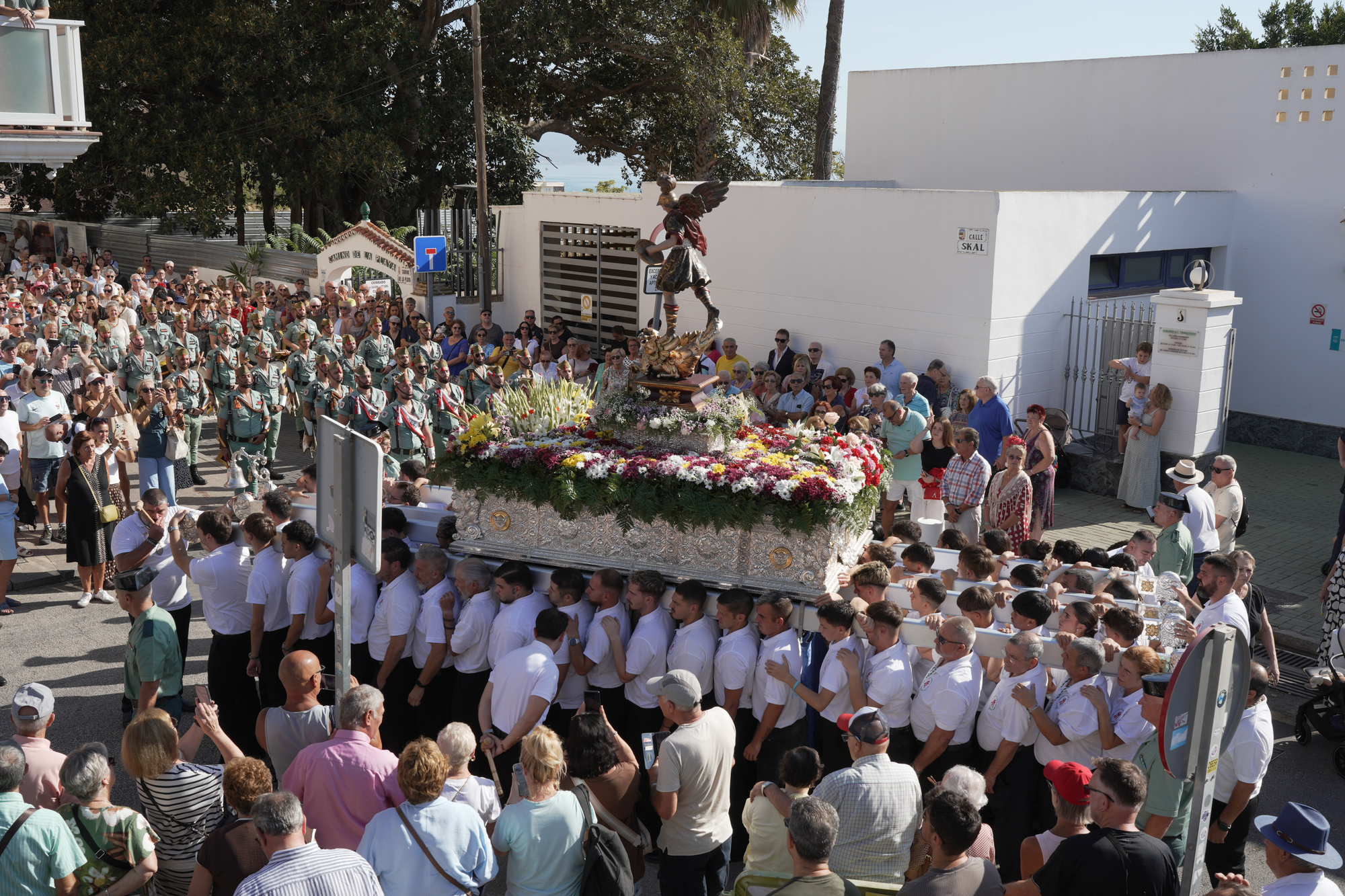
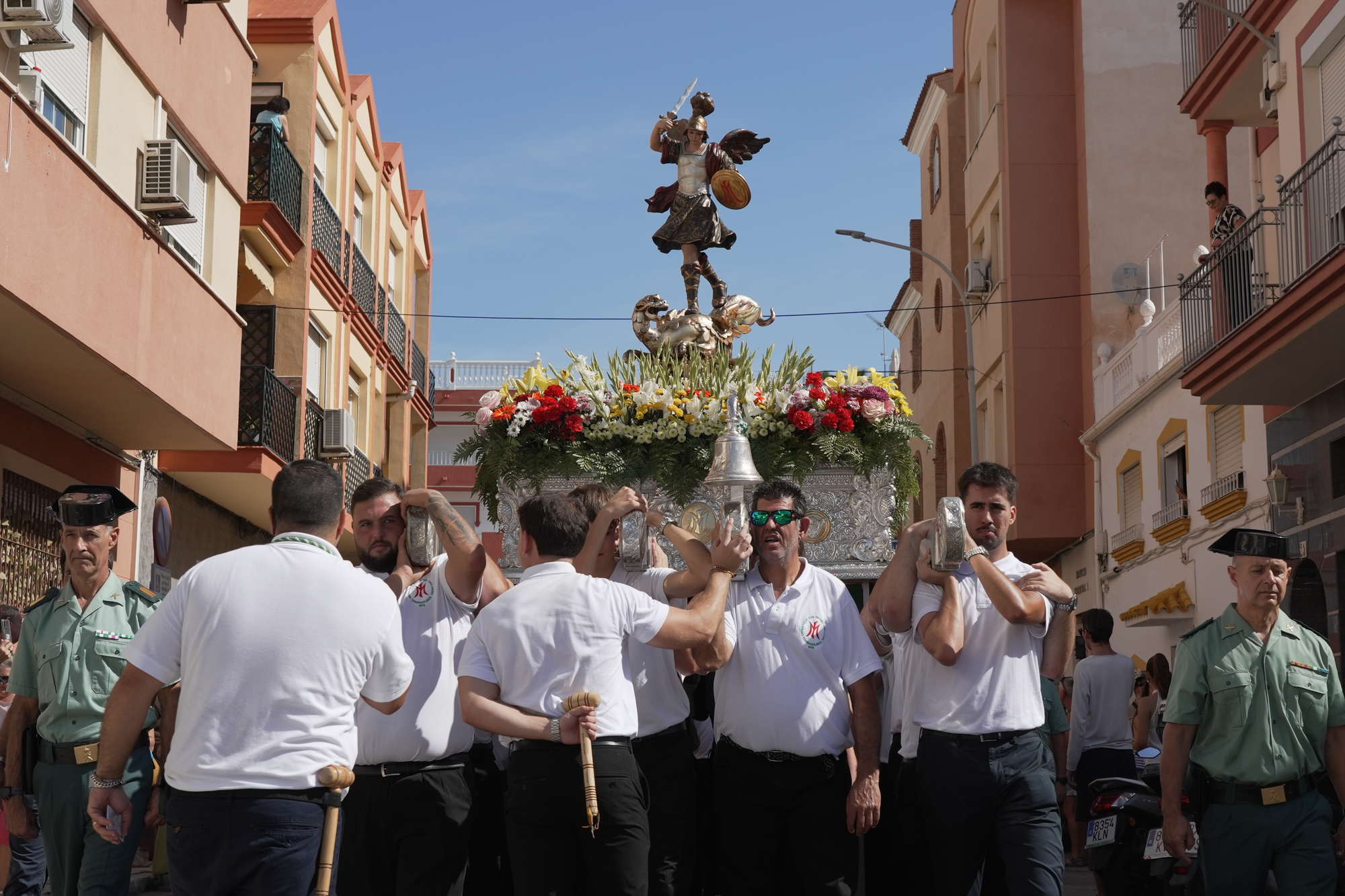
Along the route the procession stopped in front of other churches. The custom is an old one. The doors open, a prayer or a piece of music is offered, and the procession moves on. The patron was paying calls on his neighbors.
Back down the steps
By two o'clock San Miguel was back inside his church, the drums had gone quiet, and the day fair was starting up again in the plazas below. He will stay there, at the top of the steps, until next September.
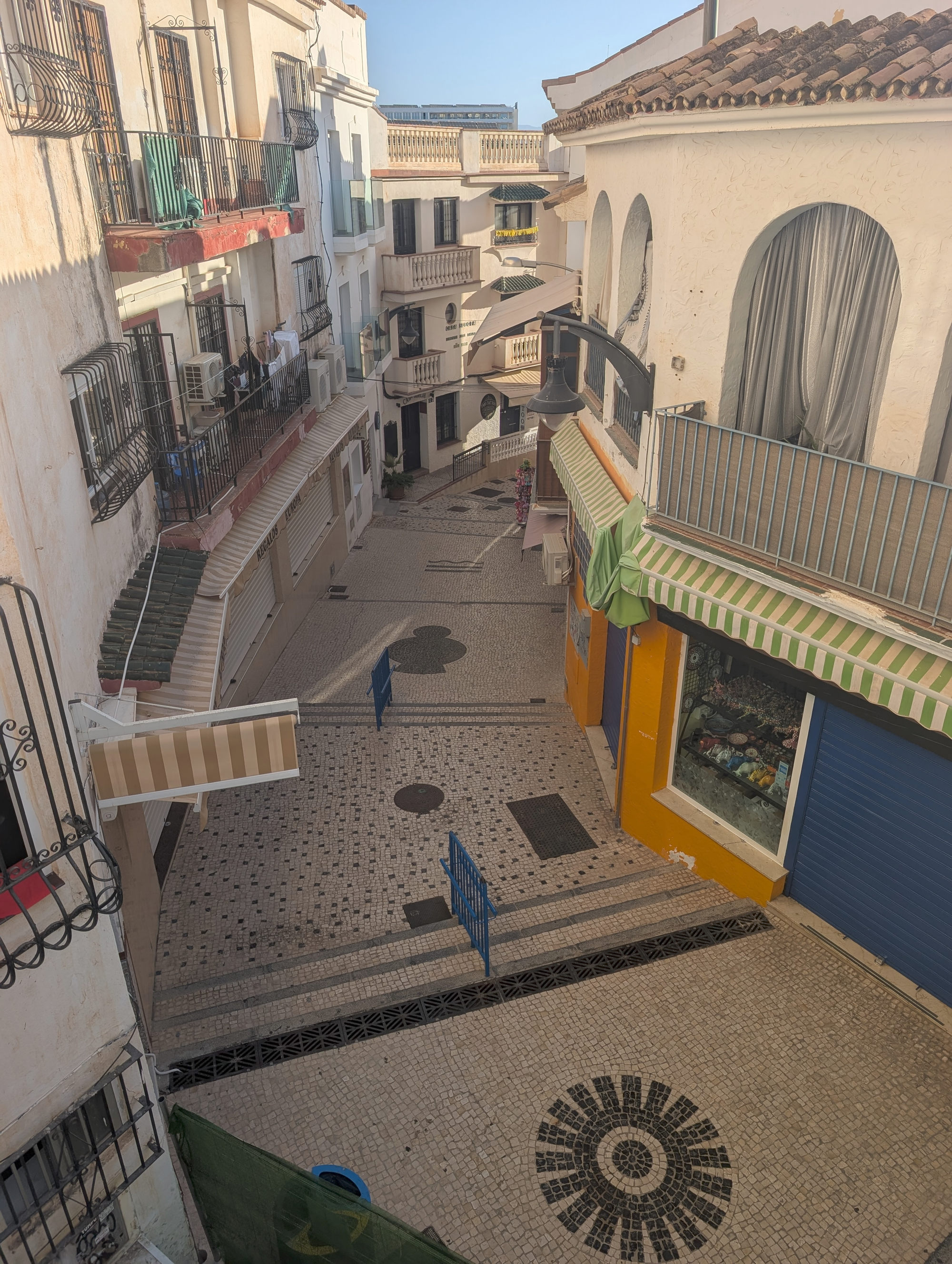
I walked home down the 192 steps. Halfway down, the incense had given way to the smell of frying fish from the chiringuitos, and I could hear a beach club's bassline over what was left of the fair. From there you can see the high-rises and the sunbathers, most of whom had no idea that a warrior angel had just been carried through the streets above them.
Comments ()