

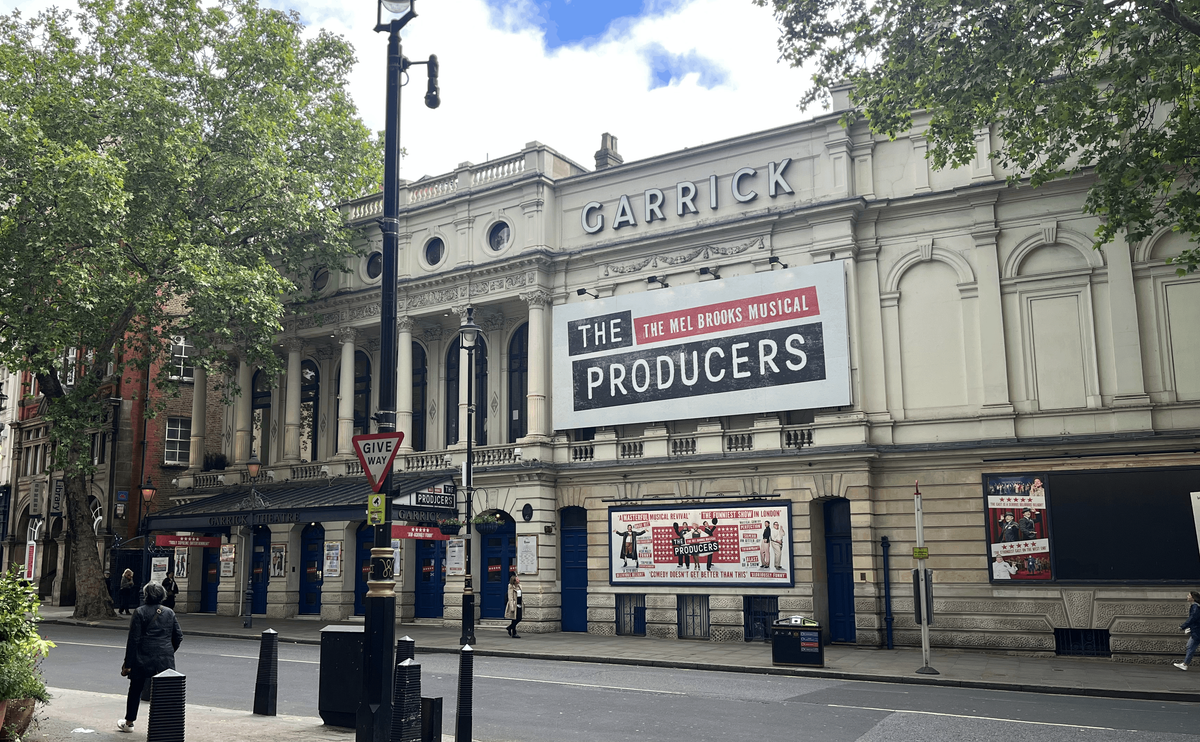
The West End production of The Producers starring Andy Nyman proves that twenty-five years on, the show still has teeth.
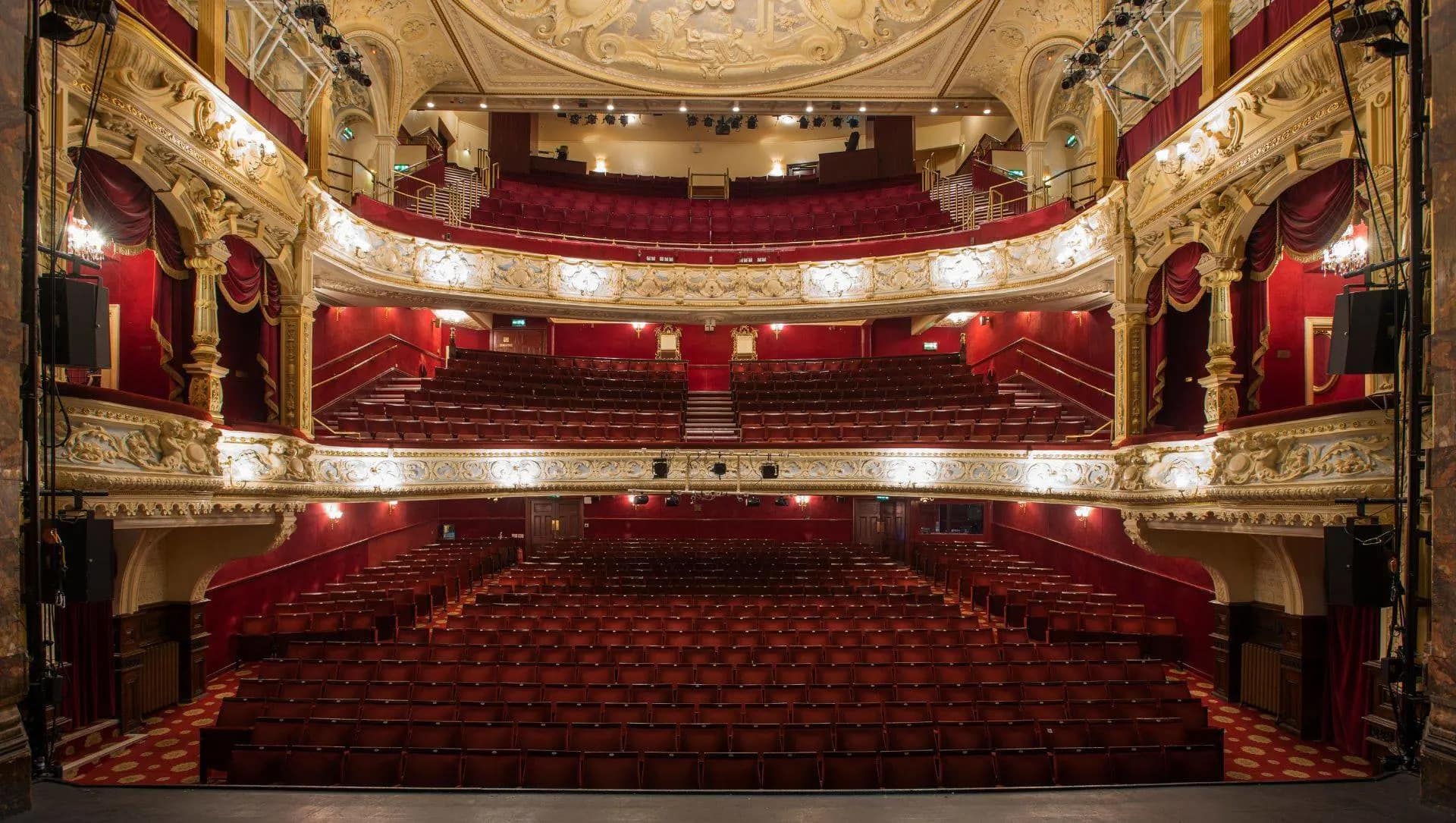
The Producers lives in my head at a very specific size: Nathan Lane bellowing, Matthew Broderick blinking, enormous sets and outrageous costumes. So when I took my seat at the Garrick last week, the first reaction was to the room. The Garrick is a compact, 139 year old theater, but compared to the epic-scale Broadway and touring productions this show has given rise to, it feels almost cozy. The stage felt close. The audience felt close. I had a brief moment of wait, are they really going to do this here?
It turns out the smaller frame is the point. Jokes land faster when you're closer to them. Twenty-five years after its Broadway debut, The Producers has been rediscovered as a chamber piece, and it suits the material in ways I hadn't expected.
From a Chocolate Factory to the West End
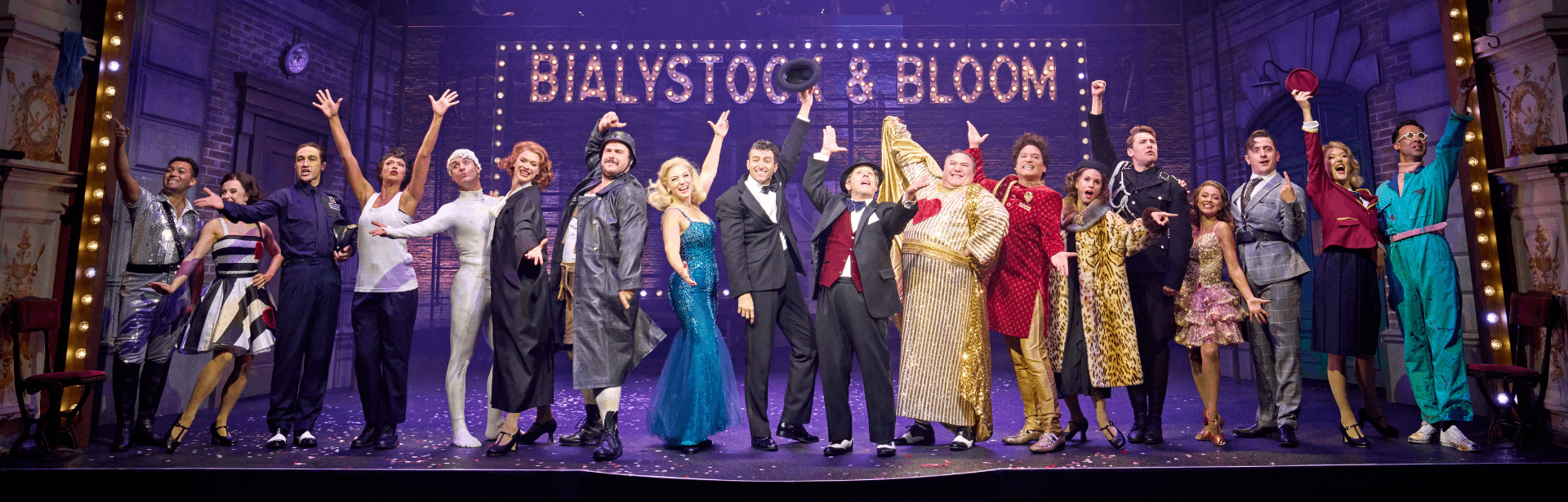
This production started life at the Menier Chocolate Factory, the 180-seat South London venue with a remarkable track record for launching West End transfers. The 2024 run sold out before previews even began.
The move to the Garrick brought the obvious challenge: how do you scale up a show that worked partly because it was crammed into a tiny room? The answer, sensibly, was: don't scale it up too much. Trying to inflate it into a "glitzy juggernaut", a phrase Andy Nyman has used pointedly, would have killed the thing that made it work. So the production kept its slightly-falling-apart energy and just gave it a bigger room to fall apart in.
Directed by Patrick Marber
The Producers is directed by Patrick Marber, the man behind Closer and the Olivier-winning Leopoldstadt. He's more associated with slow, devastating dramas about loneliness or European Jewish history than musicals. But Marber was a stand-up before he was a playwright, and that instinct shapes this production. He doesn't direct it like a comedy machine, hitting beats and waiting for laughs. He directs it like a play that happens to contain ridiculous people doing ridiculous things. The slapstick is all there, but underneath it is something grubbier, a sense that Max and Leo are not cartoon characters but actual humans, broke and panicked and lying to themselves and each other.
Andy Nyman's Beautiful, Sweaty Max
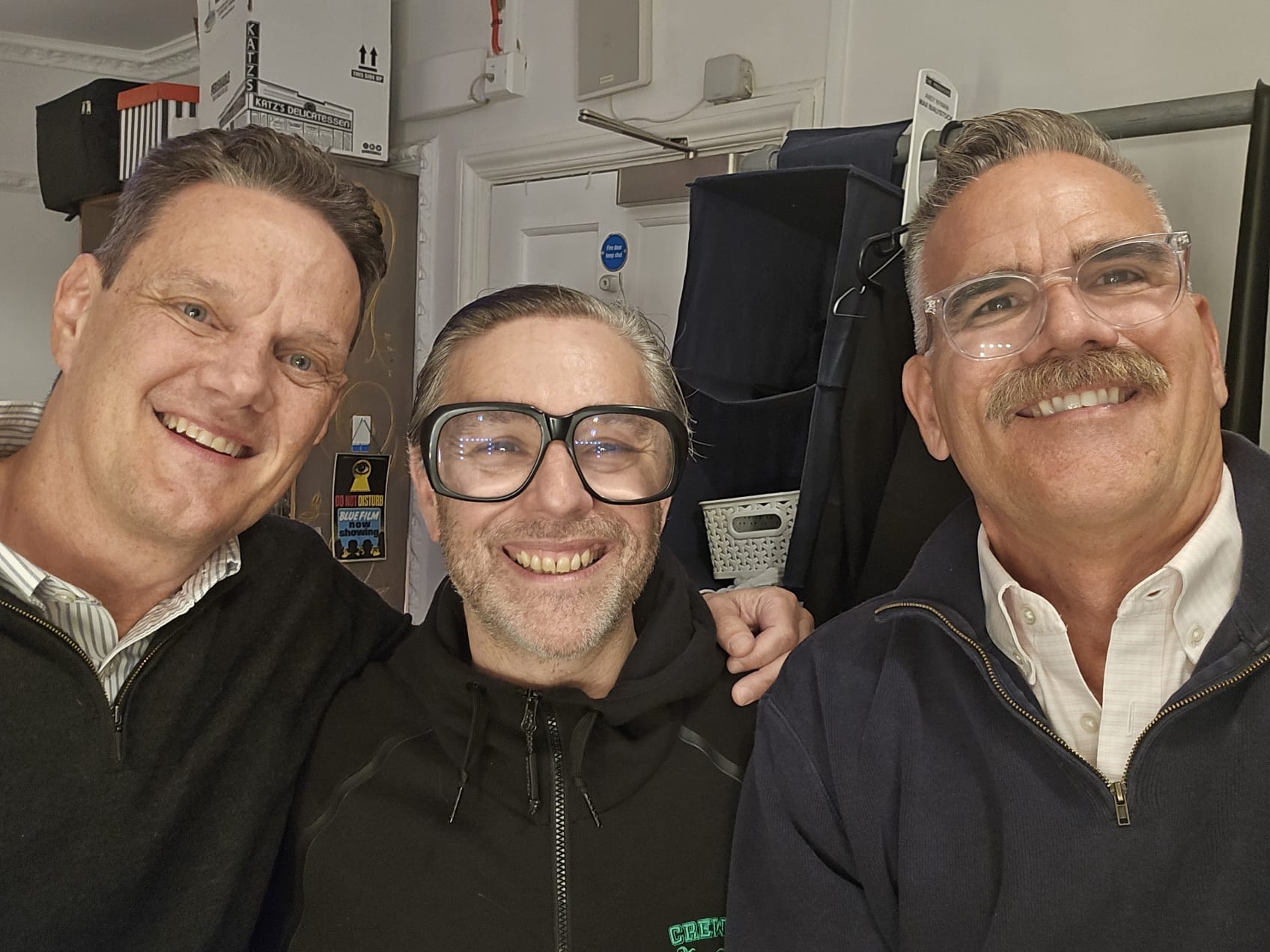
Andy Nyman has been playing Max Bialystock since the Menier opening in late 2024, which means he's been living inside this man's fat suit for the better part of two years. He takes full ownership of the role. This is not someone trying out a famous role; this is someone who has settled in.
The smart thing Nyman does, and it's a real choice, is refuse to do a Nathan Lane impression. And you wouldn't want him to. He's slighter than Lane, smaller than Zero Mostel, physically wrong for the booming theatrical-tyrant version of Max that's calcified into people's expectations. So he builds a different Max entirely.
This Max is a survivor, not a king. He's a man who used to be somebody and is now genuinely living in his office. Nyman has talked about wanting to find the "dirty fingernails" of the character, and you can see it onstage. There's something a little greasy and unwashed about this Max, a man whose schemes have a whiff of the actually pathetic about them. When he seduces little old ladies for their checks, you don't get the impression he's a great theatrical seducer. You get the impression he's a man who hasn't paid his electricity bill.
And yet you root for him. There's a manic warmth to Nyman that makes Max impossible to dislike, even when he's actively stealing from elderly women. By the time he reaches "Betrayed", the eleven o'clock number where Max essentially recaps the entire show alone in a prison cell, he has been onstage for nearly the whole evening and the performance is somehow still escalating. I cannot remember the last time a musical theatre performance made me this tired on someone else's behalf.
Harry Morrison's Dangerous Franz
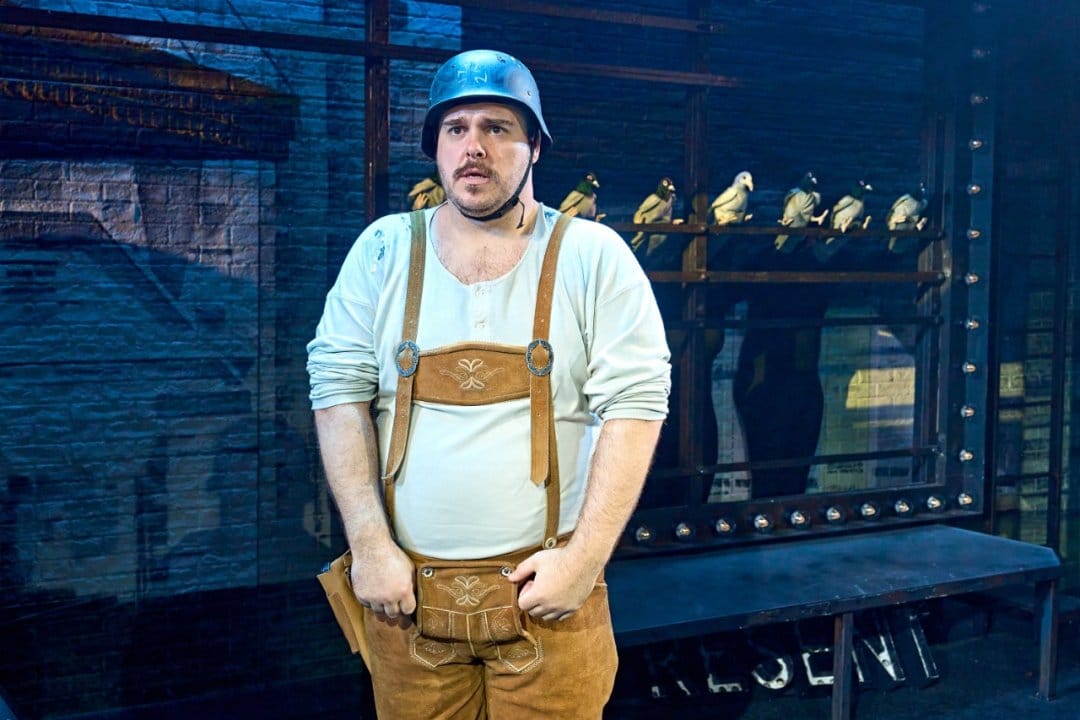
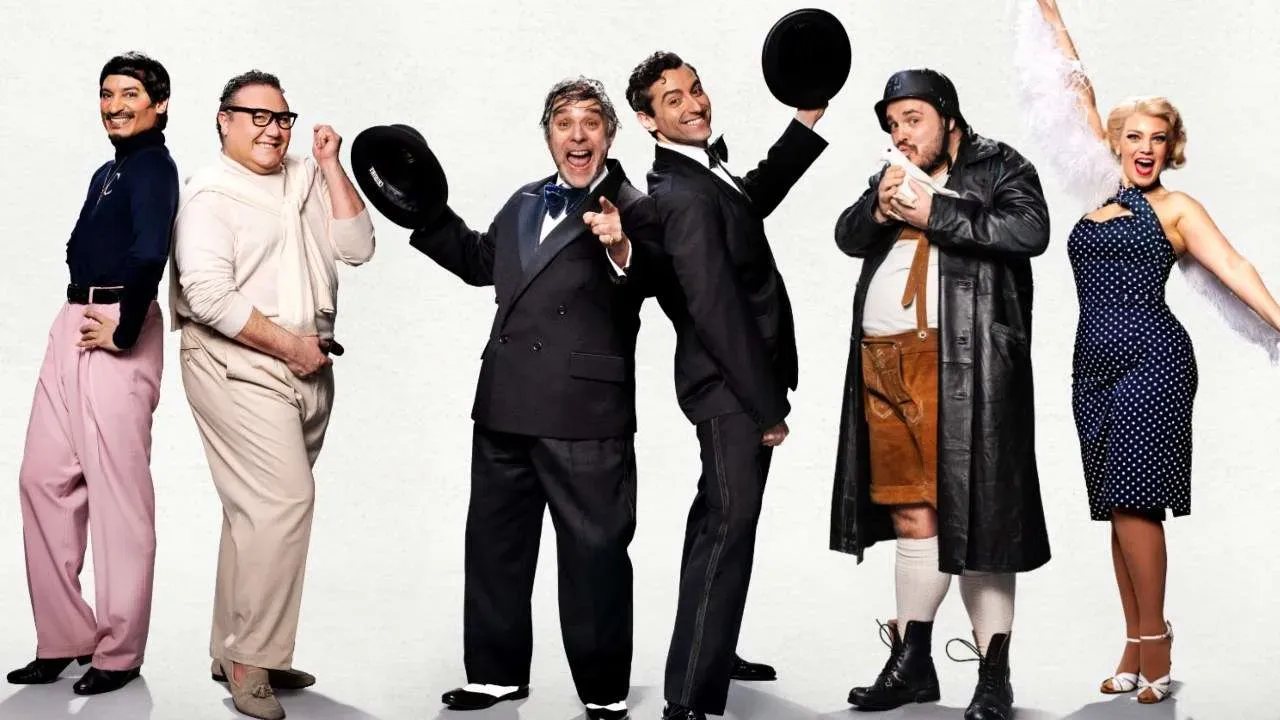
Harry Morrison is delightfully unhinged as Franz Liebkind, the deranged pigeon-loving ex-Nazi playwright. Morrison plays him with absolute sincerity, and that's the key. A camped-up Franz would let the audience off the hook, we'd be laughing at a costume. A sincere Franz forces us to keep the actual content of his beliefs in mind even as we're laughing at him, which is precisely the discomfort Brooks needs the character to generate. Without his earnestness, "Springtime for Hitler" would just be a tasteless production number rather than the savage piece of ridicule it actually is.
How Do You Do The Producers in 2026?
Mel Brooks wrote a piece of theatre whose entire premise involves humiliating Hitler for laughs, and which contains jokes about more or less every group of people you could possibly offend. There are productions that would try to gently sand the edges. This one does the opposite. It leans harder into the camp.
The Roger de Bris scenes are over the top. There's a living statue with an enormous appendage and a gag involving Jesus in a nappy that feels almost confrontationally ridiculous. The strategy is clear: the way you protect this material is not by softening it but by escalating it past the point where realism could ever apply. Brooks' comedy has always worked through excess. This production trusts that and runs with it.
The satire still bites. "Springtime for Hitler" hits differently when far-right politics is, once again, an actual concern in the actual world rather than a historical curiosity. Nyman has spoken about feeling the show is more essential now than it's ever been. Brooks' project has always been about stripping fascism of its dignity through ridicule. That trick may work better now than it did in 2001.
The Producers has been extended at the Garrick through 19 September 2026. What this production found, and what the bigger versions sometimes lose, is the panic underneath the farce. In the close quarters of the Garrick, that panic is no longer something you watch from a respectful distance. It's happening a few rows away, and it feels a little bit dangerous, and twenty-five years on that turns out to be exactly what the show needed.
Get your tickets: https://thegarricktheatre.co.uk/

Comments ()