


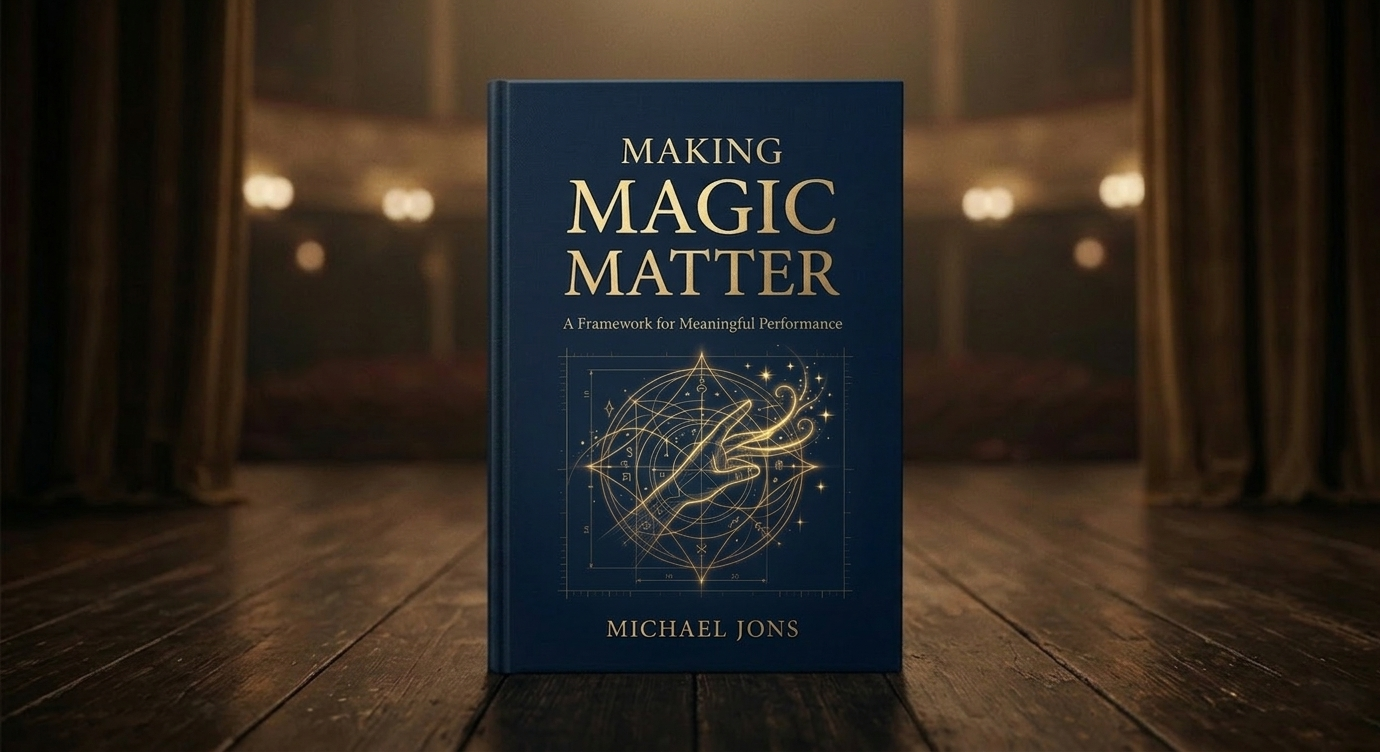
In his new book Making Magic Matter, mentalist Michael Jons argues that the best magic isn't a puzzle at all, it's a temporary collapse of everything you think you know about the world.
If you’ve ever watched a magic trick, you’ve probably had this experience. Something impossible happens right in front of you. A card appears somewhere it shouldn’t. A coin vanishes. A prediction comes true. You react the way audiences always do – laughter, applause, disbelief. And then, ten minutes later, the moment is gone. You can still remember that the trick fooled you, but the feeling itself has faded.
Yet occasionally something different happens. A piece of magic lingers. You replay it in your mind on the walk home. You find yourself trying to reconstruct what you saw. The moment feels less like a puzzle and more like a brief crack in your understanding of reality. Why do some moments of magic disappear almost instantly while others stay with us for years?
A new book, Making Magic Matter, argues that the answer has surprisingly little to do with the cleverness of the trick. Instead, it has to do with how the experience is constructed in the audience’s mind.
The Hidden Question Behind Magic
Most people assume the challenge of magic is simple: figure out how to do something impossible. And historically, magicians have treated it that way. Their craft is full of ingenious techniques designed to produce astonishing effects. But the author of Making Magic Matter believes that focusing only on the mechanics misses the real mystery. “People assume magic is about fooling the eye,” he says. “But the real experience of magic happens somewhere else entirely.” It happens in the audience’s understanding of what’s possible.
A magic trick isn’t just an event we watch. It’s a moment where something we believed about the world suddenly stops making sense. And that moment, the instant when certainty gives way, is where wonder lives.
Why Some Tricks Feel Hollow
Anyone who has watched enough magic has seen the difference. Two tricks might be equally baffling. One produces a quick laugh and applause. The other produces silence, followed by the kind of reaction people have when they genuinely cannot reconcile what they just witnessed.
According to the book, the difference often comes down to something audiences never consciously notice: the structure of the experience itself.
Magicians tend to focus on what the audience sees. But what really determines the impact of a trick is what the audience believes is true at each moment. If the experience doesn’t carefully guide those beliefs, the result can feel oddly empty, even if the trick itself is flawless.
When Magic Stops Being a Puzzle
Consider a familiar style of magic trick: a card is chosen and somehow ends up somewhere impossible. Most versions of this effect succeed in fooling people. But sometimes the experience feels less like witnessing something mysterious and more like trying to solve a riddle. You watch closely. You search for the secret. When the trick ends, you shrug and move on.
The author argues that the strongest magic avoids this trap. Instead of presenting a puzzle, it carefully shapes what the audience believes about the situation before the impossible moment occurs. When that belief suddenly collapses, the experience can feel profound rather than merely surprising.
“The trick itself might be simple,” he says. “What matters is the moment when the audience realizes their understanding of the situation can’t be correct.” That realization is what creates wonder.
Why Certain Magic Stays With Us
This idea helps explain something curious about the history of magic. Many classic routines that audiences still love today are not the most technically sophisticated tricks ever invented. In fact, modern magicians often have access to far more elaborate methods. And yet the older routines endure.
According to Making Magic Matter, the reason may be that those classics produce complete experiences, moments where everything the audience sees and hears contributes to a single shift in understanding. When that shift happens cleanly, the effect can feel almost philosophical. For a brief instant, reality itself seems negotiable.
Why Magic Still Matters
In an era filled with computer-generated spectacle, it might seem surprising that live magic continues to fascinate audiences. Movies can show us entire cities folding in on themselves. Digital effects can create illusions far beyond anything a stage magician could produce. But those illusions happen on screens. Magic happens in the same physical space as the audience. And that changes the experience.
“When you see something impossible on a screen,” the author says, “you assume technology is responsible. When you see it happen right in front of you, the experience is different. Your brain tries to reconcile what you know about reality with what you just saw.” For a brief moment, the world feels less predictable than it did a second earlier.
A Different Way to Think About Wonder
The book doesn’t teach readers how to perform magic tricks. Instead, it explores a deeper question: why the experience of magic affects us at all.
The answer, it suggests, lies in the fragile relationship between what we believe about the world and what we observe. Most of the time those two things align comfortably. Magic works by forcing them apart. And when that happens, even for a few seconds, we’re reminded of something we rarely notice in everyday life.
Our sense of reality is built on assumptions. When one of those assumptions suddenly breaks, the result isn’t just surprise. It’s wonder. And if Making Magic Matter is correct, those moments matter not because they fool us, but because they briefly show us how easily certainty can give way to mystery.
If you are a magician or a lover of magic, you can get your copy at MakingMagicMatter.com
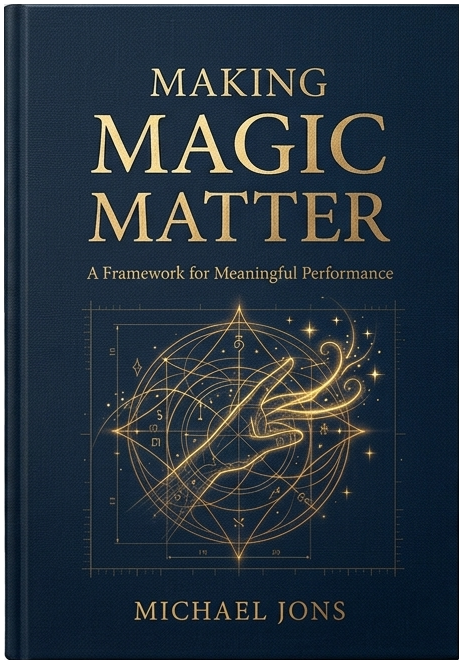
Making Magic Matter
You've put in the work. The moves are clean. The reactions are good. And yet something is off — a feeling that the performance is landing just short of where it should.
Most performers are told the answer is to tell a story. Add a premise. Make it personal. It helps a little. The gap remains.
Making Magic Matter identifies what that advice misses: the interior experience of your audience — what they believe before your effect begins, and what happens to that belief when the effect lands. That moment, the collapse of a felt certainty, is where magic actually lives.
This book shows you how to design for it, deliberately, every time.

Comments ()