

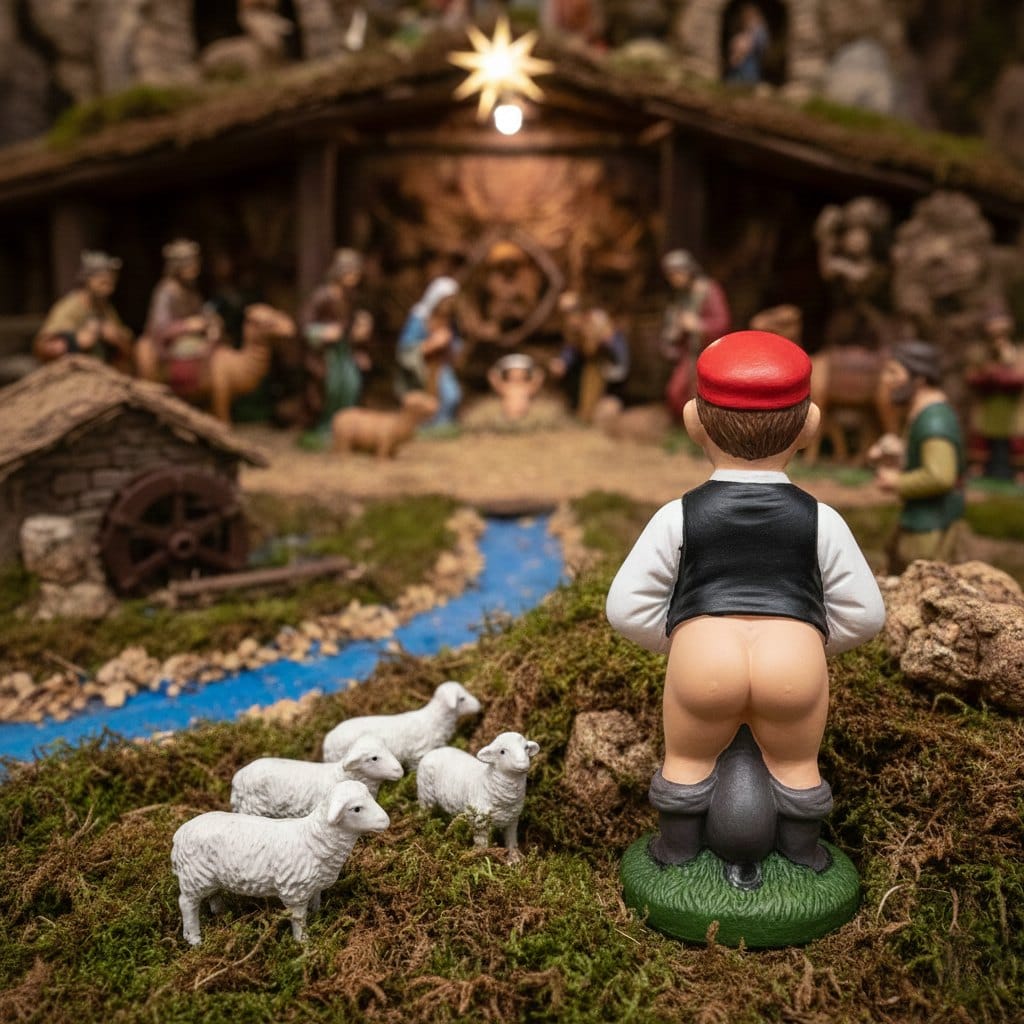
Only in Spain does the most meaningful Christmas decoration come with sheep, waterfalls, and a tiny man secretly pooping behind a clay olive tree. It's all part of a tradition that blends art, folklore, and cheeky holiday mischief.
You might think you know what Christmas looks like: twinkling trees, shining ornaments, and warm wreaths. But spend December in Spain and you’ll quickly learn that the holiday season adds its own cultural flavor. In the markets, people aren’t shopping for ornaments or hunting for the perfect Christmas tree. They’re buying miniature sheep, tiny clay houses, and even watermills powered by trickling fountains.
This is the world of the Belén, a tradition far more intricate and older than the modern Christmas tree. Although Spain has it's share of Christmas trees on display, they are just the warm-up act. The true centerpiece of Spanish holiday decor, and the only one that really matters, is the Belén.
The Belén: Spain’s True Holiday Icon
Belén means Bethlehem, but a Spanish Belén is so much more than a tiny stable with a manger. It’s an entire miniature world. Picture sweeping landscapes carved from cork, moss-covered hillsides, hand-painted villagers, flickering campfires, bustling markets, and rivers made from glass or running water. The Holy Family is there but so is the butcher, the baker, the sandal-maker, and the shepherd with his flock.
The Belén tradition took root in the 18th century when King Carlos III introduced the elaborate Neapolitan Nativity custom to Spain. What began as a royal import soon became a nationwide obsession. Today, many families keep boxes of Belén pieces passed down through generations, and add new pieces created by artisans known as belenistas using centuries-old sculpting techniques.
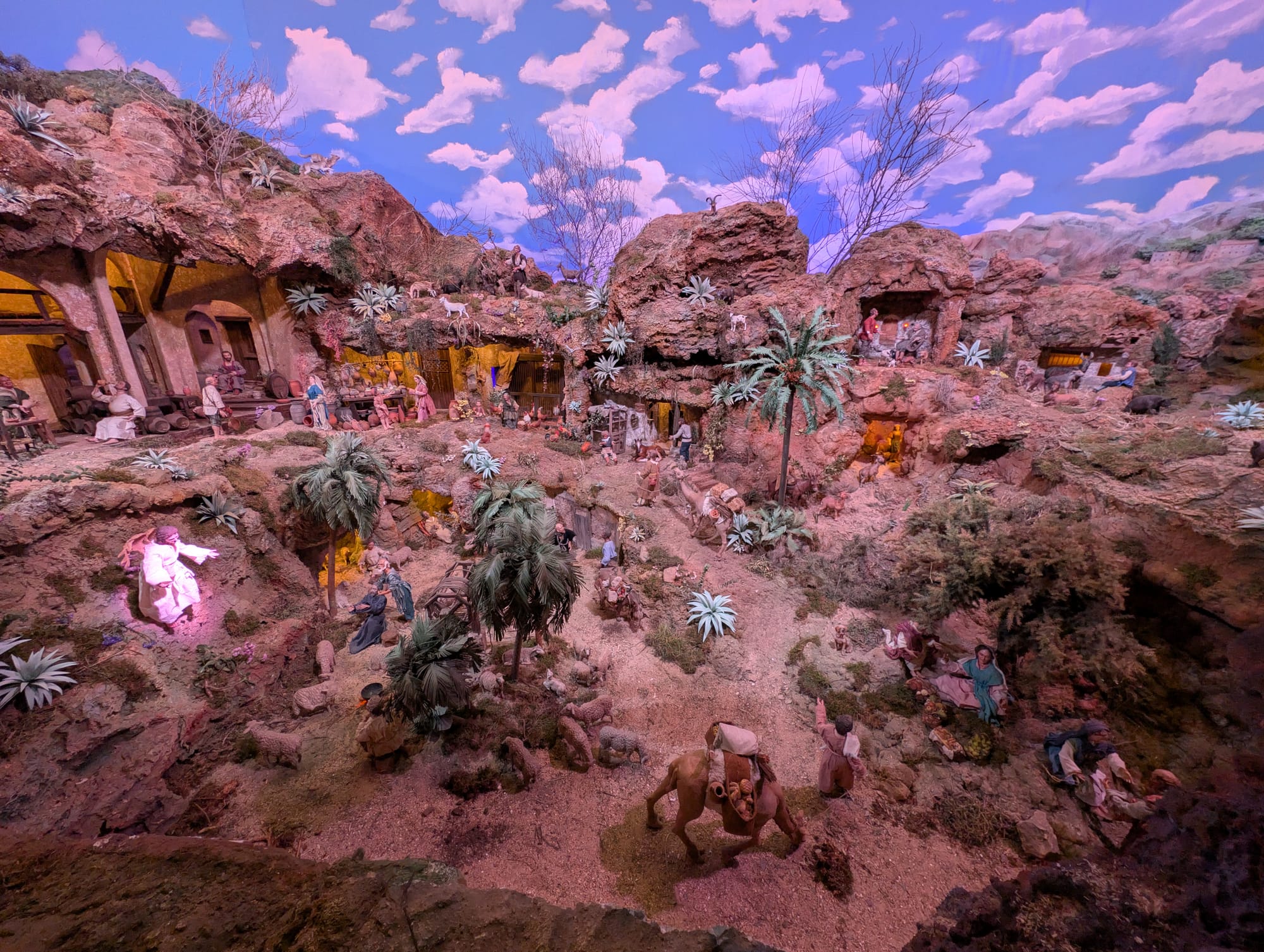
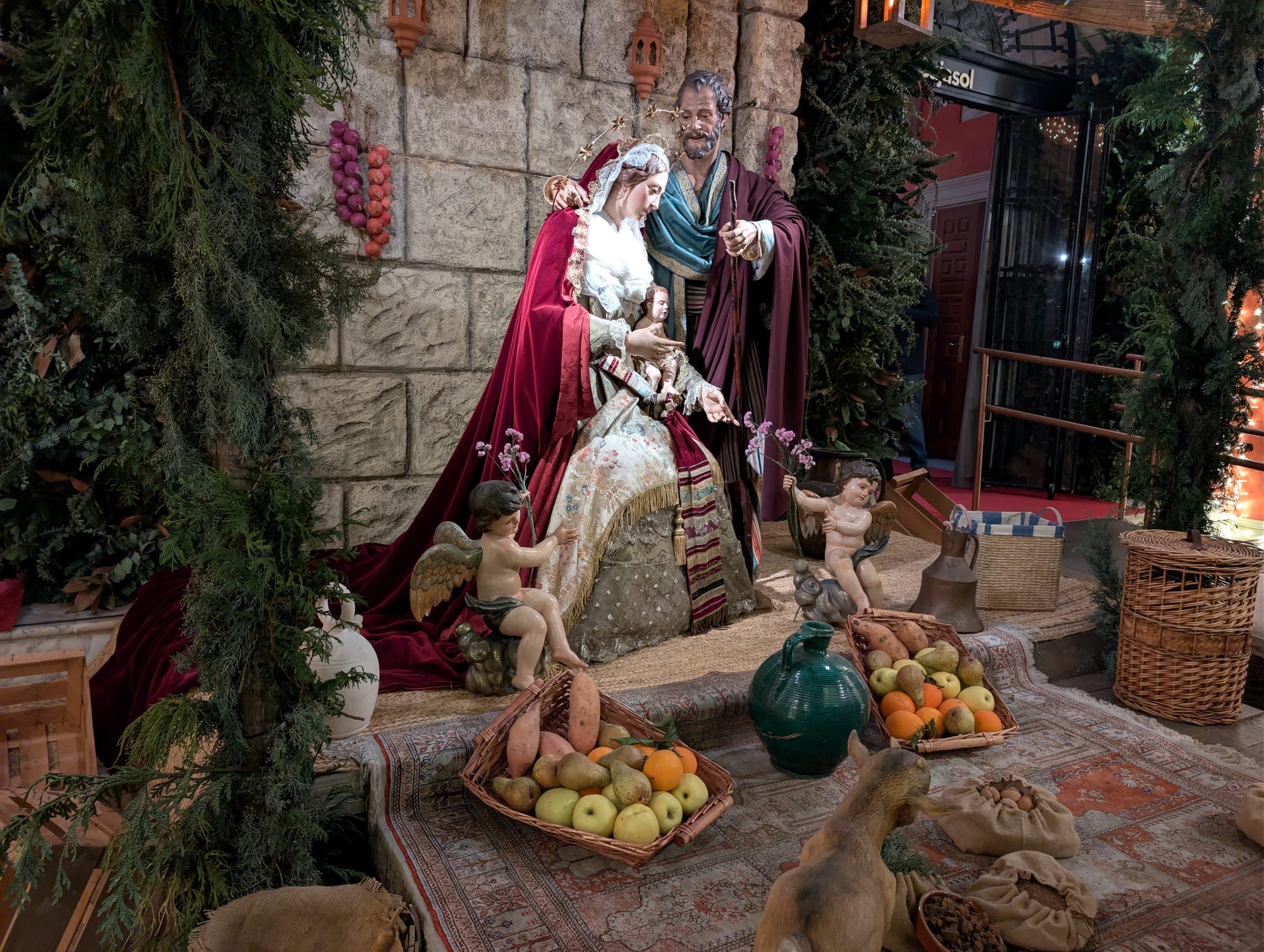
Belén displays in Seville
In major cities, public Belén displays grow huge. They are sprawling installations you can walk through like tiny magical worlds. For many Spaniards, building or visiting a Belén is more than just decoration. It’s a ritual, a craft, and often the emotional center of Christmas.
But just when the story seems comfortably traditional, it takes a wonderfully unexpected, and very Spanish, turn.
Meet the Caganer: The Hidden Prankster of Christmas
Somewhere in the Belén, you’ll find him.
Or rather, you might, because finding him has become a festive game for Spanish kids. They (and I) crouch, search, and squeal with delight when they spot the ultimate holiday mischief-maker: the Caganer.
His name, in Catalan, literally means “The Defecator.” Yes, that kind of defecator.
He’s a small figure, usually a Catalan peasant in a traditional red cap, squatting with his trousers down, mid-business. And he appears not on the outskirts of holiday culture but right inside the sacred nativity scene.
The initial reaction from newcomers is always the same: shock, then disbelief, then laughter. But is he just a joke? Well, only partly.

A Symbol as Ancient as It Is Irreverent
The Belén first appears in the late 17th or early 18th century as part of Catalan folk tradition. His role isn’t to be disrespectful, but one of renewal. By “fertilizing” the earth he symbolically brings prosperity, luck, and abundant harvests to the coming year. He completes the natural cycle of life, right there among the holy figures. He is a reminder that the divine and the earthy coexist.
Over time the Caganer has evolved into an icon of cultural humor and social leveling. Today, he isn’t depicted only as a peasant. Artisans sculpt versions of celebrities, politicians, athletes, and even superheroes as Caganers. Seeing famous or powerful figures with their pants down is Spain’s playful way of saying: in the eyes of nature, all humans are equal.
It’s satire, tradition, and earthy realism wrapped into a single humble figurine.
But Wait, Spain Has Another Pooping Tradition!
If you thought one pooping Christmas mascot was enough, Catalonia politely disagrees.

The Catalan community of northeastern Spain also brings us Tió de Nadal, affectionately called Caga Tió (“the pooping log”). Each December 8, the Feast of the Immaculate Conception, families bring out a small wooden log with a painted smile and a red hat. Children take care of it by “feeding” it nightly with nuts, fruit, treats, and covering it with a blanket so it stays warm.
On Christmas Eve or Christmas Day the fun begins. Kids gather around the log, sing special songs, and gently (or not-so-gently) hit it with sticks until it “poops” out treats and gifts which appear under its blanket.
It’s part nurturing, part chaos, part comedy and completely beloved.
A Christmas That’s Playful, Earthy, and Deeply Human
Taken together, the artistry of the Belén, the mischievousness of the Caganer, and the pure whimsy of the Tió de Nadal paint a vivid portrait of Spanish Christmas that stretches far beyond simple religion or commercial decoration.
At its core, the tradition is deeply artistic and community-driven. The elaborate Belén is far more than just a seasonal fixture; it transforms craftsmanship into cultural memory, kept vibrantly alive by master artisans and families who lovingly build and expand their scenes across generations. This practice remains a truly social ritual as large cities host enormous, breathtaking public displays and neighborhoods often organize friendly competitions.
However, what makes this tradition truly unique is its hilarious honesty and its roots in nature. The Caganer and Tió de Nadal echo ancient, agrarian rituals of fertility, abundance, and renewal, powerfully reminding us that Christmas once marked a vital turning point in the agricultural cycle. While the meaning is ancient, the humor is thoroughly modern: nothing punctures the solemnity of the season quite like finding a celebrity, a politician, or even Spider-Man squatting behind a miniature olive tree in the Holy Land.
This blend of the sacred and the scatological makes Spanish Christmas powerfully human. It doesn't shy away from the messy, earthy realities of life; it embraces them, serving as an irreverent yet profound annual reminder that, no matter one’s status, everybody poops.
If You Visit Spain in December…
After admiring the amazing lights throughout the city head straight to the Belén fairs, where you’ll find artisans selling tiny clay animals, piles of miniature firewood, tiny fishing nets, and yes, rows and rows of mischievous Caganers.
In Seville there are dozens, if not hundreds, of public nativity scenes on display this holiday season. I used to give them fleeting glances as I passed by. However, now that I know about the Caganer, I never fail to stop. I have a feeling that you may not be stopping too!


Comments ()